
Direct Answer
A useful single dose skincare capsules RFQ checklist should establish whether the proposed capsule, formula, mold, packaging system, and manufacturing process can perform consistently at commercial scale before samples are approved. The central question is not whether a capsule looks attractive in a presentation. It is whether the supplier can control fill weight, viscosity, oxidation, shell integrity, leakage, storage exposure, labeling documentation, and scale-up without re-engineering the formula.
Before requesting samples, ask the ODM to provide a defined product brief covering capsule shell material, active concentration, fill weight target, mold dimensions, packaging compatibility, stability protocol, sample scope, and production assumptions. For retinol capsules, facial oil capsules, eye serum capsules, cleansing oil capsules, or hair oil capsules, the buyer should also require evidence that the proposed formula is compatible with the shell and dispensing format. A sample is decision-useful only when it represents the intended commercial process and is supported by traceable technical documentation.
Key Takeaways for Private Label Buyers
- Specify the formula architecture, active system, target viscosity, fill weight, oxidation controls, and claim boundaries before sampling.
- Confirm whether the shell is gelatin, plant-based, or another material, and request evidence of compatibility with the formula and intended storage conditions.
- Test the capsule with the actual blister, jar, sachet, or secondary pack because contact, compression, heat, and humidity can change performance.
- Require a stability plan that covers appearance, odor, leakage, shell aging, active retention, and package interaction rather than relying on a visual sample review.
- Define the sample quantity, mold status, pilot production method, testing responsibility, and transition path from approval to production.
- Align documentation, labeling, claims substantiation, and shipment conditions with every intended market before the launch date is committed.
Buyer Context
For an international brand, capsule skincare is a packaging-and-formulation system rather than a single cosmetic formula. A retinol serum capsule may require light and oxygen control, while a facial oil capsule may create different challenges around shell plasticization, odor migration, and leakage during transport. Eye serum capsules typically require a controlled dose and a dispensing experience that does not create excessive pressure or product waste. Cleansing oil capsules must open cleanly and release a formula that spreads rapidly without damaging the shell or packaging.
These differences matter when a group is qualifying alternative capacity after a supplier quality incident, an unexpected production interruption, or a failed third-party ESG audit. A supplier that can make an attractive sample may still lack the process controls, traceability, labor governance, or business continuity needed for a multinational launch. The RFQ should therefore be written as a qualification document. It should allow procurement, R&D, quality assurance, regulatory, legal, and sustainability teams to evaluate the same assumptions.
Shell selection is especially material for buyers considering vegan capsule shells. Plant-based materials can support a specific brand positioning, but they may have different moisture sensitivity, sealing behavior, mechanical strength, and aging characteristics than gelatin. Custom softgel molds also affect unit geometry, surface area, fill volume, tooling lead time, and packaging density. Ask the supplier to distinguish what has already been validated from what remains a development assumption.
For claims and market access, the formula and dose must be documented in a way that supports the intended product classification and label review. The FTC advertising substantiation guidelines are relevant when marketing language extends beyond simple cosmetic presentation. Technical and clinical support should be assessed alongside the supplier dossier, including literature from the Journal of Cosmetic Dermatology where appropriate. This does not replace product-specific substantiation, but it helps identify unsupported or overstated claims early.
Capsule Formula, Shell, Mold, and Packaging Factors
Formula and fill control
The RFQ should state whether the fill is an anhydrous oil, water-in-oil system, silicone-containing serum, emulsion, or another format. Record the target viscosity range, density, active loading, fragrance or essential oil content, antioxidant strategy, and sensitivity to heat, light, and oxygen. The supplier should explain how the filling process controls air entrapment, temperature exposure, fill weight variation, and cleaning validation.
Fill weight is a commercial control point. It affects the stated dose, consumer experience, yield calculation, label declarations, and capsule dimensions. Request the target weight, permitted variation, weighing method, sampling frequency, and batch-release criteria. A sample made by hand may conceal variation that appears when a production line fills thousands of units. The approved sample should therefore be linked to a defined manufacturing method and in-process inspection plan.
Shell, mold, and integrity
Ask for the shell composition, plasticizer system, colorant information, allergen status, origin statement, and relevant regulatory documents. For vegan shells, verify the plant-derived material and confirm whether the supplier has data for humidity exposure, seal strength, brittleness, and long-term aging. The shell should be evaluated with the actual formula, not with a generic oil used only for demonstration.
Custom mold selection should cover capsule length, width, shape, opening behavior, surface finish, and compatibility with the proposed filling equipment. A mold can influence the visual identity of the product, but it also creates tooling, cleaning, inspection, and packaging implications. Ask whether the mold is dedicated, shared, or modified from an existing design, and clarify ownership of the tooling and design files.
For retinol capsules and other oxidation-sensitive formats, request protection data for the complete system: shell, fill, primary package, closure, and secondary carton. The FDA cosmetic GMP inspection checklist provides a useful reference point for assessing documented controls, sanitation, records, and quality systems. If pigments or tinted shells are used, the CIR safety profile of iron oxide pigments can support ingredient and colorant review, subject to the requirements of each target market.
Packaging and storage compatibility
Packaging must be tested as part of the product. A blister may protect individual doses but can impose pressure on the capsule during sealing, transport, or opening. A jar may improve presentation and packing efficiency but can increase exposure to air, repeated handling, and heat after opening. Request compatibility testing with the intended foil, polymer, adhesive, insert, tray, and closure materials. Confirm whether the capsule surface becomes tacky, deformed, brittle, discolored, or odorous during storage.
The stability protocol should include real-time and accelerated conditions selected for the destination markets and shipment route. It should track appearance, odor, leakage, shell dimensions, fill weight, active retention where applicable, microbial quality where relevant, and package interaction. Heat and humidity excursions should be considered during ocean freight, regional warehousing, and last-mile delivery. Shipment conditions should define temperature limits, pallet configuration, protection from light, and the evidence required after an excursion.
Use the following decision framework before approving samples:
Decision Framework Table
| Factor | What to Check | Why It Matters | ODM Buyer Note |
|---|---|---|---|
| Formula | Viscosity, density, active system, oxidation controls, and fill temperature | Determines filling accuracy, shell compatibility, and product performance | Request a formula specification and confirm which parameters are fixed before sampling |
| Shell | Gelatin or vegan material, plasticizer, colorant, seal strength, and aging data | Controls leakage, brittleness, consumer opening, and market suitability | Require material documentation and formula-specific compatibility evidence |
| Fill weight | Target weight, tolerance, weighing method, and inspection frequency | Supports dose consistency, yield planning, and label accuracy | Link the approved sample to the intended production equipment |
| Mold | Geometry, tooling ownership, cavity design, cleaning, and packaging fit | Influences identity, throughput, handling, and pack density | Clarify whether the mold is existing, modified, or newly commissioned |
| Packaging | Blister or jar contact, seal pressure, foil, closure, and opening behavior | Prevents deformation, oxidation, leakage, and consumer complaints | Test the capsule in the final primary package, not a substitute pack |
| Stability | Heat, humidity, light, transport, active retention, and shell aging | Shows whether the product can survive the intended supply chain | Agree on protocol, test ownership, reporting format, and release criteria |
Serum capsules manufacturer qualification should be based on documented capability, not only sample appearance. Review the supplier's serum capsule products for comparable shell and fill systems, then compare the requested concept with relevant retinol capsules or other existing platforms. Before RFQ closure, ask for the skincare capsules OEM production route, the private label skincare capsules documentation set, and the proposed sampling plan for encapsulated retinol skincare. These checks make the next stage, including pilot production and global launch planning, materially more predictable.



ODM Manufacturing Considerations
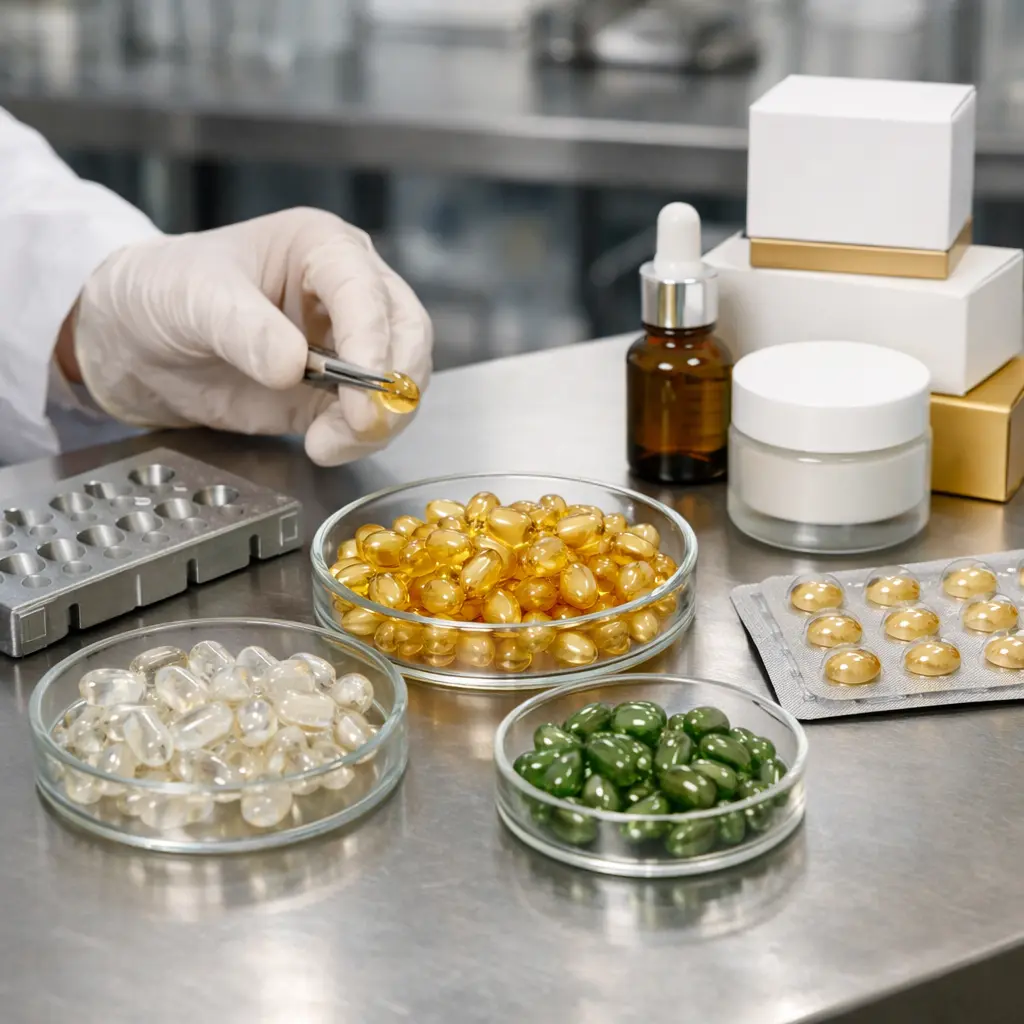
ODM sampling should confirm more than the appearance of a capsule. Before a buyer approves a sample, the supplier should document the formula brief, target skin feel, capsule dimensions, shell material, fill quantity, packaging format, and intended market. A sample that looks correct in a laboratory tray may still fail after filling, storage, labeling, or shipment.
Start with a written sample confirmation sheet. It should identify each formula version, ingredient specification, fragrance or essential-oil level, color, capsule size, shell composition, and proposed use instructions. For retinol capsules, facial oil capsules, eye serum capsules, cleansing oil capsules, or hair oil capsules, ask which ingredients may affect shell strength, odor, color migration, or fill stability. Any substitution should require written approval, including the reason for the change and its effect on claims or labeling.
Fill customization should address viscosity, flow behavior, fragrance sensitivity, and separation. The supplier should explain how it will handle a light facial oil compared with a thicker cream-serum or silicone-containing formula. Ask for the proposed fill range, filling method, inspection frequency, and retained sample procedure. The purpose is not only to achieve the requested dose, but also to maintain consistent capsule appearance and release during normal consumer use.
Shell selection is a separate decision from formula development. Confirm whether the shell is gelatin, plant-based, or another permitted cosmetic capsule material, and request documentation for colorants, plasticizers, allergens, and relevant restricted substances. Vegan skincare capsules may require different moisture control and sealing conditions than conventional softgels. A supplier should also explain how shell hardness, elasticity, and aging are reviewed before shipment.
Mold selection affects capsule shape, branding options, tooling cost, filling efficiency, and packaging fit. Compare standard capsule molds with custom shapes only after checking the inner dimensions of the proposed blister, jar insert, or carton. A sculpted capsule may look distinctive but create orientation, counting, or packing problems. Review the mold drawing and a physical dimensional sample before approving production tooling. Related information may be found in the supplier’s capsule technology resources and OEM/ODM service overview.
Packaging compatibility should be tested with the actual formula and shell, not with an empty mock-up. Confirm whether the capsule can rub against a blister cavity, deform under jar pressure, or react with an insert film, adhesive, or closure liner. For facial oil capsule jars and retinol capsule packaging, inspect headspace, light exposure, seal quality, and the condition of capsules after repeated opening and closing. Ask for packaging specifications, artwork templates, case-pack details, and a defined approval sample.
The stability review should connect to the intended distribution route. Request a written schedule for sample observation, packaging inspection, odor and color review, shell integrity checks, and formula appearance checks. Also clarify the minimum order quantity for each formula, shell color, mold, and package format. Some suppliers quote a general MOQ but apply separate minimums to custom molds, printed blisters, or multiple capsule colors.
Labeling documents should be available before commercial approval. Depending on the destination market, the file may need the ingredient declaration, ingredient nomenclature, batch coding format, net contents, use directions, warnings, country-of-origin information, allergen statements, and supporting claim documentation. Claims should remain cosmetic and evidence-based. The FTC’s advertising substantiation guidelines are a useful reference for reviewing marketing language before artwork is finalized.
Finally, confirm shipment conditions in writing. Ask how capsules will be protected from excessive heat, freezing, compression, vibration, and prolonged warehouse exposure. The shipping plan should state the outer-case configuration, pallet limits, data logger policy where appropriate, customs documents, and action required if cartons arrive damaged or outside the agreed condition.
Common Problems or Failure Cases
Shell brittleness: A capsule may crack during counting, packing, or consumer handling when the shell loses flexibility. Causes can include unsuitable moisture balance, incompatible fill ingredients, excessive storage exposure, or prolonged aging. Ask the supplier to compare shell condition at release with condition after the planned storage period.
Sticking or deformation: Capsules can adhere to one another, the blister film, or a jar insert. Excess surface moisture, insufficient curing, pressure during packing, or an unsuitable package cavity can create this problem. Review packed samples after case handling and inspect capsules at different orientations, not only immediately after filling.
Fill separation: A facial oil or serum can show visible layers, sediment, cloudiness, or changes in flow. This may affect appearance and dosing during use. Require formula-specific observation criteria and confirm whether gentle consumer shaking is acceptable. The supplier should distinguish an intentional two-phase cosmetic formula from an unintended separation defect.
Leakage: Leakage may arise from weak seals, shell damage, excessive fill pressure, incompatible fragrance materials, or capsule compression inside the package. Inspect random units from different production points, including units exposed to normal carton movement. A buyer should receive the supplier’s defect classification and replacement process before placing a production order.
Fragrance sensitivity: Fragrance, essential oils, or highly active aromatic materials can affect shell odor, flexibility, or package compatibility. Conduct an odor review on both the capsule and the closed package. Do not approve a sample solely because the formula performs well in an open laboratory container.
Packaging deformation: Blisters may warp, seals may lift, or jars may compress capsules when the package dimensions or material selection are wrong. Check filled packages after stacking, handling, and storage at the intended distribution conditions. A package that protects the capsule in a small sample batch may behave differently when packed into a full shipping case.

Supplier Checklist
- Confirm the capsule shell material, colorant system, allergen status, and documentation for vegan or conventional shell options.
- Record the approved formula version, viscosity range, fragrance level, active list, appearance, and permitted raw-material substitutions.
- Request the capsule dimensions, mold drawing, tooling ownership terms, and compatibility confirmation for the selected package.
- Review sample scope: formula sample, shell sample, filled capsule sample, packed sample, and retained sample quantity.
- Ask how the supplier checks fill consistency, seal integrity, shell appearance, sticking, deformation, odor, and leakage.
- Confirm MOQ by formula, capsule color, mold, package, and production batch rather than relying on one general figure.
- Obtain labeling and export documents before artwork approval, including ingredient information, batch coding, net contents, and warnings.
- Review the supplier’s information-security controls, formula access permissions, sample retention rules, and confidentiality agreement.
- Ask how strategic raw materials are allocated during shortages, what alternative sources are prequalified, and how buyers are notified.
- Confirm worker-welfare policies, grievance channels, working-hour controls, payroll records, and independent social-audit access.
- Document shipment packaging, storage instructions, handling limits, insurance responsibilities, and the process for damaged or rejected goods.
FAQ
Can an OEM supplier guarantee that our serum formula will not be disclosed?
No supplier should make an absolute promise without describing its controls. Ask for role-based access to formula records, account permissions, physical sample controls, confidential document handling, employee obligations, and subcontractor restrictions. A signed confidentiality agreement should identify ownership of custom formulas, molds, artwork, and test results. Periodic access reviews and audit records provide stronger evidence than a general confidentiality statement.
How can a buyer protect supply priority during a global raw-material shortage?
Request a written allocation policy, approved alternative-material list, expected lead times, and minimum reserve or safety-stock arrangement where practical. Confirm which ingredients are strategic for the capsule formula and whether substitutions would change the ingredient declaration, color, odor, texture, or claims. Supply priority should be supported by a forecast, purchase commitment, and documented escalation process rather than an informal assurance.
What should we do when a sample leaks only after packaging?
Separate the investigation into formula, shell, seal, and package causes. Photograph affected units, record the production batch, inspect the seal area, and compare loose capsules with packed capsules. Ask the supplier to review compression, cavity dimensions, closure pressure, and handling conditions. Do not approve a commercial batch until the corrective action is verified with a new packed sample.
Is a vegan capsule shell automatically suitable for every serum?
No. Plant-based shells can respond differently to moisture, oils, fragrance materials, and storage conditions. Confirm compatibility with the actual formula, mold, sealing process, and package. A vegan shell should be approved through filled and packed samples, supported by the supplier’s material documentation and integrity observations.
How should a buyer assess whether a supplier treats factory workers fairly?
Request a current social-compliance policy, age-verification procedure, payroll and working-hour records, grievance process, and any independent audit summary. Ask whether workers can be interviewed privately and whether corrective actions are tracked to closure. These checks do not replace an audit, but they help identify whether the supplier can provide credible evidence regarding child labor, wage deductions, and excessive overtime.
Which documents should be complete before a capsule launch?
At minimum, assemble the approved formula and sample record, ingredient declaration, shell-material documents, package specifications, batch-coding format, use directions, warnings, claims support, production specification, inspection criteria, and shipment requirements. The final file should match the exact capsule, formula, package, and destination market, rather than a generic product template.
References
- FDA cosmetics GMP guidelines and inspection checklist, for manufacturing-control and inspection considerations.
- FTC advertising substantiation guidelines, for reviewing cosmetic claims and supporting evidence.
- Journal of Cosmetic Dermatology, Wiley, for cosmetic dermatology research relevant to ingredient and product claims.