
Direct Answer
A cosmetic capsule documentation buyer guide should begin with one operating principle: approve the documentation architecture before approving the manufacturer. For serum capsules, the relevant evidence must connect the finished unit to its fill formula, shell composition, mold specification, packaging components, raw-material lots, production batch, release tests, storage conditions, and shipment record. A certificate package is insufficient if those records cannot be reconciled through consistent batch identifiers.
Before nomination, require the ODM to demonstrate traceability using a representative batch record rather than a blank template. Procurement, R&D, regulatory, QA, and legal teams should test whether the record supports ingredient verification, deviation investigation, leakage analysis, oxidation review, packaging reconciliation, and targeted recall. The control model should also identify who owns each document, how revisions are approved, how long records remain retrievable, and which evidence follows the product into each destination market. This review should precede commercial negotiation because traceability gaps become expensive after formula, tooling, and packaging have been committed.
Key Takeaways for Private Label Buyers
- Source records must be batch-linked. Require supplier identity, ingredient lot, specification, certificate of analysis, receipt status, and release decision for both the fill and capsule shell.
- Formulation control must extend beyond the ingredient list. Confirm fill viscosity, oxygen and light sensitivity, process temperature, fill-weight target, and approved manufacturing instructions.
- Shell and mold are controlled specifications. Material grade, colorants, seam geometry, capsule dimensions, and cavity ownership should be documented before sampling.
- Packaging qualification must use the commercial configuration. Jar, blister, liner, desiccant, headspace, and closure choices can change leakage, deformation, and oxidation outcomes.
- Testing must reflect the distribution route. Stability protocols should cover intended heat, humidity, light, handling, and shipment conditions, with predefined acceptance criteria.
- Launch approval requires document readiness. Label support, claims substantiation, market files, batch-release evidence, and change-control responsibilities should be closed before the first purchase order.

Buyer Context
Capsule skincare concentrates several interdependent risks into a small dose format. A retinol fill may remain chemically acceptable while the shell becomes brittle. A facial oil capsule may pass bulk testing but leak after contact with a packaging liner. An eye serum capsule may meet fill-weight requirements yet become difficult to open if the neck geometry changes between the approved sample and mass production. These are system failures involving formula, shell, mold, process, and package, not isolated cosmetic defects.
This matters when an established brand is qualifying alternative capacity after a quality event, labor disruption, failed audit, or unexpected loss of output at an incumbent site. Accelerated onboarding cannot mean reduced evidence. A prospective serum capsules manufacturer should show that pilot and commercial records operate under the same quality system and that scale-up does not introduce an undocumented supplier, line, or tooling transfer. Buyers comparing broader skincare capsule product lines should also separate platform-level evidence from SKU-specific validation.
Market access adds another layer. United States artwork should be checked against the FDA Cosmetics Labeling Guide, while Canadian screening should consider Health Canada cosmetic requirements and ingredient restrictions. Middle East launch plans may require evidence aligned with the Dubai Municipality Montaji registration system and SASO conformity assessment standards. These authorities do not replace manufacturer controls; they define destination requirements that the technical file must support.
Capsule Formula, Shell, Mold, and Packaging Factors
Fill Formula and Process Controls
Begin with the qualitative and quantitative formula, ingredient specifications, allergen or restricted-substance statements where applicable, and the manufacturing instruction used for the sample. For an oil-based capsule, document viscosity at the defined filling condition, mixing sequence, temperature limits, filtration, hold time, and oxidation controls. Sensitive ingredients may require nitrogen management, reduced light exposure, antioxidant strategy, or controlled headspace. The buyer should be able to reconcile theoretical batch yield, actual yield, filled-unit count, rejects, and retained samples.
Fill weight is both a dosing and manufacturing-control variable. Request the target, tolerance, sampling frequency, measuring method, and disposition rule for out-of-limit units. For encapsulated retinol skincare, assay and degradation monitoring should be connected to the fill process and commercial package, not supported only by a generic ingredient certificate. When reviewing other cosmetic softgel products, verify whether each formula has its own compatibility evidence or merely inherits a platform assumption.
Shell Material and Mold Governance
The shell file should identify polymer system, plasticizer, water-related controls, pigments or opacifiers, processing aids, ingredient origin, and supplier lot. Vegan capsule shells require evidence supporting the declared material route; a marketing statement alone is not an adequate specification. Ask how incoming shell ingredients are released, how shell mass is prepared, and how aging is monitored under different humidity conditions.
Custom mold documentation should define cavity geometry, nominal capsule dimensions, neck or twist-off features, seam characteristics, tooling identification, maintenance history, approved drawing, and ownership. A custom project also needs a controlled golden sample and a change process that prevents tooling adjustment without buyer review. This is especially important when private label serum capsules must remain visually and functionally consistent across multiple production campaigns.
Packaging, Storage, and Stability
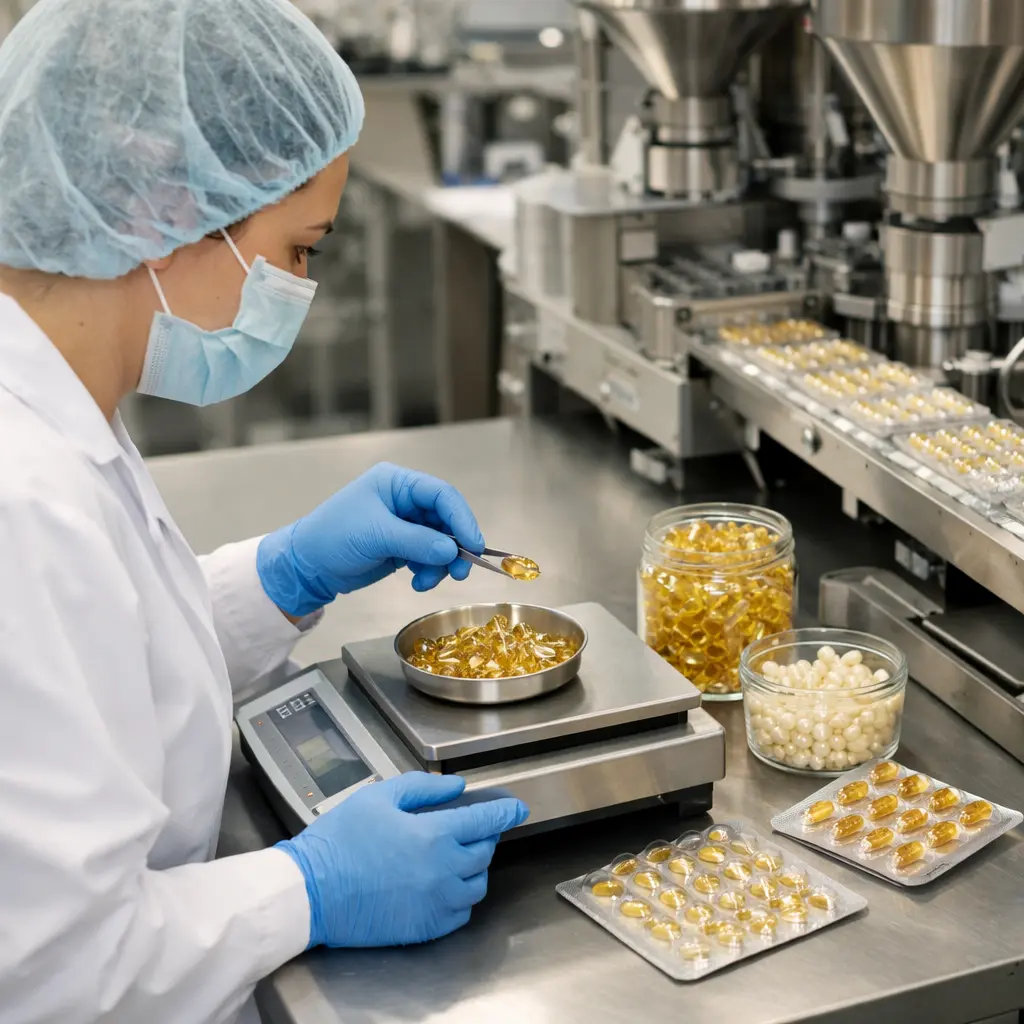
Packaging qualification should test the capsule inside the intended blister or jar, using production-representative liners, closures, desiccants, labels, and secondary packs. Review moisture transfer, oxygen exposure, capsule-to-component interaction, crushing, abrasion, blocking, odor migration, and opening performance. A blister may offer stronger unit isolation but creates forming, sealing, and material-control requirements. A jar may simplify consumer use but increases repeated exposure to heat, humidity, oxygen, and handling.
Stability protocols should state batch identity, package configuration, storage conditions, pull points, test methods, acceptance criteria, deviation handling, and final conclusion. Relevant observations include appearance, odor, shell deformation, brittleness, tackiness, leakage, fill-weight change, opening behavior, and formula-specific chemical or microbiological results. Shipment qualification should then address case configuration, pallet pattern, vibration, compression, temperature exposure, lane duration, and excursion review. Buyers assessing a cosmetic softgel capsule factory should confirm that retained samples and distribution records can support investigation by destination and batch.
Decision Framework
| Factor | What to Check | Why It Matters | ODM Buyer Note |
|---|---|---|---|
| Fill formula | Approved composition, viscosity condition, process limits, oxidation controls, and ingredient lots | Links product performance to a reproducible manufacturing route | Compare the sampled instruction with the proposed commercial master record |
| Fill weight | Target, tolerance, sampling plan, calibrated equipment, and rejection rule | Controls dose consistency, yield, and capsule behavior | Request actual in-process data from a representative run |
| Shell system | Material identity, plasticizer, color system, supplier evidence, and aging behavior | Influences sealing, brittleness, tackiness, and ingredient compatibility | For vegan claims, trace each shell input to supporting evidence |
| Mold and tooling | Controlled drawing, cavity ID, maintenance, ownership, and change approval | Protects capsule geometry and continuity across batches | Define transfer rights and replacement responsibility contractually |
| Commercial package | Blister or jar components, closure, liner, desiccant, and compatibility results | Packaging can alter leakage and oxidation risk | Do not approve based on bulk capsules or laboratory containers |
| Stability and shipment | Protocol, conditions, acceptance criteria, transport simulation, and excursions | Tests whether the complete SKU can survive its intended market route | Align testing with launch geography and distribution season |
| Traceability | Batch genealogy, reconciliation, deviations, retained samples, and record retrieval | Determines investigation and recall precision | Conduct a timed trace exercise before supplier approval |
| Regulatory file | Ingredient nomenclature, label support, claims evidence, and market-specific records | Prevents artwork and registration delays near launch | Evaluate document completeness for each destination, not only the manufacturing country |
A procurement team reviewing private label skincare capsules can use this framework as a document-index requirement at the request-for-information stage. For a technically sensitive SKU such as retinol serum capsules, the same framework should be expanded into a cross-functional approval matrix covering QA, regulatory, R&D, packaging, procurement, and legal ownership.
ODM Manufacturing Considerations
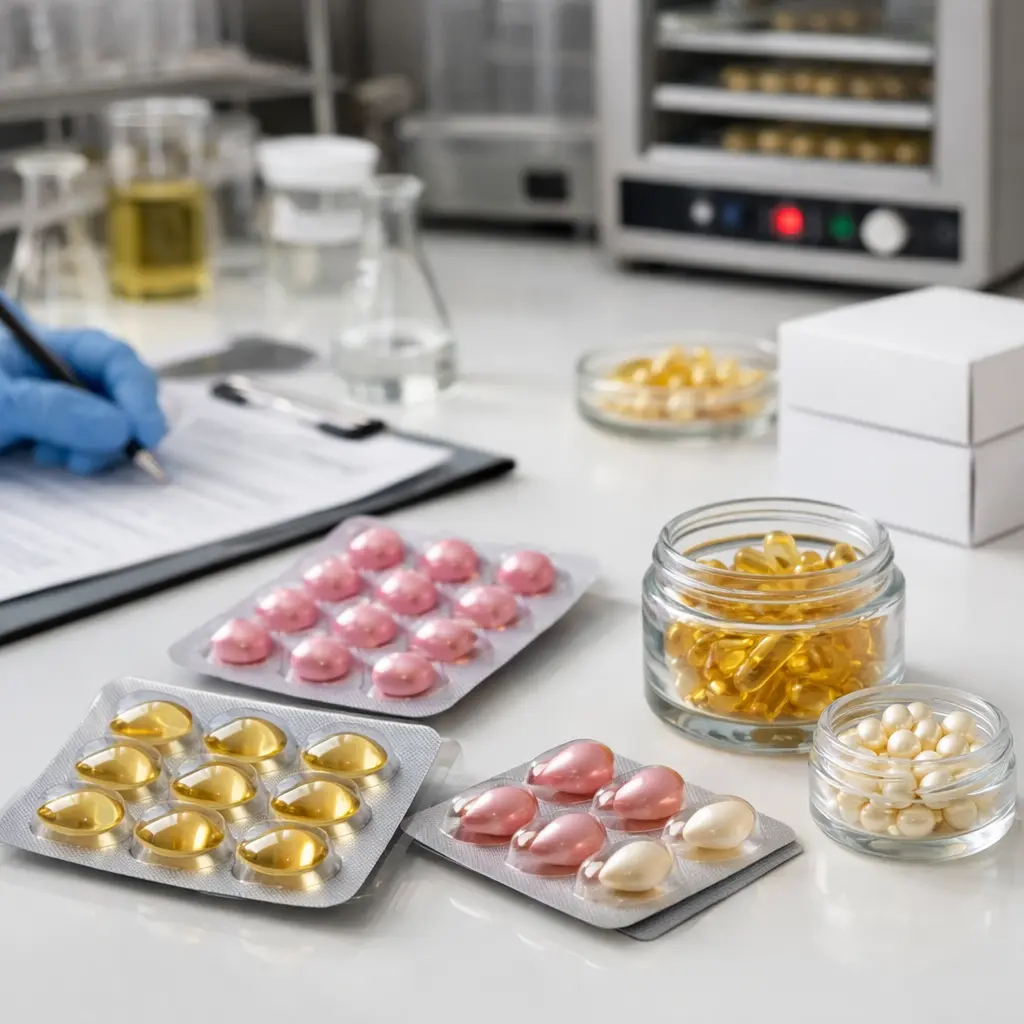
ODM scope should be defined as a sequence of approval gates rather than a single finished-sample decision. Ask the manufacturer to identify which sample is for appearance, which is made with the intended commercial ingredients and process, and which represents the proposed production specification. The confirmation record should cover capsule appearance, opening feel, serum spread, odor, net fill tolerance, shell composition, pack configuration, and approved comparison samples. It should also state whether a later ingredient substitution, color adjustment, or process change requires renewed buyer approval.
For fill formula customization, establish the target ingredient list, restricted-substance requirements, sensory profile, and target markets before laboratory work begins. A facial oil capsule may tolerate a different flow profile than an eye serum capsule, while a retinol capsule may require tighter controls for light, oxygen, and ingredient interactions. Buyers should request the formula version, raw-material naming convention, theoretical percentages or agreed disclosure level, and the test methods used for release. The supplier should also identify any ingredients that have variable origins, long lead times, or single-source exposure.
Shell options must be connected to the formula rather than selected only from a marketing description. Confirm the shell polymer or gelling system, plasticizer components, colorants, opacity, allergen position, and supporting vegan documentation where relevant. Request comparative samples when changing shell type because puncture behavior, moisture response, and storage performance may differ. Background information on capsule technology and vegan skincare capsules can help buyers prepare the initial specification.
Mold selection should document capsule shape, nominal capacity, dimensional tolerances, embossing details, tooling availability, and the party responsible for maintenance. Standard tooling can shorten development, while a custom shape can improve product distinction but adds validation work and replacement risk. Buyers comparing options can review capsule mold options before requesting engineering drawings and pilot output.
Packaging evaluation should use the intended capsule count, decoration, insert, closure, and secondary carton. Examine whether capsules abrade, clump, become difficult to dispense, or transfer oil to pack surfaces. Confirm that the pack remains functional after realistic distribution vibration and temperature cycling. The stability protocol should define test intervals, acceptance criteria, analytical responsibilities, pack orientation, and treatment of out-of-specification results. Include both unopened packs and an in-use condition that reflects repeated consumer opening.
MOQ discussions should separate laboratory samples, pilot quantities, bulk capsules, decorated packaging, and finished retail units. Record minimums and lead times for each component because the highest component minimum may determine the practical order quantity. Labeling deliverables should include the ingredient declaration, net contents basis, batch coding format, responsible-party details, warnings supported by the formula, and available substantiation. Requirements vary by destination; buyers should map documents against the intended launch markets rather than treating one artwork file as globally valid.
Finally, define shipping conditions in the purchase specification. Record acceptable temperature and humidity exposure, carton stacking limits, pallet pattern, desiccant or thermal protection where justified, carrier data requirements, and the process for inspecting arrival damage. This becomes especially important when a brand is qualifying an alternate supplier after a capacity interruption or serious compliance finding at its current factory.

Common Problems or Failure Cases
Shell brittleness: Capsules crack during packing or consumer handling when the shell loses flexibility. Common contributors include unsuitable moisture conditions, shell-formula interactions, or prolonged exposure to an uncontrolled warehouse environment. Investigate fracture frequency by lot and location within the shipper, not only by inspecting a few retained units.
Sticking or deformation: Capsules may adhere to each other, flatten under load, or retain impressions from adjacent units. Excess heat, pack compression, surface oil, and an incompatible shell system can produce similar symptoms. A corrective-action report should distinguish among manufacturing, packaging, warehousing, and transport causes.
Fill separation: Pigments, suspended ingredients, or blended oils may become nonuniform, causing dose-to-dose appearance or composition differences. Request time-point observations and assay data where composition is critical. Sample preparation must represent the complete capsule contents rather than only the easiest liquid fraction to withdraw.
Leakage: Seal defects can present as visible oil, gradual mass loss, stained cartons, or capsules that feel unusually soft. Buyers should define defect categories and inspection timing because slow leaks may not be apparent at factory release.
Fragrance sensitivity: A fragrance component can alter odor over time or interact with shell and fill materials. A pleasing initial sample is insufficient evidence for commercial use. Review fragrance concentration, allergen declarations, oxidation behavior, and aged-pack sensory results.
Packaging deformation: Jars, trays, or blisters may warp, loosen, or lose barrier performance under elevated temperatures. Evaluate the complete decorated pack because coatings, adhesives, and printing processes can change performance from an undecorated packaging sample.
Supplier Checklist
- Approved master specification linking formula version, shell system, capsule dimensions, fill target, visual limits, and finished pack.
- Sample plan separating laboratory, pilot, and production-representative approvals, with change-control rules.
- Ingredient documentation covering identity, origin, specifications, restricted substances, allergens, and alternate-source policy.
- Defined in-process and release tests, sampling levels, defect classifications, and certificate-of-analysis content.
- Stability protocol with test packs, intervals, storage conditions, analytical methods, and failure escalation.
- Packaging evidence covering capsule count, closure function, barrier needs, decoration, transit exposure, and arrival inspection.
- MOQ and lead-time schedule for fill materials, shells, tooling, primary packaging, cartons, and finished units.
- Market-specific label document set, including ingredient names, warnings, net contents, coding, and responsible-party fields.
- Quality agreement covering deviations, changes, complaints, investigation deadlines, records access, and product withdrawal responsibilities.
- Business-continuity evidence for constrained ingredients, critical equipment, utilities, labor disruption, and alternate production capacity.

FAQ
Can a manufacturer guarantee that our core formula will never be disclosed?
No system can support an absolute guarantee. Ask for evidence of role-based access, network and physical segregation, controlled formula issuance, removable-media rules, confidentiality obligations, access logs, backup controls, and employee departure procedures. The agreement should define formula ownership, authorized recipients, breach notification, subcontractor restrictions, and audit rights.
How should supply priority be handled during a global raw-material shortage?
Do not rely on a verbal promise of priority. Request the allocation policy, forecast commitments, safety-stock responsibilities, approved alternate sources, reserved-capacity terms, and escalation contacts. For strategic ingredients used in retinol or facial oil capsules, define which substitutions require testing and written approval before production.
What environmental evidence should a buyer request?
Request current permits, discharge monitoring records, waste-transfer documentation, energy and emissions methodology, corrective actions, and the scope of independent verification. If corporate policy requires supplier carbon targets, define the reporting boundary and baseline year. Records should be traceable to the capsule production site, not only summarized at group level.
How can buyers assess worker-treatment risks?
Review recent independent social audits, payroll and time records, age-verification controls, grievance channels, recruitment-fee policies, corrective actions, and evidence that excessive overtime is addressed. Confirm that temporary labor and subcontracted operations are included. A certificate alone does not show whether findings were closed effectively.
Which sample should be treated as the final approval standard?
Use a documented production-representative sample made with approved formula materials, shell type, tooling, process range, and intended packaging. A hand-prepared laboratory capsule can guide sensory development but should not become the sole acceptance reference for commercial output.
Which labeling documents are needed for multiple markets?
Prepare a market matrix covering ingredient nomenclature, language, net contents, responsible-party information, warnings, claims support, and notification or registration responsibilities. For the United States, consult the FDA Cosmetics Labeling Guide. Canadian review should include Health Canada cosmetic requirements and the Cosmetic Ingredient Hotlist. Saudi-bound projects should confirm applicable SASO conformity requirements.