Category: Packaging & Compliance

  • Capsule Sample Feedback Process: Product Routes for a Private-Label Skincare Launch

    Capsule Sample Feedback Process: Product Routes for a Private-Label Skincare Launch

    Direct Answer

    The capsule sample feedback process should be managed as a controlled product-route decision, not as an informal exchange of opinions. For a private-label skincare launch, the buyer should evaluate each sample against five linked variables: formula performance, capsule shell compatibility, fill weight, packaging behavior, and evidence generated during stability testing. A satisfactory serum texture is insufficient if the shell softens, the fill oxidizes, the blister seal fails, or the approved sample cannot be reproduced on the intended manufacturing line.

    The recommended route is to define measurable acceptance criteria before sampling, test no more than a small number of deliberate formula or packaging variables in each round, and require the ODM to document every revision. This approach gives procurement, R&D, QA, regulatory, and packaging teams a common decision record. It also reduces the risk that a late-stage change to a retinol capsule, facial oil capsule, or vegan shell creates a new qualification cycle immediately before launch.

    For a supplier such as PZIK, the objective is to connect the sample route to the production route from the beginning: pilot manufacturing under ISO 22716 controls, documented ingredient and packaging records, and a formulation that can move from a 1,000-unit pilot toward scaled production without re-engineering.

    Key Takeaways for Private Label Buyers

    • Source against a documented route: confirm whether the sample will use the same shell material, mold geometry, filling equipment, and packaging format planned for production.
    • Review the formula as a physical system. Viscosity, oil polarity, active concentration, oxidation sensitivity, and interaction with the shell can affect leakage, seal integrity, and consumer handling.
    • Set acceptance criteria for fill weight, capsule dimensions, appearance, odor, release behavior, and package compatibility before the first feedback round.
    • Separate sensory revisions from compliance revisions. A change to fragrance, color, preservative system, or active level may require updated labeling and regulatory documentation.
    • Require stability evidence under heat and humidity conditions relevant to the intended markets and shipment lanes, rather than relying only on an attractive day-one sample.
    • Approve a production reference sample with retained units, revision history, and signed specifications before issuing a mass-production purchase order.

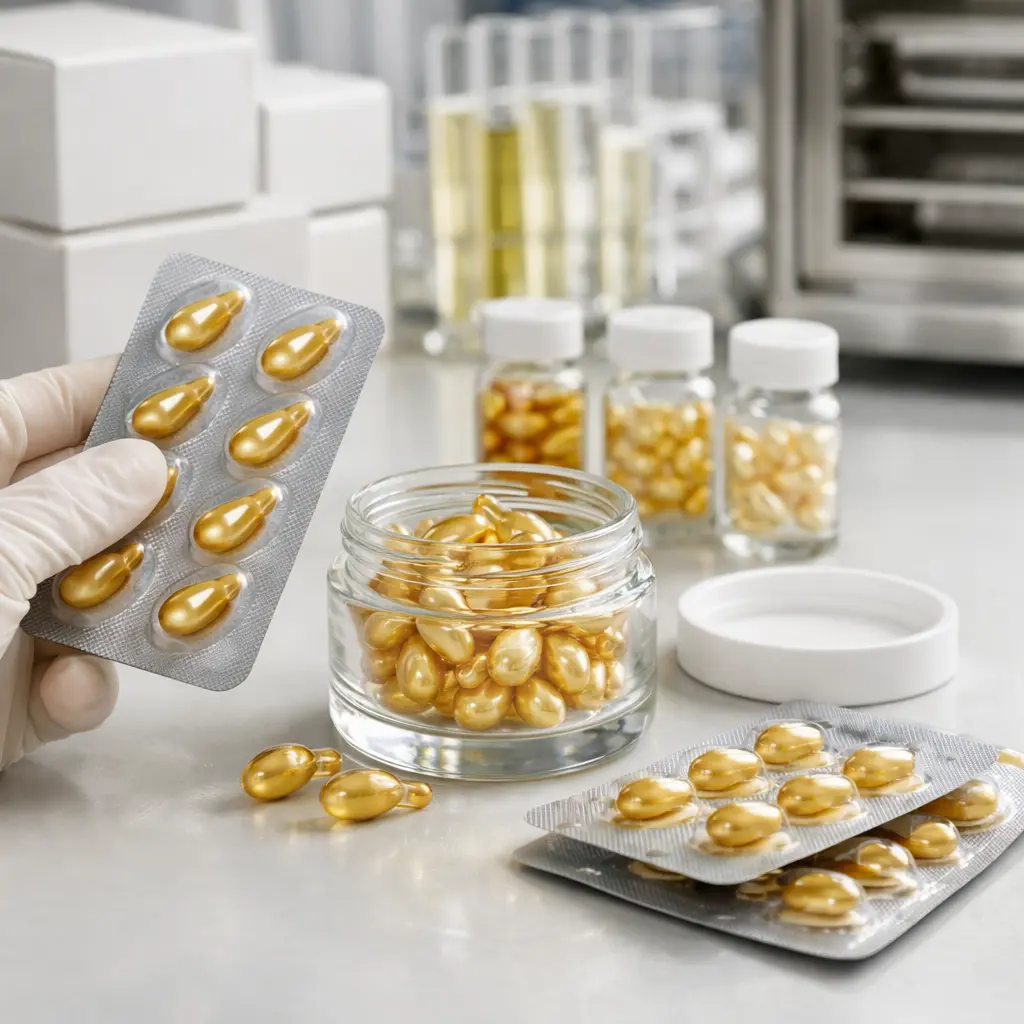
    Serum capsule shell inspection in a cosmetic manufacturing laboratory
    Serum capsule shell inspection in a cosmetic manufacturing laboratory

    Buyer Context

    Capsule skincare introduces a qualification problem that conventional pump or tube products do not fully share. The unit dose is part of the product claim and part of the packaging system. A retinol capsule must protect a sensitive formula while remaining easy to twist, puncture, or dispense. A facial oil capsule must hold a fluid fill without seepage during transport. An eye serum capsule may require a smaller fill weight and a more controlled dispensing profile. Cleansing oil capsules and hair oil capsules may require different viscosity and release characteristics from a lightweight facial serum.

    These differences matter when a mature brand is adding a second manufacturing source after a quality event, a labor-audit concern, or an unexpected capacity interruption at an incumbent supplier. They also matter when a group enters a new format, such as softgel skincare, without wanting to create a separate governance model for every SKU. The sampling process becomes an early indicator of supplier discipline. If the ODM cannot provide clear shell specifications, batch records, revision controls, and packaging compatibility data during sampling, the risk is likely to increase during scale-up.

    Buyers should also distinguish a genuine vegan capsule shell from a marketing description. The material, plasticizer system, moisture behavior, and storage requirements should be stated in technical documents. A custom softgel mold may improve brand differentiation, but it can also affect tooling lead time, fill accuracy, sealing performance, and line changeover. The decision therefore belongs in the cross-functional NPD review, not only in a creative packaging discussion.

    Ingredient and claim decisions should remain aligned with market requirements. Buyers can use Health Canada's cosmetic ingredient hotlist as one regulatory reference and review peer-reviewed research indexed by PubMed and NCBI when assessing ingredient substantiation. For pigmentation-related positioning, the AAD treatment standards for hyperpigmentation provide useful context, while final cosmetic claims still require market-specific regulatory review.

    Relevant internal product routes include serum capsules manufacturer, serum capsule products, private label skincare capsules, cosmetic softgel products, retinol capsules, encapsulated retinol skincare, retinol softgel capsules, and skincare capsules OEM.

    Capsule Formula, Shell, Mold, and Packaging Factors

    Formula and fill behavior. The ODM should record the formula's viscosity range, density, oil or water phase, active system, fragrance load, and oxidation controls. A fill that is too fluid may increase leakage risk; a fill that is too viscous may create incomplete dosing, air entrapment, or filling variability. For retinol and other oxidation-sensitive formulas, buyers should ask how the formula is protected from oxygen, light, and unnecessary heat during filling and storage. A nitrogen strategy, opaque secondary packaging, antioxidant system, or reduced headspace may be relevant, but each control should be verified through testing rather than assumed.

    Shell material and aging. Conventional gelatin and plant-based or vegan shell systems can differ in moisture sensitivity, elasticity, sealing behavior, and aging profile. The buyer should request the shell composition, plasticizer information, colorant documentation, allergen statement where applicable, and storage limits. Inspect samples after conditioning in heat and humidity environments that reflect the target market. Look for tackiness, brittleness, deformation, color shift, odor transfer, and changes in opening force.

    Fill weight and mold geometry. Fill weight should be confirmed by a defined sampling plan, with equipment calibration records available for review. Capsule length, width, seam position, tip geometry, and wall thickness influence both user experience and package fit. A custom mold can support a distinctive unit dose, but it also introduces tooling validation and replacement-part considerations. The production specification should identify tolerances rather than relying on visual similarity to a reference sample.

    Packaging compatibility. The approved capsule must be evaluated in its final blister, jar, sachet, or tray. Check cavity dimensions, compression, seal temperature, foil or film compatibility, desiccant requirements, count accuracy, and abrasion during line handling. A jar may improve merchandising flexibility but expose capsules to repeated oxygen and humidity exchange after opening. A blister can provide stronger unit-dose protection but may constrain mold geometry and increase packaging qualification requirements. Shipment simulations should include vibration, temperature excursions, and orientation changes where relevant.

    Stability and release readiness. Stability testing should compare the initial sample, revised sample, and production-equivalent pilot. Review appearance, odor, fill weight, shell integrity, leakage, active assay where applicable, microbiological status, and package seal performance. Do not approve a route solely because the sample performs well immediately after filling. The supplier should state test conditions, intervals, sample quantities, acceptance limits, and the disposition process for failures.

    Decision Framework Table

    Factor What to Check Why It Matters ODM Buyer Note
    Formula Viscosity, density, oxidation controls, active and fragrance system Determines dose consistency, leakage risk, and product aging Require a controlled formula revision code and change-impact assessment
    Shell Material, plasticizer, moisture response, seam and opening behavior Protects product integrity and user handling Confirm whether the approved shell is production-available, including vegan options
    Fill weight Target weight, tolerance, calibration, sampling method Supports dose consistency and costed pack architecture Review results from production-equivalent filling equipment
    Mold Dimensions, tooling ownership, tolerances, replacement plan Affects package fit, sealing, and scale-up continuity Document tooling approval before artwork and packaging release
    Packaging Blister, jar, tray, seal, foil, humidity protection, shipment exposure Controls oxygen, moisture, abrasion, and leakage during distribution Run compatibility and transport checks using final components
    Stability Heat, humidity, light, integrity, odor, assay, microbiological checks Reveals risks that a fresh sample cannot show Request the protocol, raw observations, deviations, and approval criteria
    Documentation INCI list, specifications, SDS where applicable, labeling data, batch records Enables regulatory review and global launch coordination Align document ownership across procurement, QA, regulatory, and legal teams

    Fill-weight sampling for softgel serum capsules during pilot manufacturing
    Fill-weight sampling for softgel serum capsules during pilot manufacturing

    Retinol capsule blister and jar packaging compatibility review
    Retinol capsule blister and jar packaging compatibility review

    ODM Manufacturing Considerations

    A reliable capsule sample feedback process product route should convert buyer comments into controlled manufacturing decisions. Start by confirming one reference sample with a written specification: capsule dimensions, shell material, appearance, fill quantity, serum texture, fragrance level, color, and intended package. Feedback such as too oily, too soft, or difficult to dispense should be translated into measurable revision points before the next sample is prepared.

    Formula customization normally involves the oil or serum base, active selection, antioxidant system, fragrance concentration, and target fill weight. For retinol capsules, facial oil capsules, and eye serum capsules, ask the supplier to identify which ingredients may affect shell strength, color, odor, or oxidation behavior. A supplier should provide a revision record showing what changed between samples and what remained constant. This helps the brand distinguish a formula issue from a shell or package issue.

    Capsule shell selection should match the product positioning and the formula. Gelatin and vegan shell systems can behave differently during storage, filling, sealing, and shipment. Request the shell composition, source documentation, colorant information, and any allergen or animal-origin declaration needed for the target market. For vegan skincare capsules, confirm that the proposed shell is genuinely compatible with the chosen serum and that its appearance remains consistent after storage.

    Mold selection affects capsule size, dosing presentation, tooling cost, and package fit. A standard mold may be appropriate for an initial launch, while a custom mold can support a distinctive shape or brand experience. Before approving tooling, compare the capsule dimensions with the planned blister cavity, jar opening, scoop or dispenser arrangement, and label presentation. A capsule that looks suitable in a sample tray may be impractical when packed at production density.

    Packaging compatibility requires a filled-capsule review rather than an empty-shell review. Examine whether capsules stick together, deform under pressure, rub against blister pockets, or become difficult to remove from a jar. Check the closure, liner, inner tray, and headspace, especially for facial oil capsules and cleansing oil capsules with mobile fills. The supplier should document storage orientation, light protection, temperature limits, and shipment conditions so the receiving team knows how to inspect the goods on arrival.

    Stability review should include the final formula, final shell, and final package. Ask for observations on appearance, odor, texture, leakage, shell hardness, and fill consistency at agreed checkpoints. The review should also state the sample quantity, storage conditions, test duration, and acceptance criteria. Results from a serum filled in one shell or package should not automatically be applied to another capsule route.

    MOQ should be discussed together with sample scope and revision limits. Clarify whether the quoted minimum applies separately to formula, shell color, mold, capsule size, and packaging. Also ask whether a pilot order can use an existing mold, whether unused components remain the buyer’s property, and how a change in fragrance or fill weight affects the minimum. Labeling documents should cover the ingredient declaration, nominal fill information, batch identification method, shelf-life or period-after-opening guidance where applicable, usage instructions, country-of-origin details, and packaging material information. Buyers should have time to review these documents before artwork is finalized.

    For shipment, agree on carton configuration, inner protection, temperature exposure limits, pallet requirements, customs documents, and receiving inspection steps. Ask how the supplier handles a shipment delayed in a hot warehouse or exposed to freezing conditions. These conditions can change shell texture or package shape even when the product left the facility in acceptable condition.

    Related process references such as capsule technology, OEM/ODM services, and serum capsule solutions can help organize the technical brief before supplier review.

    OEM ODM technicians inspecting filled serum capsule shells beside blister and jar packaging
    OEM ODM technicians inspecting filled serum capsule shells beside blister and jar packaging

    Common Problems or Failure Cases

    Shell brittleness: A capsule may crack during filling, packing, or removal from a blister when the shell loses moisture or is mismatched with storage conditions. Request hardness observations, breakage records, and a defined receiving check. Do not solve the problem only by adding more protective packaging if the shell specification itself is unsuitable.

    Sticking or deformation: Capsules can adhere to one another when the shell surface, residual moisture, fill temperature, or package pressure is poorly controlled. In a jar of facial oil capsules, sticking can make individual dosing difficult. In a blister, pressure from an undersized cavity may flatten the capsule. Compare shell finish, cavity dimensions, separation materials, and storage orientation using the actual commercial package.

    Fill separation: A serum or oil fill may show visible layering, sediment, or inconsistent color after storage. Review the formula’s compatibility with the shell and confirm whether the appearance is an acceptable product characteristic or a specification failure. For retinol capsules, also examine odor and color changes, since visual stability alone may not reveal all oxidation concerns.

    Leakage: Leakage may originate from a weak seal, excessive fill volume, sharp package edges, rough handling, or pressure changes during shipment. Ask for leak-rate results from filled capsules and inspect both the capsule and the package cavity. Fragrance materials and certain oil-soluble ingredients can also affect shell integrity, so fragrance sensitivity should be evaluated before final approval.

    Fragrance sensitivity: A fragrance that smells balanced in a beaker may become sharper after encapsulation or prolonged storage. Compare fragrance-free and fragranced samples, record the sensory acceptance range, and require the supplier to identify the fragrance documentation needed for each destination market. The Health Canada’s cosmetic ingredient hotlist is one reference for reviewing market-specific cosmetic ingredient considerations.

    Packaging deformation: Blister film, jar liners, lids, or inner trays may warp when exposed to unsuitable heat, pressure, or humidity. Review the packed product after storage and shipment handling, not just the empty components. Any package change should trigger a new compatibility check because a small change in cavity depth or liner material can alter capsule stress.

    Supplier Checklist

    • Confirm the capsule shell material, source, colorants, animal-origin status, and compatibility with the formula.
    • Request the formula specification, target fill weight, viscosity range, fragrance level, and revision history for every approved sample.
    • Review mold drawings or dimensions before tooling, including blister cavities, jar openings, and removal clearance.
    • Require filled-capsule checks for leakage, sticking, deformation, fill separation, odor change, and shell appearance.
    • Verify the stability protocol for the final formula, shell, and commercial package, including acceptance criteria and storage conditions.
    • Define MOQ by formula, shell, mold, packaging component, and color rather than accepting one combined figure.
    • Obtain ingredient, labeling, batch coding, shelf-life, packaging, and destination-market compliance documents before artwork approval.
    • Document carton protection, temperature limits, palletization, customs paperwork, and receiving inspection requirements.
    • Review confidentiality controls, formula access permissions, development records, and sample retention procedures.
    • Check worker welfare, environmental records, insurance coverage, and corrective-action procedures through verifiable documentation.

    FAQ

    Can an OEM/ODM supplier protect a proprietary capsule formula from internal leakage?

    Ask for role-based system access, physical separation of development and production records, controlled sample rooms, visitor controls, and an agreement covering formula ownership and permitted use. No supplier should promise absolute secrecy without evidence. Request an audit trail for formula revisions and a clear process for destroying or returning retained samples.

    How can a buyer secure supply when capsule shell or oil ingredients become scarce?

    Ask whether the supplier has qualified secondary sources, approved substitute shell materials, reserved production capacity, and a documented allocation policy for strategic accounts. Any substitute should require written approval and a compatibility review because a different shell or oil can change leakage, texture, and stability performance.

    What evidence should support environmental and labor due diligence?

    Request current wastewater records, emissions documentation, waste-handling permits, energy or carbon records, and corrective-action reports where relevant. For labor conditions, ask for age-verification controls, payroll records, working-hour policies, grievance channels, and recent independent audit findings. Documentation should be traceable to the actual manufacturing site.

    How many sample revisions should be included in an ODM project?

    There is no universal number. Define the scope by revision rounds, formula changes, shell changes, mold changes, and package changes. A minor fragrance adjustment is different from changing a retinol system or moving from a gelatin shell to a vegan shell. Put approval criteria and additional development charges in writing.

    When should a custom capsule mold be selected?

    Choose a custom mold when the capsule shape is central to brand recognition or package efficiency and the expected volume supports the tooling work. Use dimensional drawings and a filled sample to verify removal, cavity fit, shell stress, and label presentation before committing.

    What should a buyer inspect when the shipment arrives?

    Record carton condition, temperature exposure if available, capsule count, visible leakage, sticking, deformation, odor, color, package damage, and batch identification. Retain representative samples and compare them with the approved reference. Escalate any deviation with photographs, lot details, and storage history.

    References

    For ingredient and cosmetic market review, consult Health Canada’s cosmetic ingredient hotlist. For substantiation research related to cosmetic ingredients and skin applications, search peer-reviewed research indexed by PubMed/NCBI. For consumer-facing context on pigmentation claims, review the AAD treatment standards for hyperpigmentation.


    Quality control inspection of serum capsules and cosmetic packaging after shipment
    Quality control inspection of serum capsules and cosmetic packaging after shipment

  • How to Scope an Anti-Aging Capsule Portfolio Before Choosing a Manufacturer

    How to Scope an Anti-Aging Capsule Portfolio Before Choosing a Manufacturer

    Direct Answer

    The right way to use an anti aging serum capsules buyer guide is to scope the portfolio as a controlled manufacturing system before evaluating suppliers. Define the active formats, capsule shell, fill viscosity, fill weight, mold geometry, primary packaging, storage profile, test plan, and documentation requirements as one interconnected specification. A retinol capsule, facial oil capsule, eye serum capsule, or cleansing oil capsule can appear commercially similar while presenting very different oxidation, leakage, compatibility, and regulatory risks.

    For an established brand, the manufacturer should be selected only after it demonstrates repeatable pilot production, documented quality controls, validated stability methods, secure formula handling, and a credible scale-up path. The central procurement question is therefore not which supplier can provide a sample, but which supplier can reproduce the approved sample across regions, batches, packaging formats, and replenishment cycles without formulation re-engineering.

    That approach is particularly important when a group is diversifying away from a disrupted incumbent supplier, adding a new softgel capability, or requiring a second qualified source for a time-critical product launch.

    Key Takeaways for Private Label Buyers

    • Scope the capsule portfolio by formula risk, not only by consumer positioning. Retinol, facial oil, eye serum, cleansing oil, and hair oil fills require different oxidation and compatibility controls.
    • Approve the shell and fill together. Gelatin, plant-based, and vegan capsule shells can differ in moisture response, sealing behavior, elasticity, and storage tolerance.
    • Make fill weight and mold geometry controlled specifications. Small changes affect dose consistency, visual presentation, packaging fit, and unit economics.
    • Require packaging compatibility testing with the actual blister, jar, sachet, or secondary pack intended for launch, including heat and humidity exposure.
    • Use pilot production to test process capability, leakage rates, appearance, labeling records, and shipment conditions before committing to a global purchase order.
    • Evaluate the ODM on documentation, business continuity, IP protection, ESG evidence, and change-control discipline as rigorously as on formulation performance.

    serum capsules manufacturer | serum capsule products | retinol capsules

    Serum capsule shell inspection beside a cosmetic softgel filling line
    Serum capsule shell inspection beside a cosmetic softgel filling line

    Buyer Context

    Capsule skincare is often introduced as a packaging innovation, but for a mature brand it is a multi-variable supply-chain decision. The capsule shell is part of the delivery system, the fill material is sensitive to oxygen and heat, and the mold determines both the consumer experience and the packaging footprint. A failure in any one component can create a batch-quality event, a delayed regional launch, or an expensive packaging redesign.

    Retinol capsules typically require tighter oxidation control and light protection than a less reactive facial oil capsule. Eye serum capsules may require a smaller fill weight, controlled opening behavior, and a geometry that supports precise facial application. Cleansing oil capsules must be assessed for shell integrity and interaction with cleansing oils, fragrance components, or other solvent-sensitive ingredients. Hair oil capsules can require a larger fill profile and packaging that remains stable through repeated handling.

    Vegan capsule shells and custom softgel molds create additional qualification requirements. A plant-derived shell may provide a preferred brand claim, but its moisture balance and sealing profile must be verified under the intended distribution conditions. A custom mold can differentiate the product, yet it may increase tooling lead time, inspection complexity, and packaging constraints. Procurement should therefore treat each proposed SKU as a technical configuration rather than a simple label change.

    For international brands, the risk extends beyond factory output. The supplier must support regional labeling reviews, ingredient and batch documentation, stability evidence, change notifications, and shipment controls. The Modernization of Cosmetics Regulation Act of 2022 is relevant to US market readiness, while Australia’s TGA cosmetic-therapeutic boundary guidance illustrates why product presentation and claims should be reviewed market by market. For sunless or bronzing capsule concepts, the FDA guidance on DHA-based sunless tanning products should also be considered where applicable.

    skincare capsules OEM | skincare capsule product lines | encapsulated retinol skincare

    Capsule Formula, Shell, Mold, and Packaging Factors

    Formula and fill behavior

    Begin with the physical properties of the fill, not just the ingredient list. Record viscosity at the proposed filling temperature, density, suspended material, fragrance load, oil polarity, and sensitivity to oxygen, light, and moisture. A serum essence with a thin fill may require different dosing and sealing controls from a dense facial oil or a silicone-containing formula. The manufacturer should explain how the formula is deaerated, held, filled, sealed, and inspected.

    Fill weight must be defined with an acceptable tolerance and verified through in-process sampling. The buyer should request the weighing method, balance calibration records, sampling frequency, and reconciliation process for bulk material. A nominal fill weight that is not tied to a validated process capability target is not a sufficient specification.

    Shell material and mold selection

    Compare gelatin, plant-based, and vegan shell options for moisture transmission, brittleness, elasticity, sealing performance, and aging behavior. Ask for technical data and production samples from the proposed shell supplier, rather than approving a verbal material description. Shell colorants, opacifiers, and surface treatments may also affect light protection and visual consistency.

    Mold selection should be assessed against dose, application behavior, tooling ownership, replacement availability, and packaging cavity dimensions. A single-dose capsule can be round, oval, elongated, or custom formed, but the shape must remain stable during filling, transport, and opening. Request dimensional tolerances and inspection criteria for both empty shells and finished capsules.

    Packaging, storage, and stability

    Compatibility testing should use the final primary pack. Blister packaging may improve unit separation and light control, while a jar may simplify consumer access but increase repeated oxygen exposure. Confirm contact-material compatibility, seal integrity, capsule deformation, oil migration, and label adhesion after heat and humidity storage. The supplier should define the intended shipment temperature range, pallet configuration, protection from direct sunlight, and procedures for temperature excursions.

    Stability work should include appearance, odor, fill weight, shell integrity, leakage, oxidation indicators, and relevant formula performance measures. Retinol and other oxidation-sensitive ingredients may require an opaque or higher-barrier package. The buyer should review both accelerated and real-time plans, test intervals, sample quantities, acceptance criteria, and responsibility for investigating out-of-specification results.

    private label skincare capsules | cosmetic softgel products | retinol serum capsules | cosmetic softgel capsule factory

    Fill-weight sampling for facial oil serum capsules in a cosmetic laboratory
    Fill-weight sampling for facial oil serum capsules in a cosmetic laboratory

    Decision Framework Table

    Factor What to Check Why It Matters ODM Buyer Note
    Fill formula Viscosity, density, oxygen sensitivity, fragrance and solvent profile Determines filling accuracy, oxidation risk, and sealing behavior Require a formula-specific process record, not a generic capsule specification
    Shell material Gelatin or vegan composition, moisture response, elasticity, seal integrity Influences leakage, brittleness, storage performance, and claims support Review supplier qualification and change-control procedures for shell materials
    Fill weight Target weight, tolerance, balance calibration, sampling frequency Supports dose consistency, cost control, and regulatory documentation Request pilot batch reconciliation and in-process inspection data
    Mold geometry Dimensions, cavity fit, opening behavior, tooling ownership Affects application, packaging compatibility, and production continuity Approve dimensional drawings and retain a tooling contingency plan
    Primary packaging Blister or jar contact, barrier properties, seal, light protection Controls oxygen exposure, deformation, leakage, and shelf performance Test the finished capsule in the final pack before artwork approval
    Stability and shipment Heat and humidity profile, real-time plan, transport controls, excursion handling Connects factory quality with global distribution reliability Make shipment conditions and investigation duties contractual

    Retinol capsule packaging compatibility review with blister and jar formats
    Retinol capsule packaging compatibility review with blister and jar formats

    ODM Manufacturing Considerations

    Supplier qualification should combine technical review with operational evidence. Ask whether the same line, shell source, filling equipment, inspection method, and packaging process will be used from sample through commercial production. A pilot run from 1,000 units can expose leakage, fill-weight variation, and packaging defects before larger commitments. The preferred scale-up path should demonstrate capacity from pilot quantities to 500,000 or more units per SKU without changing the approved formula or transferring production to an unqualified partner.

    Assess whether formulation, stability, quality, regulatory, and packaging teams work in parallel. A manufacturer with an established library of more than 800 baseline formulations and third-party validation on more than 150 formulas may reduce development uncertainty, but those figures do not replace SKU-specific testing. Ask for the evidence behind each proposed claim, the applicable ISO 22716 controls, batch-release workflow, deviation procedure, and product-change notification period.

    For a multinational procurement team, information security and resilience deserve equal weight. Review formula-access permissions, physical segregation, electronic records, backup systems, business-continuity plans, strategic raw-material allocation, insurance coverage, worker-welfare audits, environmental records, and waste-management controls. A technically capable capsule line is not an adequate second source if the site cannot withstand an audit or maintain supply during a disruption.

    Finally, define the sampling package before the project begins: approved formula version, shell specification, mold drawing, fill-weight target, packaging configuration, test plan, labeling documents, certificate requirements, release criteria, and shipment conditions. This creates a controlled baseline against which the manufacturer can be evaluated and prevents a sample from being approved on appearance alone.

    ODM Manufacturing Considerations

    Before approving an OEM or ODM partner, treat the first sample as a technical confirmation stage rather than a visual approval. The supplier should document the formula version, capsule shell material, target fill weight, capsule dimensions, appearance, fragrance level, and intended package. A private-label buyer should receive samples from the proposed production route, because a laboratory sample made with different equipment may not represent production behavior.

    Start with the fill formula. Ask the manufacturer to record viscosity, density, oil or water phase behavior, suspended ingredients, and any separation observed during filling. Retinol capsules, facial oil capsules, and eye serum capsules may require different handling because oxidation sensitivity, flow behavior, and dose size can vary. Customization should be assessed against the capsule format, not only against the ingredient list. A formula that looks stable in a beaker may be difficult to fill consistently or may increase leakage risk after sealing.

    Confirm the shell option early. Standard gelatin softgels may differ from vegan capsule shells in moisture response, flexibility, aging behavior, and compatibility with the fill. The supplier should identify the shell composition, plasticizer system, colorants, and any relevant allergen or animal-origin statement. For a vegan skincare capsule, request aging samples and storage observations before selecting the shell for a full portfolio. The capsule technology overview can help buyers organize these questions.

    Mold selection also affects the commercial brief. Confirm the capsule shape, length, width, seam position, tip geometry, surface finish, and expected fill capacity. A mold should be selected after the fill weight and user-opening experience are understood. Ask for dimensional drawings or approval samples, then compare the filled capsule with the proposed blister cavity, jar opening, scoop, or dispensing tray. A capsule that is attractive in isolation may be difficult to remove without puncturing or may occupy excessive package volume.

    Packaging compatibility requires physical testing with the actual formula and shell. Review whether capsules stick to one another, deform under compression, rub against blister film, or become difficult to dispense from a jar. Check headspace, closure torque, inner seals, desiccant requirements, and label area. For retinol capsules, the package review should include light exposure and oxygen-control measures. For facial oil capsules, inspect staining, oil migration, and seal cleanliness. Product-specific references such as retinol capsules and facial oil capsules can support the initial specification discussion.

    The stability review should match the intended market and shipment route. Request a written protocol covering appearance, odor, fill separation, leakage, shell hardness, seal integrity, fill-weight change, and package condition under heat and humidity exposure. The report should identify test duration, sampling intervals, acceptance criteria, and the tested batch. A buyer should also define what happens when a result is outside specification: reformulation, package revision, additional testing, or rejection.

    Commercial terms should be linked to the technical scope. Clarify the minimum order by formula, shell color, mold, package, and printed component. Ask whether pilot samples, production samples, and retained samples are included, and identify charges for mold development, artwork adaptation, testing, and regulatory documents. Required labeling documents may include the ingredient declaration using accepted cosmetic nomenclature, net contents, batch coding format, shelf-life or period-after-opening guidance, country-of-origin information, certificate of analysis, safety documentation, allergen statements, and packaging material specifications.

    Finally, define shipment conditions in writing. The supplier should state temperature limits, pallet or carton configuration, protection from crushing, exposure limits during transit, and procedures for receiving inspection. A shipment record should make it possible to connect cartons to the batch, package version, and release documentation. These details are especially important when a capsule portfolio includes oils or shell materials that respond differently to seasonal transport conditions.

    OEM ODM laboratory review of filled serum capsules, capsule mold, and packaging compatibility samples
    OEM ODM laboratory review of filled serum capsules, capsule mold, and packaging compatibility samples

    Common Problems or Failure Cases

    Shell brittleness: Capsules can crack, split, or develop fine surface defects when shell moisture is poorly controlled or storage conditions are unsuitable. Review shell hardness and flexibility at release and after conditioning. Retain samples from each major production batch so the buyer can compare future complaints against the original condition.

    Sticking or deformation: Capsules may stick together in a jar, flatten under carton pressure, or deform inside a blister cavity. The cause may involve shell composition, residual moisture, package compression, or excessive surface contact. Test filled capsules in the final package during storage and simulated distribution, rather than evaluating empty shells alone.

    Fill separation: An oil or essence can become visibly stratified, develop sediment, or show inconsistent color between capsules. Confirm whether the formula requires controlled mixing during filling and whether suspended ingredients remain uniform throughout the run. The buyer should establish acceptable appearance limits and compare samples from the beginning, middle, and end of filling.

    Leakage: Leakage may result from an incomplete seal, unsuitable seam settings, excessive fill volume, sharp capsule geometry, or package abrasion. Inspect seam appearance, perform pressure or leak testing appropriate to the format, and examine capsules after transport simulation. Do not rely on a single visual inspection at the factory.

    Fragrance sensitivity: A strong fragrance may intensify during storage or transfer to the shell and package. Request fragrance specifications, compatibility observations, and odor checks at defined intervals. The same review applies to essential-oil-rich facial or hair oil capsules, where fragrance, oxidation, and package interaction can influence consumer acceptance.

    Packaging deformation: Blister film can distort, seals can wrinkle, and jars can place pressure on capsules when the cavity or closure is poorly matched. Approve the package with filled capsules, finished labels, and the intended carton configuration. A packaging revision should trigger a new compatibility check, even when the formula has not changed.

    Supplier Checklist

    • Confirm the shell material, shell additives, allergen status, animal-origin statement, color options, and aging behavior.
    • Request formula records covering viscosity, density, fill weight, separation risk, fragrance level, and oxidation-control requirements.
    • Review capsule dimensions, mold drawings, seam location, surface finish, and the process for dimensional approval.
    • Test filled capsules in the intended blister, jar, tray, or carton for sticking, leakage, abrasion, deformation, and dispensing behavior.
    • Obtain a stability protocol and report covering appearance, odor, shell condition, fill condition, package integrity, and storage limits.
    • Define sample scope, formula revision control, minimum order by SKU, mold ownership, retained samples, and change-notification procedures.
    • Verify labeling documents, ingredient nomenclature, batch coding, safety files, certificates of analysis, and package specifications.
    • Audit information security, formula access permissions, visitor controls, production segregation, backup practices, and document retention.
    • Ask for supply-continuity procedures covering approved alternatives, allocation during raw-material shortages, and communication of substitutions.
    • Review environmental permits, emissions records, worker grievance channels, wage and overtime controls, age-verification procedures, and independent social-audit results.
    • Set shipment requirements for temperature, humidity, carton strength, palletization, receiving inspection, and excursion reporting.

    FAQ

    Can an OEM supplier guarantee that our serum capsule formula will not be disclosed?

    No supplier should make an absolute promise without showing controls. Ask for a confidentiality agreement plus a practical security review covering access permissions, formula coding, electronic records, physical segregation, visitor rules, sample disposal, and employee departures. Confirm who can view the formula and how unauthorized exports are detected and logged.

    How can a buyer protect priority supply during a major raw-material shortage?

    Put supply continuity into the commercial agreement. Define approved ingredients and substitutes, minimum safety stock or reserved capacity where appropriate, allocation rules, forecast windows, and escalation contacts. Require advance notice before any ingredient or shell change, followed by compatibility and stability review. Priority status should be documented rather than treated as an informal assurance.

    What evidence should a buyer request about environmental and labor practices?

    Request current permits, relevant emissions or wastewater records, corrective-action reports, and independent audit documentation. For labor practices, review age-verification controls, payroll and overtime records, grievance procedures, worker interviews, and remediation history. A policy statement alone does not establish that the factory is free of forced labor, child labor, wage violations, or excessive overtime.

    How many capsule samples are needed before approving an ODM formula?

    Use enough samples to assess formula behavior and packaging behavior, not merely appearance. The set should include capsules from more than one filling point, samples in the final package, reserve units for transport simulation, and retained units for comparison after storage. The supplier should record fill weight, dimensions, defects, odor, and package condition against written acceptance criteria.

    Should one shell type be used across an entire anti-aging capsule range?

    Consistency can simplify packaging and consumer handling, but it should not override compatibility. Compare gelatin and vegan shell options against each formula, especially retinol, facial oil, eye serum, and fragrance-rich fills. Differences in moisture response, flexibility, and aging may justify separate shell specifications within one portfolio.

    What labeling and release documents should accompany a finished capsule order?

    Agree on the ingredient declaration, net contents, batch code, shelf-life information, storage statement, country-of-origin details, certificate of analysis, safety documentation, allergen information, and packaging specifications. Also request a release record linking the finished goods to the approved formula, shell, mold, package, and test results.

    References

    For market-specific boundary questions, consult Australia’s TGA cosmetic-therapeutic boundary guidance. For products containing DHA-based tanning ingredients, review the FDA’s guidance on DHA-based sunless tanning products. For additional stability-testing context, see the cosmetic stability testing guide.

    Quality control inspection of serum capsule shell integrity, fill consistency, leakage risk, and packaging condition
    Quality control inspection of serum capsule shell integrity, fill consistency, leakage risk, and packaging condition

  • 7-, 10- and 30-Count Capsule Packaging Selection

    Short answer: choose 7-count when the product is framed as a short discovery or weekly ritual, 10-count when a trial, giftable set or defined short program fits the route, and 30-count when the consumer routine supports repeat use. These are starting points, not rules. Validate the count against capsule protection, component availability, labeling and the production plan.

    Project decision

    • Let the intended routine and sales channel determine the count, not a competitor’s carton format.
    • Confirm that the chosen count still protects and presents the actual capsule configuration.
    • Revisit count if the one-use fill amount or product routine changes.

    Count communicates how a product should be used. A 7-count format can read as a discovery or weekly ritual. A 10-count format can work as a trial, giftable set or defined short program. A 30-count format can support an established daily routine. Those are starting hypotheses, not fixed meanings. The buyer should decide what the count tells the consumer and whether the formula, package and replenishment model support that story.

    Begin with the intended routine

    Write the use pattern before choosing a carton size. Is one capsule used daily, only at night, as a targeted treatment or in a multi-capsule ritual? Is the product a discovery item, a subscription candidate, a salon add-on or a main retail SKU? The answer should guide both the count and how the pack explains the product.

    Count direction Buyer questions to resolve
    7 count Is the product designed as a one-week trial, a travel format or a focused introduction? Does the unit price and channel make sense for a small pack?
    10 count Does a ten-use set match a sampling program, gift concept or defined regimen? How will the consumer understand the routine?
    30 count Is the product intended for a daily or extended routine? Can the pack protect, count and present a larger number of capsules effectively?

    Choose the package format with the count

    Capsules can be presented in blisters, trays, jars, strips or other retail constructions. The count affects the pack size, visual rhythm, consumer access and component requirements. A 30-count jar may suit one brand’s routine and sustainability approach, while a blister route may better support another project’s unit organization and presentation. The correct route depends on the full product system.

    Discuss the intended formula, shell, capsule appearance and protection needs with the packaging route. A package should not be approved solely from a structural mock-up. Review representative capsules inside a representative pack whenever the project reaches that stage.

    Use count to make the product easier to understand

    The count should support clear communication, not create a claim the product cannot substantiate. If a seven-capsule set is positioned as a weekly ritual, consumer instructions need to explain how and when the capsules are used. If a larger pack is designed for repeat use, the product team should consider how the consumer stores the remaining capsules after opening and how the pack keeps the routine clear.

    • Make the intended frequency visible in approved consumer instructions.
    • Check how the count appears on pack, in retail listings and in product photography.
    • Confirm carton, label and coding space before artwork is final.
    • Review distribution and handling assumptions for the chosen pack format.

    Understand the project impact

    Count selection can influence packaging components, assembly steps and the manufacturing plan. It may also influence the quantity of cartons, trays, blisters or inserts needed for a production run. That does not mean a certain count always carries a certain MOQ or cost. It means that count needs to be included in the first commercial brief rather than left until after formula development.

    Read How Private-Label Capsule MOQ Is Affected by Mold and Packaging when preparing a quantity discussion. It will help the buyer explain the full project rather than asking for an isolated capsule price.

    Packaging selection checklist

    • Intended consumer routine and number of capsules per use.
    • Sales channel, trial strategy and replenishment expectation.
    • Preferred primary package and why it suits the capsule format.
    • Required label, instruction, coding and market information.
    • Quantity range, target launch timing and components that need supplier review.

    Link the package to the product route

    Packaging count should not be selected before the capsule dose and consumer application are understood. If the amount in one capsule changes, the consumer routine and pack count may change with it. Review the fill-weight guide alongside this article, then use PZIK OEM/ODM services to organize formula, shell, mold and packaging in one project brief.

    Use the 10-input count selection matrix

    The 10-input count selection matrix is our own packaging-planning tool, not an industry standard. It prevents the team from choosing a count only because a competitor uses it. Compare routine, channel, price architecture, replenishment, package protection, instructions, artwork, sampling, shipping and production planning. The best count makes the product easy to understand and practical to manufacture.

    Input Buyer question What the answer changes
    Routine How many capsules are used per application and how often? The count should match the product instructions.
    Program length Is this a short trial, weekly ritual, course or ongoing routine? 7, 10 and 30 counts communicate different commitments.
    Channel Ecommerce, retail, salon, spa, distributor or sampling? Pack presentation, price point and replenishment may differ by channel.
    Consumer risk How much product does the buyer want to commit to before first use? Smaller counts can reduce trial friction but may increase pack complexity.
    Package Blister, tray, jar, strip, carton or another route? Count must fit the physical package and access method.
    Protection What storage and distribution assumptions apply? Count and package should protect and present remaining units.
    Instructions Can the routine be explained clearly on pack? A count that implies a program needs clear usage guidance.
    Artwork Is there space for claims, ingredients, warnings and coding? Carton and label structure may change with count.
    Sampling Can the brand test the proposed retail unit before launch? Representative packs reduce late artwork and assembly changes.
    Production What first order and reorder plan is realistic? Count translates capsule quantity into finished retail units.

    What a 7-count format communicates

    A 7-count format can work when the product is framed as a one-week introduction, discovery pack, travel ritual or short sampling program. The number creates a clear boundary, but the instructions must explain how the capsules are used. If one capsule is not used per day, calling the pack a weekly program may confuse the consumer. If the product is a targeted treatment, the pack should avoid implying a result or regimen that has not been reviewed.

    For B2B buyers, the 7-count route can be useful when the brand wants to lower the first-use commitment or create a trial SKU. The package still needs to look intentional. A small count in a large carton may feel wasteful or confusing. A blister may support unit organization, while a tray or jar may support a different presentation. Test the complete pack rather than approving the count in isolation.

    What a 10-count format communicates

    A 10-count format often sits between trial and routine. It can support a short course, giftable set, sample program, ecommerce introduction or a defined product challenge. The advantage is flexibility: the brand can tell a clear story without committing the consumer to a large pack. The risk is that the instructions become vague if the team has not decided whether the product is daily, occasional or targeted.

    A ten-count pack can also help a brand compare channels. The same product may be sold as a trial online, a gift set in retail or a professional add-on in a salon. The count alone does not decide the route. Review the unit economics, packaging, shipping, display and replenishment assumptions for each channel before using one pack as the universal answer.

    What a 30-count format communicates

    A 30-count format commonly supports a daily or extended routine. It can make sense for a core SKU, subscription candidate or replenishment product when the consumer understands how often to use the capsule. The larger pack creates more opportunities for retail value, but it also creates more responsibility for storage, access, protection, instructions and remaining capsules after the package is opened.

    For a 30-count product, ask whether the primary pack protects and presents all units consistently. Confirm whether the carton has enough space for instructions and market information. Review the package in a shipping and retail context, not only on a design board. The right 30-count format is one the consumer can use easily and the manufacturer can assemble consistently.

    Compare count with channel and replenishment

    Count can be a commercial signal, but it is not a standalone price strategy. A small pack may reduce trial resistance but require more packaging per capsule. A larger pack may improve the routine story but increase the first purchase commitment. A distributor may want a different pack from a direct-to-consumer brand. A salon may use capsules as a treatment add-on rather than a daily retail SKU.

    Channel situation Count direction to test Questions before approval
    First ecommerce launch 7- or 10-count trial plus a later routine SKU. Can the first pack explain use and lead naturally to replenishment?
    Retail gift set 7- or 10-count with strong presentation and instructions. Does the package look complete and giftable without overclaiming?
    Daily routine 30-count or another longer-use configuration. Can the consumer store and access remaining capsules easily?
    Salon or spa add-on 7- or 10-count professional/trial format. Does the count fit professional use and customer take-home instructions?
    Distributor launch Count selected with carton, barcode, shipping and shelf constraints. Are packaging components and finished-unit quantities clear for the first order?

    Check pack count against capsule dose

    Count must follow the fill-weight and application brief. If one capsule covers a full face, the product may be presented differently from a targeted eye capsule or a hair oil capsule used only on ends. If users need more than one capsule per routine, the count should not imply a one-capsule-per-day program. Revisit the count whenever the dose, mold or consumer instructions change.

    Use the fill-weight guide to define the amount first, then review count and package. This sequence reduces the chance of choosing a retail box before the product experience is clear.

    Review package formats with the count

    Blisters can organize single units and create a clear opening sequence. Trays and jars can offer a different visual and access experience. Strips, sachet-like constructions or other formats may support specific travel or sampling concepts. The correct format depends on capsule protection, count, access, shipping, label information, production capability and market requirements.

    Ask for representative capsules inside a representative package before final artwork. Check movement, scuffing, extraction, seal or closure assumptions, carton space and coding. A package that looks elegant empty may not perform well when filled. The package should be part of the sample and quote route, not a decorative step after manufacturing has been decided.

    Count-selection RFQ checklist

    • Number of capsules per consumer application.
    • Routine frequency and intended program length.
    • Channel, target buyer and trial/replenishment strategy.
    • Preferred count and alternative count to compare.
    • Primary package, carton, insert and coding direction.
    • Storage, shipping and consumer-access assumptions.
    • Quantity range in capsules and finished retail units.
    • Open questions about claims, instructions or market information.

    When a fixed count is the wrong starting point

    Do not lock 7, 10 or 30 counts before the single-use amount, consumer routine and package route are understood. A fixed count can create a misleading regimen, an awkward package or a commercial quantity that does not match the launch plan. Start with the product promise, test one or two count routes in representative packaging, and then select the format that makes the buyer’s decision easiest.

    FAQ

    Is 30-count always better for a daily skincare capsule?

    No. A daily routine may suit a 30-count product, but the final format depends on capsule amount, package protection, consumer commitment, channel and replenishment plan.

    Is a 7-count pack only for samples?

    No. It can support discovery, travel, weekly rituals, professional add-ons or short programs. The instructions and channel story must make the intended use clear.

    Why would a brand choose 10-count instead of 30-count?

    A 10-count pack can reduce first-purchase commitment and work for a defined short program, giftable set or trial route. It should be compared against the brand’s channel and repeat-purchase plan.

    Does pack count change MOQ?

    It can change the finished-goods plan because the same capsule quantity becomes a different number of retail units at different counts. Packaging components and assembly assumptions can also change.

    What should be printed on a capsule count package?

    The final label and instruction requirements depend on the market and product. At minimum, the team should confirm intended use, ingredient and claim information, warnings, coding and storage language with the responsible reviewers before artwork approval.

    Request a packaging-count review

    Send PZIK your product route, single-use amount, target channel, preferred count and packaging idea. We can help compare 7-, 10- and 30-count routes against the consumer routine, package and finished-goods plan. Request capsule packaging support.

    About this guide

    This guide is a manufacturer-side packaging selection framework. The count examples describe commercial hypotheses, not guaranteed consumer outcomes or universal packaging rules. Final packaging, labeling and market decisions require project-specific review.

    Decision summary

    Pick the count that makes the product routine believable and simple for the intended buyer. Then prove it works in the real package and real production plan. Seven, ten and thirty are useful options because they help structure distinct commercial propositions, but the final decision should come from the product, consumer and operational evidence for that project.

  • What to Confirm Before a Capsule Stability Review

    Short answer: request a capsule stability review only after the exact formula, shell, capsule format, package, storage assumptions, test conditions and acceptance criteria are identified. A request without those details risks producing observations that cannot be applied confidently to the product that will actually launch.

    Project decision

    • Freeze the configuration being reviewed before the test request is made.
    • Agree what the review is meant to answer, rather than asking for a generic stability test.
    • Reconsider the relevance of earlier observations when formula, shell or packaging changes.

    “Please test stability” is a reasonable starting concern but not a usable project instruction. A stability review must be linked to a defined product configuration. If the formula, shell or pack changes after samples are submitted, the relevance of earlier observations may need to be reconsidered. The buyer’s role is to make sure the commercial brief and the technical review are talking about the same finished product.

    Freeze the configuration being reviewed

    Before a test plan is agreed, identify the formula version, ingredient documentation route, shell direction, mold or capsule format and package configuration. If the final package is not available, document the representative packaging used and the gap that remains. This does not delay a project; it prevents a later team from assuming a preliminary result applies to a different product.

    Configuration item Why it belongs in the review record
    Formula version Appearance, odor, viscosity and other observations only make sense against a named formula and batch.
    Shell direction The shell is part of the finished capsule system and should not be omitted from the scope.
    Capsule format Mold, shape and fill concept help identify what was actually sampled.
    Package configuration Blister, jar, strip, carton and closure assumptions can affect how the finished product is protected and presented.
    Storage and distribution assumptions The test discussion should reflect the proposed commercial route, not an undefined generic condition.

    Agree the question the review is meant to answer

    The team should state what it needs to learn. It may be reviewing visible changes, shell condition, leakage, package interaction, fragrance, fill behaviour or another project-specific characteristic. The appropriate methods and acceptance criteria should be set by qualified technical, quality and regulatory reviewers for the formula and target market. Do not rely on a generic online list to determine a product’s compliance or shelf-life needs.

    • Which characteristics will be observed or measured?
    • Which conditions and time points are relevant to the intended product route?
    • What counts as an acceptable outcome, and who can approve that decision?
    • What documentation must accompany the review record?
    • What change would trigger a repeat or expanded assessment?

    Connect the package to the technical review

    Capsule buyers sometimes treat packaging as a final graphic task. In a stability conversation, it is a functional part of the system. The project should identify the primary pack, how the capsules are counted and accessed, and whether the sample route represents the intended retail product. If a packaging component changes, record the reason and determine whether the prior review still applies.

    The packaging selection guide explains how count and package format should be selected from the consumer routine. Once that route is clear, it can be incorporated into the test and approval plan.

    Use samples that match the decision stage

    Early samples can help the team compare a formula direction or capsule shape. Later samples should become more representative of the product the brand plans to launch. Do not communicate early exploratory feedback as final validation. Instead, use a staged approach: feasibility sample, selected configuration, representative package review and final documentation appropriate to the project.

    Before you request a review, prepare this packet

    • Product brief, target markets and intended cosmetic positioning.
    • Formula and sample identification, including any material changes.
    • Shell, mold, fill-weight and package description.
    • Proposed storage and distribution assumptions.
    • Questions to answer, reviewers and decision criteria.

    Keep claims separate from observations

    A stability review can create project evidence, but an observation in a development review is not automatically permission to make a broad product claim. Cosmetic claims, labels and market requirements need their own appropriate review. This distinction is especially important when a project uses sensitive actives or strong consumer language.

    For retinoid projects, read Retinol Capsules: Stability and Packaging Considerations. For an overview of shell, mold, fill, packaging and quality checkpoints, return to Capsule Skincare Technology.

    Use the 7-field stability brief

    The 7-field stability brief is our own project-planning framework, not a laboratory standard. It helps the buyer and manufacturer agree what is being reviewed before anyone treats a result as relevant to the launch product. The fields are formula, shell, capsule format, package, storage, observations and decision owner. If one field is unknown, identify the gap and decide whether an exploratory review is still useful.

    Field What to record Why it matters
    Formula Formula version, batch or sample identity, ingredient direction and any changes. Observations only make sense against a named formula.
    Shell Gelatin, vegan or other direction, plus sample and material reference. The shell is part of the finished capsule system.
    Capsule format Shape, mold, fill amount and opening or use method. A different format can create a different product configuration.
    Package Primary pack, count, carton, closure and representative or final status. Package assumptions can affect protection, access and presentation.
    Storage Proposed storage and distribution assumptions for the intended route. The review should relate to the product’s likely commercial path.
    Observations Appearance, odor, leakage, shell condition, fill behavior or other agreed measures. The team needs to know exactly what the review is meant to observe.
    Decision owner Technical, quality, regulatory or product owner responsible for interpretation. Results need a responsible approval path, not only a lab file.

    Define what the review is supposed to answer

    “Please test stability” is a concern, not a complete question. A review may be intended to explore visible change, shell condition, leakage, package interaction, odor, color, viscosity, fill behavior or another project-specific characteristic. It may be an early feasibility check or a later representative-product assessment. State the purpose before choosing conditions and time points.

    The question also needs a decision boundary. What would cause the team to continue, reformulate, change the shell, change the package or stop the route? Do not invent acceptance criteria from a generic internet checklist. The appropriate observations, methods and decisions should be agreed by qualified technical, quality and regulatory reviewers for the formula and target market.

    Review question Example of a useful scope What it does not prove by itself
    Appearance Does the capsule and fill remain within the agreed visual direction under the defined review conditions? Universal shelf life or consumer efficacy.
    Shell condition Are there observations requiring technical follow-up for the named formula and shell? That every formula will behave the same way.
    Package interaction Does the representative package create an issue that needs investigation? That another package material or closure has the same behavior.
    Leakage or release Are there project-specific observations under the defined sample and handling route? That production will be released without a quality plan.
    Claim support What evidence does the responsible reviewer still need before approving wording? That a development observation authorizes a marketing claim.

    Separate feasibility, representative and release stages

    Stability work becomes easier to understand when the team distinguishes three stages. A feasibility sample helps identify whether the formula, shell and capsule route are worth further work. A representative package review examines a configuration closer to the intended finished product. A release or launch decision requires the appropriate final evidence, approvals and documentation for the product and market.

    These stages should not be blended. Early observations can guide the next sample, but they should not be described as final validation. If the formula, shell, mold, fill or package changes between stages, state the change and assess whether earlier observations remain relevant. A clear stage label prevents a preliminary result from being copied into final sales language.

    Connect storage assumptions to the commercial route

    A review is more useful when the storage and distribution assumptions resemble the intended route. Consider where the product will be manufactured, packed, shipped, stored, displayed and used. The buyer does not need to invent technical conditions; the buyer needs to tell the qualified reviewer what commercial path the product is expected to encounter.

    For example, a capsule intended for ecommerce shipping, a salon treatment kit and a retail shelf may have different handling and package questions. The package count, carton, closure, outer case and instructions may influence how the product is protected and accessed. Include those assumptions in the project brief so the review is not disconnected from the launch plan.

    Control changes after the review starts

    Change control is essential because capsule skincare projects evolve. A brand may replace an ingredient, change fragrance, move from gelatin to vegan shell, select a new mold, change fill amount or choose a different package. Each change should be logged with the date, reason, owner and assessment of whether the review needs to be repeated or expanded.

    Change-control questions

    • What exactly changed: formula, shell, mold, fill, package, count or storage assumption?
    • Which observations from the earlier review may no longer apply?
    • Does the change affect the intended claim or target market?
    • Who decides whether a repeat or additional review is required?
    • Which version should be used for the next sample, quote or production discussion?

    Keep the change record attached to the product configuration. A new package should not be treated as a minor artwork change if it changes the way capsules are protected or accessed. A new shell should not be treated as a label change if it changes the finished capsule system. The more disciplined the record, the less likely the team is to rely on stale evidence.

    Keep observations separate from claims

    A stability review can generate useful project observations, but it does not automatically prove a broad consumer claim. The buyer still needs to review cosmetic claim wording, ingredient information, label requirements and market expectations. Avoid translating “no visible change under the reviewed condition” into “guaranteed stable” or “protected against all exposure.” Precise language creates more trust than an absolute statement.

    The same principle applies to certificates and quality documents. A document may support a facility, process or system review, but it does not automatically certify every finished formula for every market. Connect each document to what it actually covers and identify what remains project-specific.

    Prepare the stability RFQ packet

    A complete request lets the manufacturer or laboratory respond to the real question. Send the product brief, formula and sample identity, shell, mold, fill, package, count, storage assumptions, review purpose, observations, target market and decision owner. If the final package is not available, state what is representative and what remains open.

    Stability-review RFQ checklist

    • Product category, cosmetic use and target markets.
    • Formula version, sample batch identity and ingredient documentation route.
    • Shell direction, capsule shape, mold and target fill amount.
    • Primary package, pack count, carton and representative/final status.
    • Storage, shipping and handling assumptions.
    • Characteristics to observe or measure and the reason for each.
    • Proposed decision owner, acceptance discussion and change-control contact.
    • Documents required before the formula and package can be released for launch.

    When a stability review should pause

    Pause when the formula version is unknown, the sample is not identifiable, the package is materially different from the intended launch route, the target market is not defined or the team is asking for a shelf-life or compliance conclusion without an agreed technical scope. Pausing is not failure. It prevents the business from paying for a review that cannot answer the decision it needs to make.

    FAQ

    Can I request stability review before choosing the final package?

    You can conduct an exploratory review with a documented representative package, but you should not assume the result automatically applies to a materially different launch package. Record the gap and decide what must be repeated later.

    Does a stability review prove shelf life?

    Not by itself. The conclusion depends on the formula, shell, package, conditions, methods, time points, acceptance criteria and responsible technical or regulatory interpretation.

    What happens if the formula changes after testing starts?

    Log the change and assess whether earlier observations remain relevant. A new formula, shell, fill or package may require a repeat or expanded review.

    Should every capsule product use the same stability protocol?

    No. The review should match the formula, shell, package, market and product question. A generic protocol may not answer the risk that matters for your finished product.

    What is the most important information in a stability request?

    The exact configuration being reviewed and the question the review is meant to answer. Without those two items, the results may be difficult to apply to the launch product.

    Request a capsule stability review brief

    Send PZIK your formula version, shell, mold, fill, package, storage assumptions and the question you need the review to answer. We can help organize the request before it moves to the appropriate technical, quality or regulatory reviewer. Request capsule stability support.

    About this guide

    This guide is a project-scoping framework, not a stability protocol or regulatory conclusion. It emphasizes configuration control and clear questions so that a qualified reviewer can design the appropriate assessment for the finished capsule skincare product.

    Decision summary

    A stable review begins with a stable brief. Identify the exact product configuration, agree what will be checked and why, and keep an approval record tied to the formula and package. That makes the technical work useful to the business decision and gives the brand a clearer basis for next steps with its qualified reviewers.