Category: Launch Guides

  • European Capsule Launch Brief: EU Skincare Capsules Private Label RFQ Checklist

    European Capsule Launch Brief: EU Skincare Capsules Private Label RFQ Checklist

    Direct Answer

    Before requesting samples, an EU skincare capsules private label RFQ checklist should establish a controlled specification for the fill formula, capsule shell, mold geometry, nominal fill weight, packaging system, stability protocol, regulatory documentation, and commercial production assumptions. Without these inputs, suppliers may submit visually similar samples that are not comparable in oxidation resistance, leakage risk, dose consistency, or EU compliance readiness.

    The RFQ should therefore require the ODM to identify what is fixed, what remains adjustable, and what must be revalidated after a change. It should also confirm whether the sample formula, raw-material sources, shell composition, mold, filling process, and packaging configuration can transfer to production without reformulation. For an EU launch, the buyer should align the brief with the EU Cosmetics Regulation framework and define ownership of the safety assessment, Product Information File, Responsible Person review, CPNP notification, claims support, and label verification before approving a sample.

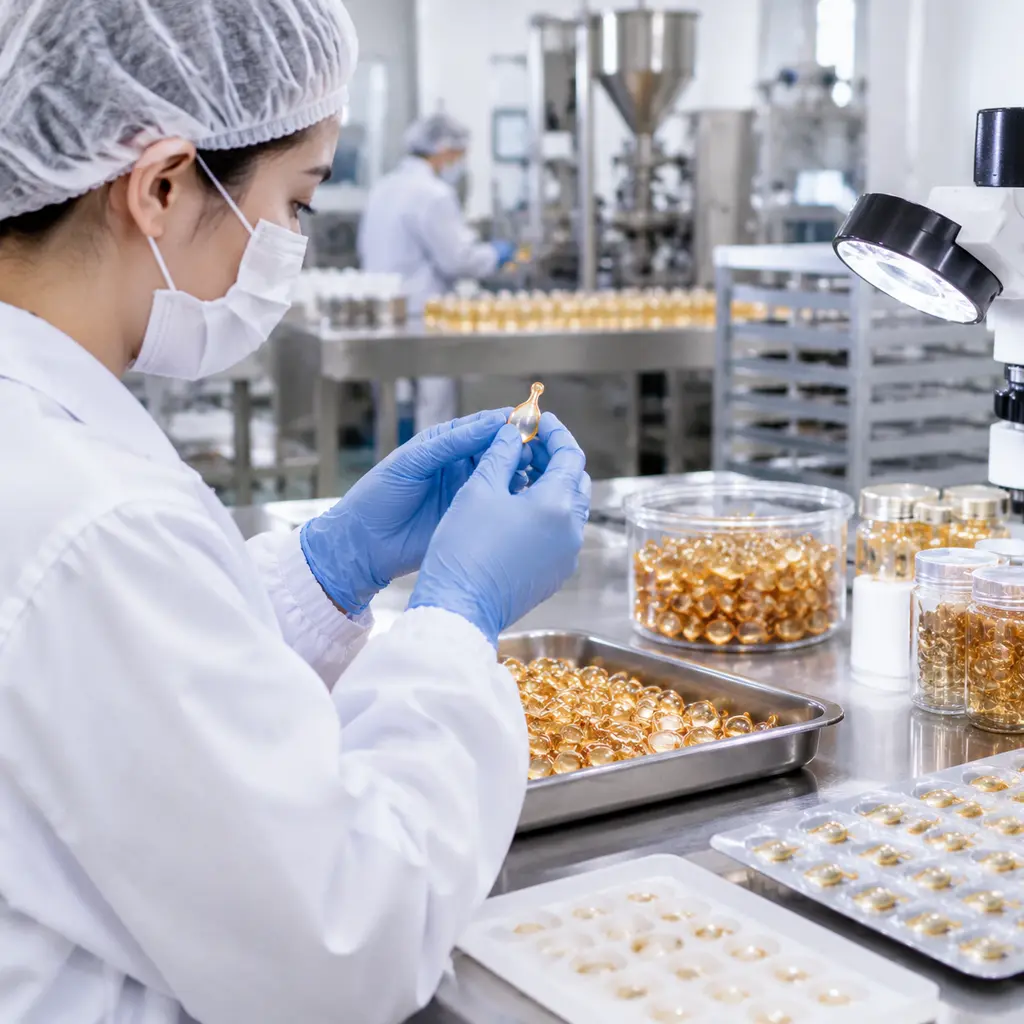
    Serum capsule sample and packaging specification review for an EU private-label RFQ
    Serum capsule sample and packaging specification review for an EU private-label RFQ

    Key Takeaways for Private Label Buyers

    • Source against a specification, not an appearance. Require named shell materials, fill composition boundaries, ingredient documentation, raw-material traceability, and approved alternatives.
    • Evaluate the capsule and formula as one system. Fill viscosity, solvent profile, active concentration, shell plasticization, seam integrity, and oxidation control can alter leakage and shelf performance.
    • Lock packaging assumptions early. A capsule that remains stable in a blister may soften, stick, or oxidize in a repeatedly opened jar.
    • Separate sample acceptance from production approval. Define the tests and documents required before pilot production, scale-up, and shipment release.
    • Make change control contractual. Shell composition, mold, fill weight, antioxidants, fragrance, color, packaging, and critical suppliers should not change without documented buyer approval.
    • Assess continuity as well as capability. Review backup raw materials, duplicate tooling, capacity allocation, business continuity, ESG evidence, and quality escalation procedures.

    Buyer Context

    Serum capsules concentrate several technical dependencies into a small format. In retinol capsules, oxygen exposure, light protection, antioxidant strategy, and fill uniformity can affect active stability. Facial oil and hair oil capsules require control of viscosity, migration, seam strength, and surface residue. Eye serum capsules introduce tighter expectations for dose size and dispensing precision. Cleansing oil capsules may contain surfactant systems that interact differently with the shell than conventional anhydrous oils.

    The issue becomes more complex when a buyer requests vegan shells, custom colors, embossed shapes, or proprietary molds. A plant-derived shell is not a simple substitution for gelatin: its moisture response, sealing behavior, storage tolerance, and compatibility with the fill must be assessed as a complete system. Procurement teams comparing serum capsule products should therefore avoid treating shell claims or visual prototypes as evidence of commercial readiness.

    This discipline matters most when a brand is qualifying replacement capacity after a quality incident or supply interruption, or when an existing factory lacks softgel capability. A credible cosmetic softgel capsule factory should support cross-functional review by procurement, R&D, QA, regulatory, legal, and ESG teams. Evidence should include ISO 22716 scope, audit status, deviation and CAPA controls, labor and environmental records, confidentiality safeguards, and documented production continuity. Sampling is then a controlled qualification stage rather than an isolated development exercise.

    Capsule Formula, Shell, Mold, and Packaging Factors

    Fill Formula and Oxidation Control

    The RFQ should identify the target product type, active range, excluded ingredients, fragrance position, color requirements, and claims territory. Ask whether the fill is anhydrous, what viscosity window the filling equipment requires, and which ingredients could migrate into or weaken the shell. For encapsulated retinol skincare, request the active assay method, overage rationale, antioxidant system, light-management controls, oxygen-management process, and acceptance criteria through shelf life.

    The buyer should also specify whether nitrogen blanketing, low-oxygen transfer, opaque bulk holding, or controlled processing temperatures are required. The sample certificate should report actual fill weight and relevant quality results, not merely nominal values. Confirm that the selected formula belongs to the same manufacturing route proposed for scale-up.

    Shell Material and Capsule Performance

    Require the exact shell composition, including gelling polymer, plasticizers, water content controls, colorants, opacifiers, and processing aids. For vegan capsule shells, request origin statements, allergen status, non-GMO status where relevant, and evidence supporting any vegan claim. Ingredient names must be reconciled with the proposed EU INCI list and safety documentation.

    Shell acceptance should cover seam integrity, deformation, brittleness, tackiness, odor, color consistency, and leakage. Ask the serum capsule supplier to disclose how heat and humidity excursions affect the shell and whether conditioning is required before filling or packing. The buyer should also confirm whether the capsule is intended to twist, tear, cut, or dissolve during use, because opening performance is part of functional quality.

    Vegan capsule shell inspection for seam integrity and leakage risk
    Vegan capsule shell inspection for seam integrity and leakage risk

    Mold Geometry and Fill Weight

    A custom mold affects more than visual differentiation. Shape, neck dimensions, seam area, wall distribution, and cavity volume influence filling tolerance, opening force, leakage risk, tooling maintenance, and line speed. The RFQ should distinguish between an existing mold, a modified standard mold, and exclusive tooling. It should state who owns the mold, where it is stored, how it is identified, and whether duplicate tooling is available for continuity.

    For private label skincare capsules, define nominal fill weight together with permissible variation and the measurement method. A heavier capsule is not automatically a better product; the dose must match the intended application, shell capacity, claims, packaging count, and consumer handling. Ask whether fill-weight adjustments require a new mold, shell change, or stability review.

    Packaging Compatibility, Storage, and Shipment

    Blisters generally provide stronger unit-level isolation from oxygen, moisture, and repeated handling, while jars can improve pack density but expose the remaining capsules whenever opened. Jar evaluations should consider headspace, closure seal, liner, desiccant compatibility, capsule-to-capsule sticking, surface oil, and breakage during distribution. Blister evaluations should cover cavity dimensions, lidding barrier, seal conditions, push-through behavior, and potential capsule deformation.

    The stability plan should test the final formula, shell, and market packaging together under defined long-term, accelerated, heat, humidity, light, and transport conditions appropriate to the product. The buyer should request protocols, interim data, failure criteria, and responsibility for investigations. Useful planning guidance can also be reviewed in this capsule production lead-time and quality checklist and an independent EU private-label compliance checklist.

    Retinol capsule blister and jar packaging compatibility stability review
    Retinol capsule blister and jar packaging compatibility stability review

    Decision Framework Table

    Factor What to Check Why It Matters ODM Buyer Note
    Fill formula Composition boundaries, viscosity window, active assay, antioxidants, prohibited ingredients, and approved substitutes Controls filling behavior, oxidation, claims support, and shell interaction Require written approval before any ingredient or supplier substitution
    Capsule shell Polymer source, plasticizers, colorants, seam quality, moisture response, vegan evidence, and opening method Determines leakage resistance, handling, storage tolerance, and label accuracy Review complete shell composition rather than relying on a general material description
    Fill weight Nominal dose, permitted variation, sampling method, and batch records Affects dose consistency, pack count, cost model, and consumer use Confirm that sample and production acceptance criteria are identical
    Mold and tooling Geometry, ownership, exclusivity, maintenance, replacement lead time, and backup tooling Influences differentiation, seam area, output, and continuity risk Record mold identity and access rights in the quality agreement
    Packaging Blister barrier or jar closure, liner, headspace, desiccant, seal integrity, and distribution resistance Packaging can determine oxidation, sticking, deformation, and leakage outcomes Do not approve bulk capsules independently of the final pack
    Stability and compliance Final-pack studies, specifications, CPSR inputs, PIF documents, claims evidence, CPNP roles, and label review Supports lawful placement on the EU market and defensible release decisions Map every document to an owner, approval gate, and delivery date
    MOQ and sample scope Sample quantity, pilot MOQ, scale-up assumptions, testing inclusions, and resampling triggers Prevents an attractive prototype from masking an unqualified production route Use the same approved formula, shell, mold, and process for pilot and commercial production
    Shipment conditions Temperature exposure, humidity protection, case configuration, pallet pattern, and data logging Protects capsules after factory release and supports root-cause analysis Assign responsibility for excursion review before the first commercial shipment

    A disciplined comparison of cosmetic softgel products should score evidence quality, change-control maturity, and continuity risk alongside formula performance. For oxidation-sensitive formats such as retinol softgel capsules, procurement approval should remain conditional until the final packaging configuration and stability plan have passed cross-functional review.

    ODM Manufacturing Considerations

    Sample approval should be treated as a controlled manufacturing gate rather than a visual preference check. The buyer and supplier should sign a sample confirmation sheet covering capsule appearance, measured viscosity range, capsule-to-capsule mass data, odor, break force, application feel, and the approved primary pack. Retain sealed reference samples from the accepted batch and record the formula version, shell grade, mold code, packaging lot, and production date. This becomes especially important when qualifying a replacement source after a quality incident or sudden capacity interruption at the incumbent manufacturer.

    For fill formula customization, clarify whether development starts from an existing base, a buyer-supplied formula, or a new brief. Ask which ingredients have concentration, solubility, color, fragrance, or shell-contact limitations. Retinol capsules, facial oil capsules, eye serum capsules, cleansing oil capsules, and hair oil capsules can behave differently even when their initial bench appearance is similar. The RFQ should therefore request ingredient documentation, a manufacturing method summary, measurable release specifications, and a change-control process. Buyers can review related formats through the supplier’s capsule technology and retinol capsule resources before finalizing the brief.

    Shell selection should identify animal-derived or vegan status, color system, opacity, plasticizer approach, and known interaction constraints. Mold selection should define the available shape, dimensions, closure style, unit dose, branding feasibility, and whether future production can use the same geometry. Ask for actual samples from the intended mold rather than approving a rendering.

    Packaging should be tested as a complete configuration. Confirm how the capsule behaves against the selected blister cavity, foil, jar, liner, closure, and any internal component. The stability plan should list checkpoints, test conditions, failure criteria, and responsibility for investigating changes in odor, color, tack, break force, or fill appearance. For procurement planning, separate minimum order requirements for development batches, stock-shape capsules, custom colors, printed components, and finished packed goods. Also ask when each minimum becomes financially committed.

    Labeling files should include the ingredient list, formula and finished-product specifications, batch certificate format, safety information where applicable, fragrance allergen data, artwork dimensions, traceability codes, and evidence supporting cosmetic claims. Shipment instructions should state carton configuration, pallet limits, seasonal routing precautions, acceptable dispatch window, and data logger requirements where justified. Production slot planning and documentation timing are discussed further in this capsule production lead-time guide.

    Serum capsule sample confirmation and fill-weight review in a cosmetics laboratory
    Serum capsule sample confirmation and fill-weight review in a cosmetics laboratory

    Common Problems or Failure Cases

    Shell brittleness: Capsules may crack during packing or consumer handling when shell moisture balance, storage environment, or formula-shell interaction moves outside the qualified range. Buyers should request break-force results at multiple study checkpoints, not only at release.

    Sticking and deformation: Capsules can become tacky, flatten, or adhere to neighboring units. This may arise from unsuitable storage, residual surface material, excessive pressure inside a jar, or migration from the fill. Review samples in the intended count and pack orientation.

    Fill separation: A clear oil may develop sediment, haze, color bands, or uneven active distribution. The investigation should distinguish normal temperature-related appearance from irreversible separation. Request photographs, assay or homogeneity data where relevant, and a defined acceptance standard.

    Leakage: Small seal defects can contaminate adjacent capsules and packaging before they are obvious during incoming inspection. An RFQ should ask how the supplier detects weak seals, records defect rates, and handles affected lots.

    Fragrance sensitivity: Fragrance components can alter odor, shell texture, or consumer tolerance over time. The approved fragrance must be evaluated in the actual capsule system rather than inferred from a conventional bottled serum.

    Packaging deformation: A capsule may remain acceptable while a blister cavity, liner, or jar component warps, discolors, or absorbs oil. This is why packaging release should rely on assembled-pack evidence rather than separate component certificates alone.

    Serum capsule shell and packaging compatibility QC inspection
    Serum capsule shell and packaging compatibility QC inspection

    Supplier Checklist

    • Confirm the legal manufacturer, production site, subcontractors, and scope performed at each location.
    • Request the complete shell composition, origin status, colorants, and supporting vegan or Halal evidence when claimed.
    • Obtain the fill viscosity range, ingredient documentation, fill-weight report, and finished-product release specification.
    • Review mold code, dimensions, available unit sizes, maintenance responsibility, and continuity arrangements.
    • Approve an identified reference sample with formula, shell, mold, and packaging version controls.
    • Check protocols and results for shell integrity, leakage, appearance, odor, fill uniformity, and pack interaction.
    • Separate minimum quantities and lead times by development, capsule production, decoration, and final packing stage.
    • Verify label inputs, claim substantiation, batch records, certificate formats, complaint records, and change notification periods.
    • Define carton, pallet, warehouse, dispatch, and seasonal shipping requirements in the purchase specification.
    • Audit information security, environmental records, insurance coverage, and business-continuity controls using objective evidence.

    FAQ

    Can a capsule supplier guarantee that our core formula will never be disclosed?

    No supplier can credibly promise absolute security. Ask for role-based system access, formula-master audit logs, segregated development records, physical access restrictions, confidentiality terms, employee offboarding controls, backup governance, and cyber-incident procedures. The contract should define ownership of buyer-provided formulas, permitted access, subcontractor restrictions, and remedies for unauthorized disclosure.

    How can a buyer verify environmental and carbon reporting?

    Request site-specific utility data, waste and wastewater records, permit status, reporting boundaries, calculation methods, reduction targets, and independent assurance reports. Confirm that evidence covers the factory producing the capsules rather than a parent company’s consolidated figures. This is particularly important when headquarters requires measurable progress toward a global supplier carbon target.

    What insurance evidence is relevant to a major capsule quality complaint?

    Review current product liability and recall policies, territorial scope, exclusions, per-event and aggregate limits, deductibles, and the insured legal entity. Confirm whether coverage applies to the intended sales countries and whether the supplier can fund investigation, withdrawal, destruction, and replacement costs before an insurer resolves the claim.

    Should we approve the laboratory sample or the first production batch?

    Approve both at different stages. The laboratory sample confirms the development direction, while a production-representative batch confirms manufacturability, shell behavior, unit consistency, packaging fit, and release documentation. The agreement should state which approval authorizes component purchasing and commercial scheduling.

    What documents are needed for a vegan capsule claim?

    Ask for the full shell composition, supplier declarations, processing-aid information, cross-contamination controls, and the finished-product claim basis. A marketing statement on a website is not sufficient evidence. If Halal positioning is also planned, confirm certification scope against the JAKIM Halal certification framework.

    What should happen when capsules become brittle or sticky during review?

    Quarantine the affected samples and record storage history, pack type, lot numbers, photographs, and defect frequency. The supplier should compare retained controls, test shell properties, inspect the fill and packaging contact surfaces, and issue a documented root-cause and corrective-action report before further approval.

    References

  • Travel Skincare Capsule Sets Buyer Guide: How to Scope the Product Before Selecting an OEM or ODM

    Travel Skincare Capsule Sets Buyer Guide: How to Scope the Product Before Selecting an OEM or ODM

    Direct Answer

    A travel skincare capsule sets buyer guide should begin with product architecture, not a manufacturer shortlist. Before requesting quotations, define the active system, capsule shell, fill weight, mold format, packaging configuration, storage conditions, target markets, and evidence required for release. This sequence matters because a serum capsule that performs well in a laboratory sample may leak in a blister, oxidize in a jar, or fail transport conditions when the final shell and fill volume are changed.

    For private-label buyers, the preferred supplier is therefore not simply the factory with the shortest sample schedule. It is the ODM partner that can demonstrate control from formula selection through capsule forming, filling, inspection, stability review, labeling documentation, and shipment release. A structured scope also allows procurement, R&D, QA, regulatory, and packaging teams to evaluate the same technical baseline and reduces the risk of re-engineering between approval and mass production.

    Key Takeaways for Private Label Buyers

    • Define the intended use case first: single-dose facial serum, retinol capsule, eye serum, cleansing oil, facial oil, or hair oil.
    • Require written confirmation of shell material, fill viscosity, fill weight tolerance, moisture sensitivity, oxidation controls, and leakage inspection.
    • Test the capsule with the final blister, jar, sachet, or secondary pack; packaging compatibility is part of product performance.
    • Separate sample feasibility from launch readiness by requesting stability, transport, labeling, and batch-release documentation.
    • Confirm whether the selected mold and production line can support the approved shape, color, fill volume, and future regional demand.
    • Evaluate the ODM on audit readiness, change control, business continuity, and documented supplier qualification rather than quotation alone.

    Buyer Context

    Travel sets appear operationally simple because each capsule contains a controlled dose and requires limited consumer handling. For a multinational brand, however, the capsule is a compact primary package with several linked risk points: the formula can interact with the shell, the shell can respond to heat and humidity, and the final pack can create pressure or abrasion during distribution.

    The issue becomes more material when a portfolio includes retinol capsules, facial oil capsules, eye serum capsules, cleansing oil capsules, or hair oil capsules. These formats may differ materially in viscosity, oxidation sensitivity, fragrance load, active compatibility, and fill behavior. A vegan capsule shell may also require a different moisture strategy and sealing assessment from a gelatin-based shell. The commercial objective is not merely to create a visually consistent series; it is to ensure that every SKU remains within its approved quality profile throughout storage and shipment.

    Supplier selection often becomes urgent after a quality incident, an unexpected capacity interruption, or a portfolio expansion into a capsule format that the incumbent supplier cannot support. Those events create pressure to qualify an alternative quickly. The correct response is not to bypass technical definition. A pre-agreed scope enables parallel evaluation by procurement, formulation, QA, regulatory, and ESG teams while preserving traceability and governance.

    For regulatory planning, ingredient naming and market acceptability should be reviewed against applicable requirements, including the European Commission’s CosIng ingredient database. Market sizing and consumer format assumptions can be cross-checked against Mintel global beauty market reports, but market data should not substitute for formula, pack, or stability evidence.

    Capsule Formula, Shell, Mold, and Packaging Factors

    Formula and fill behavior

    Start with the actual fill system rather than the marketing name. A water-light serum, an anhydrous facial oil, and a cleansing oil can require different filling controls. Document viscosity range, color, fragrance, active concentration, oxidation sensitivity, and compatibility with the proposed shell. Retinol systems, for example, require particular attention to light and oxygen exposure, while botanical oils may require rancidity monitoring and suitable headspace control.

    Fill weight should be specified as a target with an agreed tolerance, not as an approximate visual volume. The ODM should explain how in-process weighing is performed, how out-of-specification units are segregated, and how fill variation affects consumer dosing, regulatory labeling, and pack count. Ask for representative samples from the beginning, middle, and end of a filling run where the program moves beyond feasibility work.

    Shell material and mold selection

    Shell material affects elasticity, sealing, moisture transmission, appearance, and aging behavior. If the brief requires vegan capsules, the supplier should identify the shell composition, provide relevant technical documentation, and explain storage controls. The buyer should also understand whether colorants, opacifiers, or pearl effects are integral to the shell or applied through a secondary process.

    Custom softgel molds should be assessed against the intended fill weight, opening geometry, wall thickness, seam visibility, and consumer handling. A distinctive shape may improve shelf recognition but increase tooling complexity, inspection requirements, or packaging constraints. Request mold drawings, approved dimensions, pilot samples, and a clear ownership statement for tooling before technical approval.

    Packaging compatibility and storage

    Blister and jar systems should be tested with finished capsules, not empty shells. Review cavity dimensions, seal pressure, foil or film contact, abrasion during packing, headspace, and extraction force. A facial oil capsule that passes a bench test may still mark the blister or soften the seal after exposure to heat and humidity. A jar format may require an insert, desiccant strategy, or orientation control to reduce capsule contact and leakage risk.

    Stability planning should cover the formula, shell, and final pack together. The protocol should define storage conditions, inspection intervals, appearance, odor, fill weight, leakage, seal integrity, oxidation indicators, and active assay where relevant. Shipment conditions should be stated in the quality agreement, including temperature exposure limits, humidity sensitivity, pallet protection, and disposition rules after a transport excursion. The FDA OTC monograph 21 CFR 358 for first-aid antiseptics and depilatories may be relevant to certain regulated claims, but buyers must confirm the classification and claims pathway for each market rather than assuming that a cosmetic capsule has OTC status.

    Packaging decisions should be recorded before the final quotation. The capsule packaging options guide can support an initial packaging discussion, while the supplier must still validate the selected configuration with the actual formula, shell, and shipping profile. Related technical comparisons may include serum capsules manufacturer capability, serum capsule products, retinol capsules, and the broader skincare capsules OEM model.

    Serum capsule shell inspection and fill consistency review in a cosmetic manufacturing laboratory
    Serum capsule shell inspection and fill consistency review in a cosmetic manufacturing laboratory

    Decision Framework Table

    Factor What to Check Why It Matters ODM Buyer Note
    Formula Viscosity, active compatibility, oxidation sensitivity, fragrance, and fill behavior Determines dosing consistency, leakage exposure, and stability workload Approve a technical formula brief before sample comparison
    Shell Material, moisture behavior, elasticity, seam, color, and vegan documentation Influences protection, appearance, aging, and market claims Request shell specifications and retained reference samples
    Fill weight Target weight, tolerance, in-process checks, and rejected-unit controls Supports consumer dosing, label accuracy, and batch release Review weighing records during pilot production
    Mold Shape, dimensions, wall profile, tooling ownership, and inspection method Links brand design to manufacturability and packaging fit Approve drawings before tooling and confirm change control
    Packaging Blister or jar fit, sealing, abrasion, extraction, headspace, and secondary protection Controls leakage, handling damage, and shipment performance Test with finished capsules and final pack materials
    Quality evidence Stability plan, transport conditions, labeling documents, and batch records Enables regulatory review and consistent global release decisions Make documentation a quotation requirement, not a post-award request

    Fill-weight sampling for retinol and facial oil capsules during OEM quality control
    Fill-weight sampling for retinol and facial oil capsules during OEM quality control

    Blister and jar packaging compatibility review for serum capsules
    Blister and jar packaging compatibility review for serum capsules

    Before issuing an RFQ, consolidate the approved formula brief, shell requirement, mold concept, fill-weight range, packaging drawings, storage profile, target markets, sample quantity, pilot scope, and required compliance documents. A supplier that can answer these questions with controlled records is materially easier to qualify, scale, and govern than one that provides only a finished sample and a production estimate.

    ODM Manufacturing Considerations

    Before approving an ODM serum capsule set, require a documented sample-confirmation process rather than evaluating only a finished appearance. The approved sample should identify the serum or facial oil formula, capsule shell material, nominal fill weight, capsule dimensions, color, fragrance level, closure or sealing method, and packaging format. Retain a reference sample from the same approval batch so later production can be compared against a known standard.

    Formula customization should be assessed through fill behavior as well as consumer positioning. A retinol capsule may need protection from oxygen and light, while an eye serum capsule may require a lower-viscosity fill for controlled dispensing. Facial oil and cleansing oil capsules can behave differently from water-based serum fills because oils may soften or interact with some shell materials. Ask the manufacturer to document viscosity range, density, compatible ingredients, fragrance concentration, and any ingredients that can affect shell integrity.

    Shell selection should cover gelatin and documented vegan alternatives where appropriate. Request the shell composition, plasticizer information, colorant status, allergen statement, and storage limitations. For custom capsule shapes or distinctive series packaging, confirm whether the mold is existing, modified, or newly produced. The buyer should know who owns the mold, how it is maintained, what dimensional tolerances apply, and whether a mold change requires a new approval cycle.

    Packaging compatibility needs to be confirmed with filled capsules, not empty shells. Review blister cavities, lidding materials, jar interiors, inserts, and closure torque under expected transport conditions. A capsule that looks stable in a laboratory tray may stick to a blister film, deform against a tight jar insert, or lose presentation quality when exposed to heat. Packaging samples should be checked after storage and shipment simulation, with attention to capsule movement, surface contact, odor transfer, and seal integrity.

    Stability review should reflect the intended market and shipment route. Ask for a written test plan covering appearance, odor, fill separation, leakage, shell hardness, weight variation, and package condition at defined intervals. If the product contains retinol, highly unsaturated facial oils, or fragrance, request an oxidation-control rationale and suitable light and oxygen protection. The manufacturer should also state what happens when a result falls outside specification.

    MOQ should be separated into development samples, pilot production, packaging minimums, and commercial production. A supplier may accept a small formula sample run but require a larger purchase for custom molds, printed blisters, or specialized jars. Obtain a line-item quotation that distinguishes formulation work, mold charges, testing, packaging components, labeling review, and freight preparation.

    Labeling documentation should include the full ingredient declaration in the required nomenclature, net contents, batch or lot coding method, shelf-life or period-after-opening basis where applicable, storage statement, warning language, country-of-origin information, and packaging artwork requirements. The European Commission CosIng ingredient database can help buyers cross-check ingredient names, but it does not replace a market-specific regulatory review.

    Finally, define shipment conditions before the purchase order. State acceptable temperature exposure, carton orientation, pallet configuration, humidity protection, data-logger expectations, and procedures for damaged cartons or temperature excursions. These details are especially important for capsule sets shipped through multiple climates.

    Technician reviewing filled serum capsule samples for blister and jar packaging compatibility
    Technician reviewing filled serum capsule samples for blister and jar packaging compatibility

    Common Problems or Failure Cases

    Shell brittleness: Capsules can become fragile when moisture balance is poorly controlled or when storage conditions fall outside the shell specification. Cracks may appear during filling, cartoning, or transit. Verify shell moisture targets, handling limits, and retained-sample results.

    Sticking or shell deformation: Capsules may adhere to one another, blister film, or jar surfaces when residual moisture, heat, pressure, or incompatible packaging materials are involved. Review the contact materials and inspect filled units after conditioning rather than relying on empty-capsule trials.

    Fill separation: A serum or oil blend may show visible layers, sediment, cloudiness, or changes in dispensing behavior. Confirm whether the formula is intended to be homogeneous, identify the required mixing process, and establish an acceptance standard for appearance after storage.

    Leakage: Leakage can result from weak seams, excessive fill volume, incompatible ingredients, rough handling, or a shell that has softened. Test units in their final package and examine both the capsule and the surrounding cavity or jar after conditioning and transport simulation.

    Fragrance sensitivity: Fragrance materials and essential oils can alter shell odor, softness, or surface appearance. Screen the fragrance concentration against the shell and package, then review odor transfer after storage. A fragrance-free control can help identify whether the problem is formula-related.

    Packaging deformation: Blisters may warp, lids may loosen, and jars or inserts may deform under heat. Confirm package material specifications, sealing parameters, carton protection, and maximum shipment exposure. Cosmetic appearance matters because even a usable capsule set may be rejected by distributors if the package arrives distorted.

    Supplier Checklist

    • Obtain the approved formula specification, viscosity range, fill weight, density, and ingredient compatibility statement.
    • Verify shell material, shell composition, colorants, allergen information, storage limits, and vegan documentation when applicable.
    • Confirm whether the mold is standard, modified, or custom, and document ownership, maintenance, tolerances, and change control.
    • Review filled-capsule samples in the intended blister, jar, or other final package.
    • Define acceptance criteria for leakage, sticking, deformation, odor, separation, shell appearance, and fill-weight variation.
    • Request a stability plan covering heat, humidity, light, oxidation, and shipment conditions relevant to the destination market.
    • Separate MOQ and lead-time requirements for formula samples, molds, packaging components, pilot production, and commercial orders.
    • Check ingredient declarations, batch coding, storage language, warnings, artwork review, and market-specific labeling support.
    • Ask how strategic customers are allocated during raw-material shortages, including approved alternatives, safety stock, and escalation procedures.
    • Review information-security controls, restricted formula access, electronic permissions, physical segregation, confidentiality agreements, and audit records.
    • Request environmental records, wastewater permits, emissions data, and third-party audit access where the brand requires supply-chain traceability.
    • Confirm shipment packaging, temperature limits, data logging, insurance responsibilities, claims procedures, and retained-sample policy.

    FAQ

    Can an OEM or ODM factory guarantee that our core formula will never be leaked?

    No supplier can credibly promise absolute secrecy. A buyer should require role-based system access, formula version control, restricted production records, physical separation of sensitive materials, employee confidentiality obligations, and documented incident response. Ask whether customer files are stored in a segregated environment and whether access logs can be reviewed during an audit.

    How can a buyer secure supply priority during a global raw-material shortage?

    Put allocation rules into the supply agreement instead of relying on informal assurances. Define reserved capacity, approved substitute materials, minimum safety-stock levels, forecast requirements, and escalation contacts. Ask how the supplier ranks strategic accounts and how a material change would be approved before it affects a retinol, eye serum, or facial oil capsule.

    What environmental evidence should an international skincare buyer request?

    Request current wastewater permits, treatment records, emissions or energy data, waste-disposal records, and any independent audit reports relevant to the site. The records should identify the facility and reporting period so they can be traced during a customer or third-party review. Do not treat a general sustainability statement as a substitute for site-level evidence.

    What should be included in capsule sample approval?

    Approve the filled capsule and its final package together. Record formula version, shell material, size, fill weight, color, fragrance, dimensions, package components, storage conditions, and visual standards. Keep signed reference samples and define which changes require renewed approval.

    How should MOQ be compared between competing suppliers?

    Compare the complete project scope, not only the capsule quantity. Include formula development, custom mold work, testing, printed packaging minimums, component wastage, labeling review, and shipment preparation. A supplier with a smaller initial capsule quantity may still require larger packaging orders or separate testing charges.

    What worker-welfare checks are relevant to a capsule skincare factory?

    Request recent social-compliance audit results, age-verification procedures, wage and timekeeping records, grievance channels, and corrective-action reports. Where possible, use an independent audit and check whether findings were closed with evidence. Responsible labor controls should cover production, filling, packaging, warehouse, and temporary workers.

    References

    Quality control inspection of serum capsules and packaging during stability review
    Quality control inspection of serum capsules and packaging during stability review

  • Retail and Distributor Capsule Readiness: How Channel and Market Choice Change the Project Brief

    Retail and Distributor Capsule Readiness: How Channel and Market Choice Change the Project Brief

    Direct Answer

    For retail and distributor launch decisions, the project brief for private label serum capsules must be built around channel requirements before the formula is finalized. Retail buyers typically require consistent fill weight, documented stability, compliant labeling, packaging integrity, and repeatable supply. Distributors add further constraints: shipment conditions, shelf-life at handover, regional documentation, carton configuration, and the ability to replenish multiple markets without changing the product specification. The correct brief therefore connects the capsule formula, shell material, mold, filling process, primary package, testing plan, and market documentation as one controlled system. A serum that performs well in a founder sample may still fail a retail gate if the shell softens in humidity, the fill oxidizes, the blister is incompatible, or the labeling file is incomplete. Channel choice changes the technical risk profile, not merely the sales forecast.

    Key Takeaways for Private Label Buyers

    • Define the first channel and destination markets before selecting the active system, because retail and distributor requirements can change labeling, stability, and shipment conditions.
    • Approve the shell and fill as a matched formulation system. Capsule material, viscosity, fill weight, and sealing performance should be verified together.
    • Specify whether the project requires a standard mold or a custom softgel mold. Custom geometry can strengthen brand recognition but increases tooling, validation, and replacement considerations.
    • Test the capsule in its final blister, jar, or sachet configuration. Packaging compatibility is a product-performance issue, not a late-stage artwork decision.
    • Require a documented sampling plan covering appearance, fill weight, leakage, oxidation control, microbial quality where applicable, and stability under relevant heat and humidity conditions.
    • For global retail, treat documentation, change control, supply continuity, and audit readiness as launch gates. They should not be reconstructed after purchase orders are issued.

    Buyer Context

    Retail and distributor capsule readiness matters because the same cosmetic product moves through different risk environments after manufacturing. A retail chain may hold inventory in regional warehouses, expose units to repeated handling, and require a defined remaining shelf-life at delivery. A distributor may consolidate orders across markets, manage long transit routes, or request packaging and labeling variants. These conditions affect a retinol capsule, facial oil capsule, eye serum capsule, cleansing oil capsule, or hair oil capsule differently depending on its fill chemistry and shell construction.

    For a mature brand, the procurement question is rarely whether a capsule can be produced once. The question is whether it can be produced repeatedly, released with complete records, and replenished without formulation re-engineering. This becomes material when an incumbent supplier experiences a quality incident, an audit identifies labor or GMP deficiencies, or a group-wide ESG policy requires more transparent environmental and workforce records. A new supplier may also be required when an established plant lacks capsule capability or cannot support a vegan shell, a specialty mold, or a coordinated regional launch.

    The project brief should therefore identify the commercial route, forecasted demand profile, destination markets, required claims, target shelf life, and packaging format at the beginning. A capsule skincare collection intended for professional distribution may need a different pack count and shipper configuration from a direct-to-consumer subscription. Neither route should be treated as a generic capsule order.

    Clinical and safety substantiation should also match the product category and intended claims. Buyers can use the Journal of Cosmetic Dermatology as a reference point for cosmetic evidence standards, while periorbital products should be reviewed against the American Academy of Ophthalmology periorbital safety guidance. For exfoliating or blemish-oriented formulas, the CIR final report on salicylic acid in cosmetics can inform ingredient and claim review. These sources do not replace market-specific legal review, but they help procurement, R&D, and regulatory teams establish a disciplined evidence baseline.

    For buyers evaluating a retinol serum capsule, the brief should specify oxidation control, light exposure limits, package protection, and the conditions under which the active is measured. For an eye serum, the package, dispensing behavior, and user handling deserve equal attention to the fill formula. A serum capsules manufacturer should be able to show how these requirements are translated into batch records and release criteria.

    Private label skincare capsules also require a clear decision on whether the buyer is using an existing formulation or commissioning a custom formulation. An existing base can shorten sampling, but the buyer must confirm compatibility with the selected shell, scent profile, label claims, and destination-market restrictions. A custom route may provide stronger differentiation, yet it expands stability, compatibility, and change-control obligations.

    Shell selection is a strategic decision. Gelatin shells may offer established processing behavior, while vegan capsule shells may support brand positioning and specific market requirements. The decision should be based on moisture behavior, mechanical strength, sealing performance, aging response, and compatibility with the fill, not on a front-label statement alone. The supplier should identify the shell specification, source controls, colorants or opacifiers, and relevant technical documentation.

    Fill viscosity affects dosing accuracy, encapsulation speed, leakage risk, and the consumer experience when the capsule is opened or applied. A thin facial oil may require different handling from a thicker serum or an anhydrous retinol system. The brief should state the target fill weight and allowable variation, then connect those parameters to capsule dimensions and mold selection. A custom softgel mold can improve differentiation, but unusual geometry may reduce filling efficiency, increase tooling complexity, or create more demanding package-clearance requirements.

    Packaging compatibility must be assessed with the finished capsule rather than an empty shell. Blisters can provide unit separation and protection from handling, while jars may improve presentation but introduce repeated air, light, and humidity exposure after opening. The buyer should verify contact materials, cavity dimensions, headspace, closure performance, desiccant requirements where relevant, and the risk of capsules sticking together. A cosmetic softgel product intended for distributor shipment should also be reviewed in its final carton and transport configuration.

    Stability testing should reflect the destination markets and the actual package. The program should examine appearance, shell integrity, fill weight, odor or color change, active-marker retention where appropriate, leakage, and oxidation indicators. Heat and humidity exposure should be selected using the intended storage and distribution conditions, with transport simulation considered where the route is long or climate-variable. Shipment conditions, pallet configuration, lot traceability, and temperature excursions should be documented before commercial release. These records are particularly important for a private label retinol capsule or any formula whose performance is sensitive to light or oxygen.

    At the manufacturing level, the buyer should confirm that the pilot sample and the commercial batch use the same process logic, equipment family, and quality controls. The supplier should define sample scope, minimum production quantity, mold ownership, approved raw-material substitutions, deviation handling, and change-notification procedures. A cosmetic softgel capsule factory should also explain how restricted access, batch records, formula confidentiality, and backup supply are managed. For strategic buyers, the audit package should extend beyond product quality to include ESG records, worker standards, environmental controls, insurance coverage, and business-continuity planning.

    Decision Framework Table

    Factor What to Check Why It Matters ODM Buyer Note
    Shell material Gelatin or vegan specification, moisture behavior, seal strength, aging response Controls leakage, brittleness, appearance, and market positioning Approve shell and fill together through retained samples and aging review
    Fill system Viscosity, oxidation sensitivity, fragrance, active compatibility, target fill weight Affects dose consistency, encapsulation performance, and shelf stability Request formulation records and a defined fill-weight tolerance
    Mold and format Standard or custom geometry, tooling ownership, cavity dimensions Changes differentiation, production efficiency, and package fit Confirm replacement timing and compatibility with the selected pack
    Primary packaging Blister or jar, light and oxygen barrier, closure, contact materials Protects the capsule during storage, shipment, and consumer use Run compatibility and transport checks on the final commercial pack
    Quality and launch Stability, release testing, labeling file, traceability, shipment conditions Determines whether multiple markets can receive consistent product Make documentation and change control contractual launch gates

    Serum capsule products should be evaluated through this framework before commercial quotations are compared. The relevant comparison is not unit price alone; it is the supplier’s ability to hold specification, document evidence, protect intellectual property, and maintain delivery under channel pressure. For a distributor or multinational retailer, the next supplier review should request the shell technical file, formulation and fill-weight specification, mold data, packaging compatibility results, stability protocol, sample and MOQ scope, labeling documents, audit records, and shipment controls in one indexed package.

    Serum capsule shell inspection during cosmetic softgel manufacturing quality control
    Serum capsule shell inspection during cosmetic softgel manufacturing quality control

    Fill-weight sampling of serum capsules in a cosmetic formulation laboratory
    Fill-weight sampling of serum capsules in a cosmetic formulation laboratory

    Retinol and facial oil capsule packaging compatibility review in blister and jar formats
    Retinol and facial oil capsule packaging compatibility review in blister and jar formats

    ODM Manufacturing Considerations

    For a retail skincare capsules private label market launch, ODM decisions should be confirmed through physical samples and documented acceptance criteria. A formula that looks suitable in a small vial may behave differently after filling into a softgel capsule, especially when the fill contains volatile fragrance, botanical oil, retinol, or a high proportion of low-viscosity emollients. The buyer should receive a retained sample set covering the capsule shell, fill formula, package format, and intended storage condition.

    Start with sample confirmation. Record the capsule dimensions, appearance, color, odor, surface feel, fill weight, seal condition, and release behavior. The approved sample should identify the formula version, shell material, mold reference, nominal dose, tolerance range, and packaging configuration. Any later change to an oil, antioxidant, fragrance, plasticizer, or shell colorant should trigger written review rather than being treated as a minor substitution.

    Fill formula customization needs to balance consumer experience with manufacturing behavior. A facial oil capsule may require a different viscosity range from a retinol serum capsule, while an eye serum capsule needs careful control of fragrance and sensory residue because it is used near the periorbital area. Buyers should request viscosity data at the expected filling temperature, fill-weight records, ingredient specifications, allergen information where applicable, and a clear explanation of how separation is monitored.

    Capsule shell selection is a separate technical decision. Gelatin and vegan shell systems can differ in moisture response, elasticity, seal performance, color uniformity, and compatibility with the fill. A vegan capsule shell may suit a brand positioning requirement, but it still needs assessment under the planned heat, humidity, and shipment conditions. The buyer should verify shell composition, permitted colorants, residual moisture controls, storage requirements, and the conditions under which brittleness or tackiness may develop.

    Mold selection affects capsule size, visual proportion, fill weight, and line efficiency. A custom mold may be appropriate when a retail set requires a distinctive dose format, but the project brief should state the minimum practical fill, dimensional tolerance, tooling ownership, maintenance responsibility, and approval process for mold changes. Review capsule technology and mold options as part of the technical brief, then require the supplier to connect the selected mold to the actual formula and package.

    Packaging compatibility should be tested with the final blister, jar, tray, or insert rather than a generic substitute. Check whether capsules stick to a blister cavity, deform under a lid, migrate oil onto printed surfaces, or experience excess headspace in a jar. For retinol capsules, review light and oxygen exposure through the complete package. For facial oil capsules, inspect contact with inner coatings and seals. For shipment conditions, define temperature range, humidity exposure, carton orientation, pallet configuration, and acceptable arrival appearance.

    Stability review should match the channel. A distributor may need longer warehouse exposure and multiple transport legs, while a direct-to-consumer brand may prioritize parcel handling and small-unit presentation. Request a written stability protocol, test intervals, acceptance criteria, retained samples, and a process for investigating an out-of-specification result. The supplier should also provide MOQ by formula, shell, mold, and package, together with sample charges, lead-time assumptions, labeling documents, ingredient declarations, batch records, certificate packages, and shipment documentation.

    For labeling, confirm the legal product name, INCI list, net contents, batch or lot coding, period-after-opening information where required, storage language, country-of-origin statement, and market-specific claims review. The OEM/ODM service brief should distinguish documents available at sampling from documents issued only after commercial production.

    OEM ODM technician reviewing serum capsule samples, capsule mold, fill weight, and retail packaging compatibility
    OEM ODM technician reviewing serum capsule samples, capsule mold, fill weight, and retail packaging compatibility

    Common Problems or Failure Cases

    Capsule shell brittleness often appears after exposure to dry warehouse air, extended transit, or unsuitable storage. The symptom may be hairline cracking near the seal or breakage during counting and packing. The investigation should compare shell moisture, storage history, handling force, and the approved packaging configuration. Increasing shell thickness without understanding the moisture balance can create new problems, including slower dissolution of the shell and a different consumer opening experience.

    Sticking and shell deformation can occur when capsules are packed before the surface is adequately conditioned, when residual moisture is high, or when the package creates pressure against the shell. In a blister, a tight cavity can flatten one side of the capsule. In a jar, capsules may adhere to one another or to the liner. A line trial should measure dwell time, surface condition, cavity clearance, closure torque, and the appearance of capsules after simulated transport.

    Fill separation is a common risk in oil-based serum capsules containing incompatible ingredients, suspended powders, or poorly dispersed pigments. Separation may change the first and last doses in a package and can produce inconsistent color or texture. The supplier should document mixing order, agitation limits, hold time before filling, and the visual or analytical method used to release the bulk.

    Leakage may result from an unsuitable fill viscosity, excessive filling pressure, weak seals, shell damage, or interaction between the fill and shell. Testing should include seal inspection, pressure or compression checks appropriate to the format, orientation changes, and shipment simulation. A capsule that passes a stationary warehouse test may still leak when exposed to vibration and temperature cycling.

    Fragrance sensitivity deserves special attention in eye serum capsules and leave-on face products. A fragrance that is acceptable in a jar may feel too strong when concentrated in a single dose. Request a fragrance-free comparator, sensory review under intended use, and a documented fragrance specification. Do not rely on a supplier statement that the fragrance is generally tolerated; assess the finished capsule and its actual dose.

    Packaging deformation can arise from thin blister webs, unsuitable sealing temperatures, excessive carton compression, or a jar closure that presses into the capsule bed. The corrective action may involve a different cavity depth, tray material, liner, or secondary carton rather than a formula change. Every change should be checked against fill weight, leakage, appearance, and storage performance.

    Supplier Checklist

    • Confirm the shell material, shell dimensions, moisture controls, colorants, seal method, and vegan or gelatin documentation.
    • Request formula specifications covering viscosity, fill weight, ingredient traceability, fragrance, oxidation-control approach, and separation monitoring.
    • Match the mold to the target dose, capsule size, visual design, tolerances, tooling ownership, and maintenance plan.
    • Test the finished capsule in the actual blister, jar, tray, insert, liner, and closure selected for launch.
    • Define stability conditions for heat, humidity, light, orientation, vibration, and expected warehouse or parcel exposure.
    • Obtain MOQ and sample scope by formula, shell, mold, and package, with clear assumptions for pilot and commercial orders.
    • Review INCI, batch coding, ingredient declarations, storage language, claims support, certificates, and market-specific labeling documents.
    • Confirm shipment conditions, carton strength, pallet pattern, temperature controls, insurance responsibilities, and arrival inspection criteria.
    • Audit information access, formulation file permissions, change-control records, worker welfare controls, environmental records, and complaint escalation procedures.

    FAQ

    Can the supplier protect our core capsule formula from unauthorized access?

    Ask for a practical information-security description covering system permissions, physical access to formulation records, file transfer controls, backups, subcontractor access, and confidentiality obligations. No supplier should promise absolute secrecy without explaining controls. The agreement should identify ownership of the formula, permitted use, retention periods, and the process for reporting a suspected disclosure.

    How can a buyer assess supply priority during a global raw-material shortage?

    Request a documented allocation policy, approved alternative materials, safety-stock assumptions, supplier concentration data, and escalation contacts. Strategic supply should be supported by forecasts, reserved capacity terms, and change approval rules. A second-source plan for shell materials, oils, antioxidants, and package components can reduce the risk of a launch interruption.

    Are environmental records and emissions data available for independent review?

    Ask for current permits, wastewater and waste-handling records, energy or emissions data, inspection results, and the scope of any third-party audit. Verify whether records cover the facility actually making the capsules and whether corrective actions have closure evidence. A general sustainability statement is not a substitute for site-specific documentation.

    What should we do if a capsule shipment arrives with leakage or deformation?

    Quarantine the affected lot, photograph cartons and inner packs, record temperature and transit history, and compare affected units with retained samples. The supplier should provide a complaint procedure with response timing, investigation ownership, sampling rules, and disposition options. Do not release visibly compromised capsules while the root cause remains unresolved.

    How should a buyer evaluate worker welfare at the manufacturing site?

    Request the latest social-compliance audit, age-verification policy, payroll and working-hour controls, grievance process, and corrective-action records. Confirm whether temporary labor and packaging subcontractors are included. A responsible supplier should be able to explain how it prevents child labor, wage deductions, coercive overtime, and retaliation against workers who report concerns.

    Which evidence is most important before approving a retail capsule launch?

    Prioritize the signed sample specification, finished-package compatibility results, fill-weight data, stability protocol, labeling file, shipment plan, and change-control agreement. These documents connect the consumer-facing product to the manufacturing process and make later quality investigations more manageable.

    References

    For cosmetic dermatology evidence and finished-product assessment context, consult the Journal of Cosmetic Dermatology from Wiley. For safety considerations around products used near the eyes, review the American Academy of Ophthalmology periorbital safety guidance. For ingredient-specific cosmetic safety context involving salicylic acid, see the CIR final report on salicylic acid in cosmetics.

    Quality control inspection of skincare serum capsules in blister packaging after stability and shipment review
    Quality control inspection of skincare serum capsules in blister packaging after stability and shipment review

  • Cosmetic Softgel Quality Control Buyer Guide: Scoping Capsule Review and Batch Release

    Cosmetic Softgel Quality Control Buyer Guide: Scoping Capsule Review and Batch Release

    Direct Answer

    A manufacturer should not be approved for serum-capsule production until the buyer has defined a product-specific quality specification, verified that pilot samples can be reproduced at production scale, and agreed on a documented batch-release protocol. This cosmetic softgel quality control buyer guide recommends evaluating three linked control layers: the serum fill, the capsule shell and sealing process, and the final packaging system. Each layer requires measurable acceptance criteria covering material identity, viscosity, fill weight, seam integrity, leakage, oxidation, microbiology, stability, labeling, and shipment conditions.

    Procurement should also confirm who has release authority, how deviations are investigated, whether retained samples are maintained, and how out-of-specification results are escalated. A visually acceptable capsule is not sufficient evidence of manufacturing control. Qualification should demonstrate that the same approved formula, shell composition, mold, equipment route, and packaging configuration will be used from sampling through commercial production at the selected cosmetic softgel capsule factory.

    Key Takeaways for Private Label Buyers

    • Convert expectations into specifications: Define approved ranges for fill weight, viscosity, appearance, odor, shell dimensions, seam condition, leakage, disintegration behavior, and packaging performance before placing a production order.
    • Review fill and shell as one system: Oils, solvents, fragrances, antioxidants, and actives can migrate into or weaken gelatin and vegan capsule shells. Compatibility must be tested on the exact commercial composition.
    • Lock the scale-up route: Confirm that laboratory samples and mass production use equivalent raw materials, processing parameters, molds, and filling technology. Any change should require documented buyer approval.
    • Qualify the final package: Jar, blister, sachet, liner, desiccant, and closure decisions can materially change moisture exposure, abrasion, oxidation, and leakage risk.
    • Make release evidence contractual: Require batch records, certificates of analysis, deviation status, packaging inspection results, and shipment authorization before release.
    • Treat stability as a decision gate: Accelerated data can support development decisions, but it should be reviewed alongside real-time, transport, heat, humidity, and light exposure appropriate to the target market.

    Serum capsule shell inspection during cosmetic quality control
    Serum capsule shell inspection during cosmetic quality control

    Buyer Context

    Serum capsules create a distinctive control challenge because the primary package is also part of the delivery system. The shell must protect the fill during manufacturing, storage, and distribution, then open consistently during consumer use. A change in oil polarity, fragrance concentration, antioxidant package, shell plasticizer, or storage humidity can alter that balance.

    The risk profile also varies by product. Retinol capsules require disciplined control of oxygen, light, raw-material age, and packaging transmission. Facial oil and hair oil capsules may be sensitive to rancidity, fragrance interaction, or oil migration. Eye serum capsules require close control of dose uniformity and dispensing performance. Cleansing oil capsules must be evaluated for surfactant interaction with the shell. Vegan shells require verification of the actual polymer, gelling system, plasticizer, colorant, and supplier specification rather than reliance on a generic vegan declaration.

    These controls become strategically important when a brand is adding alternate capacity after a quality incident, an unexpected production interruption, or a serious third-party audit finding. Under those conditions, accelerated onboarding can increase rather than reduce enterprise exposure if the replacement supplier cannot reproduce the approved development model. Buyers comparing serum capsule products should therefore assess process equivalence, data integrity, change control, and continuity planning—not sample appearance alone.

    Regulatory review should run in parallel. Ingredient nomenclature and restrictions can be checked against the European Commission’s CosIng ingredient database. Claims and supporting evidence should be evaluated against the FTC’s advertising substantiation guidelines. If an exfoliating capsule uses alpha hydroxy acids, the development team should also consider the FDA consumer advisory on alpha hydroxy acids.

    Capsule Formula, Shell, Mold, and Packaging Factors

    Fill Formula and Oxidation Control

    The approved formula should identify each raw material, grade, supplier status, target concentration, and relevant impurity or oxidation limit. For anhydrous serum capsules, buyers should review peroxide development, odor drift, color change, active assay, and headspace controls. Manufacturing questions should cover raw-material storage, protected transfer, mixing temperature, oxygen exposure, nitrogen use where justified, and maximum bulk hold time.

    Fill viscosity should be measured at a defined temperature because it affects pumping, dosing accuracy, seam contamination, and net content. A development sample produced by manual filling may not predict performance on a continuous line. Buyers should compare pilot and production capability through the same documented route used for the proposed private label serum capsules.

    Shell Material and Fill Weight

    The bill of materials should disclose whether the shell uses gelatin or a plant-derived polymer system, together with plasticizers, water content controls, opacifiers, and colorants. For vegan capsule shells, procurement should request origin declarations and evidence supporting market-specific claims. Shell-fill compatibility should be assessed for softening, brittleness, tackiness, swelling, deformation, discoloration, and leakage over time.

    Fill weight specifications should include the nominal target, permitted variation, sampling method, test frequency, and rules for disposition. Average weight alone can conceal individual underfilled or overfilled capsules. The buyer should understand how the manufacturer detects drift, challenges the filling equipment, segregates suspect output, and reconciles rejected capsules across relevant skincare capsule product lines.

    Mold, Seal, and Consumer Performance

    Custom mold approval should cover capsule geometry, cavity dimensions, seam profile, neck design, twist-off behavior, logo detail, and compatibility with filling and drying equipment. A shape that performs well in a blister may abrade or deform in a jar. Buyer evaluation should include seam inspection, opening consistency, dose evacuation, sharp-edge risk, and residue left inside the shell.

    For retinol serum capsules, decorative transparency should be weighed against light protection. Mold ownership, maintenance responsibility, replacement lead time, storage security, and restrictions on reuse should be documented to protect continuity and intellectual property.

    Fill-weight sampling for cosmetic softgel serum capsules
    Fill-weight sampling for cosmetic softgel serum capsules

    Packaging, Stability, and Shipment Conditions

    Packaging qualification must use the final capsule, count, container, closure, liner, blister film, foil, label, and secondary carton. Jar testing should assess capsule-to-capsule abrasion, headspace, closure performance, moisture ingress, and repeated opening. Blister review should address cavity fit, seal integrity, barrier properties, and capsule damage during forming or sealing.

    Stability plans should reflect expected distribution climates and include real-time and accelerated storage, heat and humidity exposure, light where relevant, and transport simulation. Buyers can use an independent cosmetic stability testing guide to structure questions, but the protocol must remain product-specific. Shipment approval should define temperature protection, pallet configuration, transit monitoring where warranted, quarantine on arrival, and handling of excursions for imported cosmetic softgel products.

    Decision Framework Table

    Factor What to Check Why It Matters ODM Buyer Note
    Fill formula Raw-material identity, viscosity method, active assay, oxidation indicators, bulk hold time, and mixing controls Fill behavior determines dosing accuracy, chemical stability, and shell compatibility Freeze the commercial formula and require approval for supplier, grade, or process changes
    Capsule shell Polymer source, plasticizer, moisture specification, colorants, origin documents, and compatibility results Shell composition influences brittleness, tackiness, sealing, and storage performance Require complete documentation for gelatin and vegan claims from the proposed serum capsules manufacturer
    Fill weight Target, tolerance, sampling plan, in-process frequency, equipment calibration, and rejection rules Weight variation affects consumer dose, label accuracy, and batch uniformity Review individual-unit data rather than relying only on batch averages
    Mold and seam Dimensions, cavity condition, seam profile, opening performance, ownership, and maintenance records Mold condition directly affects leakage, appearance, and consumer use Approve production-tool samples, not only laboratory prototypes
    Packaging Jar or blister barrier, liner, closure, cavity fit, abrasion, seal integrity, and label adhesion The final package controls moisture, oxygen, light, and physical damage Test the complete market-ready configuration and intended capsule count
    Stability Real-time, accelerated, heat, humidity, light, freeze-thaw where relevant, and transport exposure Different failure modes may emerge under storage and distribution stress Predefine acceptance criteria and investigation rules before testing begins
    Sampling and MOQ scope Sample quantity, pilot equipment, commercial line equivalence, material lots, and scale-up changes Nonrepresentative samples can conceal production-stage risk Require traceability from approved sample through the first commercial batch
    Batch release Certificate of analysis, batch record review, leakage and microbiology results, deviations, retain samples, and packaging inspection Release governance prevents undocumented exceptions from entering distribution Assign named quality authorities and prohibit shipment before written release
    Labeling and shipment INCI list, claim support, lot coding, shelf-life basis, carton marks, temperature controls, and excursion procedure Documentation and logistics failures can block launch or trigger market action Align destination requirements before artwork approval and production booking

    Serum capsule jar and blister packaging compatibility review
    Serum capsule jar and blister packaging compatibility review

    ODM Manufacturing Considerations

    An ODM project should move through documented approval gates rather than treating the first attractive capsule sample as production approval. Start with a sample brief covering the intended market, capsule format, formula positioning, target pack, application area, opening experience, appearance, and acceptable sensory profile. Once a sample is accepted, identify it as the signed reference sample and connect it to a controlled specification. Retain matching samples on both the buyer and supplier sides so later production can be compared against the same reference.

    Formula customization requires more than selecting headline actives. Confirm the complete ingredient list, ingredient functions, antioxidant strategy, fragrance or essential-oil content, color expectations, and any market-specific restrictions. The supplier should explain whether requested actives can remain uniform in the selected anhydrous or oil-based system and whether the formula can be processed consistently at production scale. Buyers exploring formats such as retinol capsules, eye serum capsules, or hair oil capsules should approve claims and application instructions separately for each route.

    Shell selection should be tied to the fill and intended distribution environment. Ask the ODM team to identify the shell composition, color system, plasticizing approach, declared animal-origin status, and supporting supplier documents. If a plant-based route is required, review the available vegan skincare capsule platform rather than assuming that a conventional shell can be exchanged without redevelopment.

    Mold selection affects dose presentation, opening behavior, line efficiency, tooling ownership, and replacement planning. An existing mold may shorten development, while a custom shape can require additional engineering and approval stages. The commercial agreement should state who owns the tooling, where it is stored, whether it may be used for another customer, and what happens if the project changes factories.

    Packaging should be evaluated as a production system, not only as artwork. Run a line trial using the intended capsule count, jar or blister materials, closures, inserts, coding area, and secondary cartons. Confirm that automated handling does not mark, compress, or miscount capsules. The stability review plan should cover the approved formula-shell-pack combination and define observation points, acceptance criteria, responsibilities, and the process for evaluating an out-of-specification result.

    MOQ discussions should separate finished-product quantity from minimum commitments for decorated shells, printed components, custom molds, specialty ingredients, and cartons. Ask whether pilot output uses the same equipment route as commercial production and whether unused custom materials create future liability. A realistic schedule should include formula work, component procurement, sample approval, documentation review, production-slot reservation, release, and transit rather than quoting production days alone.

    Before artwork release, obtain the proposed INCI declaration, net-content basis, responsible-party details, country-of-origin information where applicable, lot-code format, shelf-life wording, cautions, and substantiation files for objective claims. The European Commission’s CosIng ingredient database is a useful ingredient-screening resource, but it does not replace a market-specific compliance review. Shipment instructions should define case configuration, pallet protection, approved freight route, data required from logistics providers, and the decision process if cargo conditions differ from the agreed plan.

    Serum capsule sample confirmation and packaging compatibility review in a cosmetic laboratory
    Serum capsule sample confirmation and packaging compatibility review in a cosmetic laboratory

    Common Problems or Failure Cases

    Shell brittleness: Capsules may crack during counting, packing, or consumer handling when the shell and fill system are poorly balanced or when finished goods encounter unsuitable conditions. Investigate whether failures are concentrated by lot, pack position, storage history, or handling step.

    Sticking or deformation: Capsules that clump, flatten, or transfer color can disrupt packing equipment and make the consumer dose difficult to remove. Compare bulk samples with packed samples to determine whether the primary container, compression, or distribution environment contributes to the change.

    Fill separation: Visible settling, clouding, or uneven color can indicate that the formula is not remaining uniform. The manufacturer should establish how bulk material is held and mixed before encapsulation and demonstrate that capsules taken at different production stages remain comparable.

    Capsule leakage: Oil on the container wall, localized shell softening, or loss of capsule count may originate during forming, packing, or distribution. Complaint investigations should examine affected and unaffected capsules from the same lot instead of relying only on photographs.

    Fragrance sensitivity: A fragranced facial oil capsule may smell acceptable during development but become overpowering after enclosed storage. Fragrance materials can also influence shell behavior, so changes should trigger compatibility reassessment rather than an informal sensory approval.

    Packaging deformation: A jar, closure, tray, or blister can warp or lose fit during warehousing or transit. The corrective action may involve the packaging component, case loading, or logistics route rather than changing the capsule itself.

    QC inspection of serum capsules for shell deformation and fill consistency
    QC inspection of serum capsules for shell deformation and fill consistency

    Supplier Checklist

    • Define the approved sample, specification owner, revision number, retain-sample process, and production comparison method.
    • Request the complete formula review, ingredient traceability expectations, active and fragrance documentation, and market-compliance responsibilities.
    • Verify shell composition, origin declarations, colorants, supplier qualification, and suitability for the selected fill.
    • Record mold identity, cavity or shape approval, tooling ownership, maintenance responsibility, and exclusivity terms.
    • Confirm how dose consistency, appearance, opening performance, and defective capsules are assessed during manufacturing.
    • Require a trial with the intended jar or blister, closure, count, coding method, carton, and packing-line route.
    • Review the stability protocol, complaint investigation procedure, change-control process, deviation handling, and release authority.
    • Break down MOQ and cost commitments for formula, shell decoration, mold, primary pack, printed materials, and unused inventory.
    • Check labeling documents, artwork approval history, claim support, lot coding, and destination-market records.
    • Document production-slot assumptions, shipment configuration, logistics responsibilities, contingency capacity, and notification rules.
    • For groups implementing carbon-neutral supplier targets, request site-specific energy, emissions, waste, and wastewater evidence that can be traced to reporting periods and operating locations.

    FAQ

    Can a manufacturer guarantee that our core formula will never be disclosed?

    No responsible supplier can promise absolute protection. Evaluate role-based system access, separated customer files, physical access controls, confidentiality terms, employee obligations, backup administration, audit logs, and incident-response procedures. Also clarify whether laboratories, ingredient vendors, or subcontractors receive the complete formula.

    How can a strategic buyer secure priority during a major raw-material shortage?

    Ask for a written allocation model, forecast requirements, reserved-material terms, approved alternate sources, safety-stock ownership, and escalation contacts. Priority language is meaningful only when supported by purchasing commitments, inventory records, and a change-approval route for substitute materials.

    How should we evaluate factory labor treatment?

    Review recent independent social-audit evidence, worker-age verification, payroll and time records, grievance channels, recruitment fees, disciplinary practices, and corrective-action closure. Include temporary and agency workers. A staged backup qualification is prudent if an incumbent supplier faces serious audit findings or license risk.

    Should the production sample use final packaging?

    Yes, before commercial release. Early laboratory samples can use development containers, but the confirmation stage should include the intended primary pack and packing process so component interaction and consumer handling can be assessed.

    What happens if the supplier changes an ingredient or shell component?

    The quality agreement should require advance notice, documented rationale, updated specifications, regulatory review, and buyer approval before implementation. Define which changes require new samples or additional testing.

    How early should production capacity be reserved?

    Reserve capacity after the development route, component availability, and approval milestones are understood. Lead time should distinguish material procurement, manufacturing, quality release, and freight. This capsule production lead-time checklist provides additional planning questions.

    References

  • Cosmetic Capsule Documentation Quality Checklist for Global Skincare Buyers

    Cosmetic Capsule Documentation Quality Checklist for Global Skincare Buyers

    Direct Answer

    A cosmetic capsule documentation quality checklist should establish an unbroken evidence chain from approved raw materials through formula compounding, shell formation, encapsulation, packaging, batch release, and shipment. At minimum, buyers should verify the master formula, ingredient specifications, certificates of analysis, shell composition, fill viscosity, target fill weight, mold identification, in-process controls, packaging compatibility, stability results, batch manufacturing records, deviations, and finished-product release criteria.

    The central procurement question is not whether an ODM can provide a document package. It is whether every document is version-controlled, attributable to the supplied batch, and supported by retained samples and auditable production records. This distinction becomes material when qualifying a secondary source after a quality incident, capacity interruption, or category expansion. A supplier offering pilot runs from 1,000 units or a development cycle under 30 days should treat those timelines as commercial commitments, while maintaining the same ISO 22716 controls expected for scaled production.

    QC inspection of serum capsule documentation and retained batch samples
    QC inspection of serum capsule documentation and retained batch samples

    Key Takeaways for Private Label Buyers

    • Sourcing: Approve the fill ingredients and capsule shell as separate material systems, with supplier identity, origin, specification, certificate, and change-control status recorded for each.
    • Formulation: Confirm that fill viscosity, oxidation sensitivity, fragrance load, and ingredient-shell interactions are validated under actual filling conditions rather than inferred from bench samples.
    • Packaging: Test the finished capsules in the intended blister, jar, pouch, or secondary pack. Bulk compatibility data cannot substitute for the final commercial configuration.
    • Testing: Require stability, leakage, fill-weight, appearance, odor, opening performance, and microbial controls tied to defined acceptance criteria and test methods.
    • Launch: Release purchase orders only after formula, mold, artwork, labeling documents, shipment conditions, and deviation responsibilities have named owners and approved versions.

    Buyer Context

    Serum capsules concentrate several interdependent risks into a small unit dose. The fill can remain chemically acceptable while the shell becomes brittle, tacky, stained, or permeable. Conversely, a capsule may look intact while oxygen exposure, fill migration, or dose variability compromises performance. Buyers evaluating a serum capsules manufacturer therefore need more than a finished-product specification. They need traceability across the fill, shell, mold, line, package, and distribution lane.

    The risk profile varies by product. Retinol capsules require disciplined light and oxidation control. Facial oil capsules depend on rancidity management and shell compatibility. Eye serum capsules require exposure-appropriate safety review; procurement and regulatory teams should consult the FDA’s eye-area cosmetic safety framework rather than relying on general facial-use assumptions. Cleansing oil and hair oil capsules may introduce surfactants, fragrances, or mobile oils that affect seam integrity. Vegan capsule shells require verification of the complete shell composition, not merely an animal-free declaration.

    For multinational buyers, documentation also determines how quickly a secondary site can be qualified after an outage or failed audit. The FDA’s regulatory framework for cosmetics clarifies the manufacturer’s responsibilities, while the agency’s cosmetic GMP inspection checklist provides a useful diligence reference. FDA alignment should not be represented as product approval. Similarly, market notification records, safety substantiation, and compliant labels do not replace batch-level manufacturing evidence.

    Initial screening can begin with documented skincare capsule product lines, but qualification should proceed to controlled records, physical samples, and production-site verification.

    Capsule shell inspection for seam quality and leakage risk
    Capsule shell inspection for seam quality and leakage risk

    Capsule Formula, Shell, Mold, and Packaging Factors

    Fill Formula and Processing Window

    The approved formula should identify each ingredient, grade, supplier, percentage, and permissible processing range. Buyers should request evidence that viscosity is measured at a defined process condition because a fill that flows in a laboratory may not meter consistently on the encapsulation line. The ODM should document mixing order, temperature exposure, deaeration, filtration where applicable, hold time, and controls for light- or oxygen-sensitive materials.

    Fill-weight sampling must connect individual measurements to the line, mold, time interval, and batch record. Average weight alone can conceal unit-level variation. For retinol serum capsules, documentation should also identify antioxidant strategy, light protection, headspace management, and assay or other justified stability indicators. If a formula contains salicylic acid, the buyer may use the CIR safety assessment record for salicylic acid in cosmetics as supporting evidence, while still conducting a market-specific safety review.

    Shell System and Mold Control

    Shell records should state the polymer system, plasticizer, colorants, opacifiers, processing aids, and animal-origin status. A vegan claim requires supplier declarations and traceability for the full system. Shell thickness, seam quality, elasticity, moisture response, and opening behavior should have defined acceptance criteria. The manufacturer should also explain how shell aging is monitored during stability testing.

    Custom molds introduce intellectual-property and continuity risks. The technical file should identify mold geometry, cavity references, ownership, approved drawing revision, maintenance history, and replacement arrangements. Buyers reviewing private label serum capsules should confirm that pilot and commercial batches use the same approved geometry or document the comparability assessment.

    Packaging, Storage, and Distribution

    Packaging qualification must use finished capsules from representative production. Blisters can improve unit separation and environmental protection, while jars may create repeated exposure to air, humidity, and handling. The correct choice depends on capsule sensitivity, consumer use, target shelf life, and distribution climate. Desiccants, induction seals, liners, and barrier films should be justified through compatibility and stability evidence rather than selected by convention.

    Protocols should assess leakage, fusion, brittleness, discoloration, odor change, oxidation, fill migration, opening performance, and package integrity under intended storage and shipment conditions. Excursion procedures should define who evaluates exposed stock and what evidence supports disposition. This review should be completed before moving from cosmetic softgel products samples to commercial purchase orders.

    Retinol capsule blister and jar packaging compatibility review
    Retinol capsule blister and jar packaging compatibility review

    Decision Framework Table

    Factor What to Check Why It Matters ODM Buyer Note
    Fill formula Approved composition, ingredient grades, processing limits, oxidation controls, and change history Confirms that the commercial batch matches the reviewed sample Require written approval before substitutions or process changes
    Shell material Complete composition, origin declarations, supplier records, and moisture behavior Shell performance governs leakage, brittleness, and claim support Review vegan and allergen statements against source documents
    Fill weight Target, sampling plan, unit results, measuring equipment, and out-of-specification handling Controls dose consistency and batch reconciliation Request raw sampling records, not only a summary certificate
    Mold Drawing revision, cavity identity, ownership, maintenance, and production-site location Geometry affects fill capacity, sealing, appearance, and supply continuity Define access rights if tooling becomes unavailable
    Packaging Blister or jar compatibility, closure integrity, barrier properties, and artwork version Final packaging can change capsule stability after bulk approval Test the exact market pack and component suppliers
    Stability Protocol, conditions, time points, test methods, results, deviations, and retained samples Supports shelf-life decisions and identifies shell-fill-package interactions Do not accept appearance review as the sole endpoint
    Manufacturing records Material lots, equipment, operators, line clearance, yields, reconciliation, and release signatures Enables investigation, containment, and targeted recall Confirm record-retention and audit-access terms
    Sampling and MOQ Sample scope, pilot quantity, scale-up controls, and comparability plan Prevents undocumented reformulation between sampling and production Evaluate skincare capsules OEM capability against commercial scale, not sample speed alone
    Shipment Storage limits, lane assessment, pallet configuration, excursion evidence, and lot-coded packing list Protects product condition and preserves downstream traceability Align release responsibilities before dispatching the capsule skincare collection

    ODM Manufacturing Considerations

    A cosmetic capsule documentation quality checklist should connect the approved sample to the commercial product. Buyers need more than an attractive prototype: the supplier should define which formula, shell, tooling, process settings, package components, and acceptance criteria constitute the approved specification.

    Sample Confirmation and Formula Customization

    Separate exploratory samples from approval samples. Early samples may compare emollients, fragrance levels, active concentrations, color, capsule feel, or break-open behavior. The final approval sample should have a unique code, dated specification, ingredient list, target fill mass, sensory standard, and retained reference. Any later substitution should require documented buyer approval.

    For customized retinol capsules, facial oils, cleansing oils, or hair oils, confirm whether the fill is homogeneous at rest and after expected production holding time. Define acceptable appearance, odor, flow behavior, and active-assay limits where applicable. Fragrance, botanical extracts, and certain oils can interact with the shell, so customization cannot be evaluated only as a bulk serum.

    Shell, Mold, and Package Decisions

    Ask the ODM to identify the shell material, plasticizing system, colorants, opacifiers, and ingredient-origin documentation. For plant-based capsule options, confirm the exact polymer system rather than relying only on a vegan statement. Shell flexibility, seam strength, dissolution behavior, and moisture response should be specified.

    Mold selection affects capsule volume, seam geometry, appearance, break-open experience, and packaging density. Buyers should approve a tooling drawing or controlled physical master and verify who owns the mold. The agreement should also state how tooling changes, repairs, and replacement molds are authorized.

    Package evaluation should use production-representative capsules and the intended blister film, lidding material, jar, liner, insert, or closure. Confirm capsule count, headspace, movement during transport, seal integrity, and whether package materials transfer odor or cause surface changes. Additional considerations for eye-area formats are covered in the eye serum capsule category.

    Lab review of serum capsule shell condition and final packaging compatibility
    Lab review of serum capsule shell condition and final packaging compatibility

    Stability, Order Quantity, Labels, and Distribution

    A stability plan should cover the finished capsule inside its final market package, not merely the bulk fill. Agree on time points, temperatures, humidity conditions, light exposure where relevant, and failure criteria for odor, color, fill separation, shell texture, deformation, and seal performance. Accelerated data can support decisions, but it does not guarantee every real-world shelf-life outcome.

    Minimum order quantity should be separated into formula, capsule color, mold, printing, and packaging minimums. Confirm what is included in the sampling scope and whether a pilot quantity uses the same equipment and materials planned for commercial production.

    The document set may include the INCI list, raw-material declarations, finished-product specification, test reports, artwork approval, lot-code format, net-contents statement, warnings, claims support, and rationale for expiry or period-after-opening labeling. Shipment instructions should define carton configuration, pallet protection, permitted route conditions, seasonal controls, and the response process when a temperature or humidity logger exceeds its limit.

    Common Problems or Failure Cases

    Shell Brittleness or Sticking

    Brittle capsules may crack during counting, packing, or consumer handling when the shell loses moisture or has an unsuitable plasticizer balance. Sticking can occur under high humidity, elevated temperature, excessive surface oil, or package compression. Investigate shell composition, conditioning records, storage history, and the package microenvironment rather than treating either issue as cosmetic only.

    Deformation and Leakage

    Capsules can flatten, twist, or develop weak seams when the fill and shell are chemically incompatible or when distribution conditions exceed the qualified range. Leakage may also result from inconsistent sealing, excessive internal fill, damaged tooling, or sharp package features. Buyers should request defect counts by type and evidence that corrective action addresses the cause, not just visual sorting.

    Fill Separation and Fragrance Sensitivity

    A fill that looks uniform immediately after mixing may separate during holding or storage. Suspended powders, incompatible oil blends, and temperature-dependent ingredients are common contributors. Define whether gentle redistribution is acceptable or whether any visible separation is a failure.

    Fragrance can migrate into the shell, alter odor over time, soften the capsule, or become more noticeable after opening a jar. Evaluation should include the scented formula in the final capsule and package. A fragrance-free reference can help distinguish shell odor from formula odor.

    Packaging Deformation

    Thin trays, tight cavities, poor liners, or excessive stacking pressure can deform capsules even when the capsules leave production within specification. Simulated distribution should reflect the actual case count, pallet pattern, and sales channel. Package changes after approval should trigger focused confirmation work.

    Supplier Checklist

    • Sample identity: Is the signed approval sample linked to a formula code, shell code, tooling version, package bill of materials, and dated specification?
    • Formula controls: Are raw-material identity, mixing sequence, hold time, flow range, appearance, odor, and fill-mass tolerances defined?
    • Shell evidence: Are composition, origin statements, color system, moisture range, flexibility criteria, and seam requirements documented?
    • Tooling: Are mold ownership, cavity dimensions, maintenance, version history, and change authorization clear?
    • Finished-product testing: Are weight variation, defects, microbial limits, active assay when relevant, and package seal criteria included?
    • Stability scope: Does testing cover heat, humidity, light sensitivity where applicable, and the final blister or jar configuration?
    • Packaging: Are component specifications, capsule count, closures, liners, coding, artwork, and transport cartons controlled?
    • Order planning: Are minimum quantities and lead-time dependencies separated for formula, shell, mold, and packaging components?
    • Documentation: Can the supplier provide specifications, test reports, ingredient and labeling files, deviation records, and change notifications?
    • Shipping: Are storage limits, route risks, logger use, release responsibilities, and procedures for out-of-range conditions agreed?

    This checklist is particularly important when qualifying a replacement after a current manufacturer experiences a major quality event or when corporate sourcing policy introduces stricter carbon-reporting requirements.

    Quality-control inspection of facial oil capsules and manufacturing documents
    Quality-control inspection of facial oil capsules and manufacturing documents

    FAQ

    How can a buyer confirm that an approval sample will match production?

    Use a signed specification linking the sample code to the formula, shell, mold, target fill mass, color, package components, and acceptance limits. Require written authorization for substitutions or process changes and retain reference samples from both approval and commercial lots.

    Can a factory guarantee that a proprietary capsule formula will never leak?

    No supplier can credibly promise absolute protection. Evaluate role-based system access, separate customer project folders, controlled formula downloads, confidentiality agreements, visitor restrictions, physical access logs, employee training, backup security, and breach-response procedures. Confirm whether production staff receive the full formula or only coded manufacturing instructions.

    What environmental and carbon evidence should an international buyer request?

    Request site permits, waste and wastewater records, energy data, emissions methodology, reporting boundaries, and independent assurance statements where available. Data should identify the facility and reporting period. A certificate alone does not prove that capsule production data can be traced to utility records, waste manifests, or verified calculations.

    How should buyers assess worker welfare at a capsule facility?

    Review age-verification procedures, payroll records, working-hour logs, overtime consent, grievance channels, agency-labor controls, and corrective actions from social audits. Private worker interviews and unannounced assessments provide stronger evidence than management statements alone.

    What documents are especially important for eye serum capsules?

    Confirm ingredient suitability, microbiological criteria, warnings, claims support, and packaging that minimizes contamination during use. Market requirements differ, but the FDA eye-area cosmetic safety framework provides useful safety context for products intended near the eyes.

    Does accelerated stability testing establish the final shelf life?

    It provides early evidence and supports risk-based decisions, but it is not a complete substitute for ongoing real-time data. Shelf-life justification should consider formula behavior, shell condition, final packaging, production history, and expected storage and distribution environments.

    References

  • US Cosmetic Capsule Private Label Technical Requirements: Pre-Development Launch Brief

    US Cosmetic Capsule Private Label Technical Requirements: Pre-Development Launch Brief

    Direct Answer

    US cosmetic capsule private label technical requirements should be settled before formula development begins, not after the first samples arrive. The buyer and ODM must define six linked specifications: fill composition, shell chemistry, target fill weight, mold geometry, final packaging, and expected storage and shipment conditions. A change in any one can invalidate stability work or require new tooling.

    For a US launch, the development brief should also establish cosmetic claims, ingredient restrictions, labeling responsibility, safety substantiation, batch traceability, and MoCRA-related documentation ownership. The critical operating principle is package-level validation: a stable bulk serum does not prove that the filled capsule will resist leakage, oxidation, deformation, or shell aging in its intended blister or jar. Buyers evaluating a serum capsules manufacturer should therefore request an integrated formula-shell-package protocol, with measurable acceptance criteria and documented change control, before authorizing custom molds or market-facing samples.

    Capsule shell inspection for private label serum capsules
    Capsule shell inspection for private label serum capsules

    Key Takeaways for Private Label Buyers

    • Freeze the commercial brief first. Define capsule use area, dose, claims, target markets, pack count, dispensing method, and channel-specific shipment exposure.
    • Evaluate fill and shell as one system. Oil polarity, active concentration, viscosity, water activity, antioxidants, and fragrance can affect shell strength and leakage risk.
    • Approve samples from production-representative inputs. The shell material, color system, fill formula, mold, sealing process, and primary package should match the intended manufacturing configuration.
    • Set fill-weight controls before artwork. Nominal dose, process tolerance, capsule dimensions, declared net contents, and pack count must reconcile.
    • Test the final package. Blister barrier properties, jar headspace, liner, closure torque, desiccant use, and secondary packaging can materially change stability.
    • Make documentation a release gate. Ingredient files, specifications, test methods, batch records, label support, and change-control obligations should be reviewed alongside physical samples.

    Buyer Context

    Serum capsules create a concentrated dependency between formulation science, precision filling, shell manufacturing, and packaging conversion. This is materially different from sourcing a conventional cream in a bottle. Retinol capsules may require strict oxygen and light control; facial oil capsules may challenge the shell through ingredient migration; eye serum capsules require controlled dispensing and a geometry appropriate for small-dose application. Cleansing oil and hair oil capsules may need larger fill volumes and different opening behavior.

    The issue becomes strategic when a brand is qualifying alternate capacity after an incumbent quality event, supply interruption, or adverse factory audit. It is equally relevant when a group enters a capsule format that its established skincare plants cannot manufacture. Reviewing available skincare capsule product lines can clarify feasible format families, but catalogue availability does not replace technical qualification.

    The sourcing team must also separate cosmetic presentation from regulatory status. FDA does not pre-approve ordinary cosmetic labels, and MoCRA obligations do not convert a cosmetic into an approved product. The FDA summary of cosmetics labeling requirements should be used to structure label review, while claim substantiation should be assessed against the actual formula and intended use. Clinical literature from the Journal of Cosmetic Dermatology can inform evidence strategy, but it does not automatically substantiate a finished custom capsule. Market reports such as Mintel global beauty market reports may support category planning, not safety or performance conclusions.

    Fill-weight sampling for retinol serum capsules
    Fill-weight sampling for retinol serum capsules

    Capsule Formula, Shell, Mold, and Packaging Factors

    Fill Formula and Oxidation Control

    Most cosmetic softgels are best suited to anhydrous or tightly controlled low-water fills. The ODM should disclose fill viscosity at the actual processing temperature, not only at room temperature, because pumpability and dosing accuracy can change during production. The review should cover active solubility, sedimentation, crystallization, fragrance compatibility, peroxide development, and migration between fill and shell. For retinol capsules, buyers should request potency and degradation testing in the final package rather than relying solely on raw-material assay data. Antioxidants, chelating strategy, nitrogen management, and light protection should be documented without assuming that any single control is sufficient.

    Shell Material and Aging Behavior

    Gelatin and plant-derived shell systems do not have identical forming, sealing, moisture, and storage behavior. A vegan capsule shell may use modified starch, carrageenan, or another supplier-specific polymer system. Procurement should verify full shell composition, colorants, plasticizers, allergen statements, origin declarations, and suitability for target claims. Shell review must include brittleness under dry conditions, softening under humidity, seam integrity, discoloration, odor transfer, and interaction with the fill. A cosmetic softgel capsule factory should be able to trace both fill and shell lots through the finished batch.

    Fill Weight, Mold, and Consumer Use

    Fill weight is a controlled manufacturing parameter and a commercial dose decision. Buyers should establish nominal weight, acceptable variation, sampling frequency, and the method used to verify net contents. Mold selection determines capsule volume, visual identity, wall distribution, seam length, and opening performance. Custom twist-off shapes require particular attention to neck strength: a tip that is too fragile can break in transit, while an excessively strong tip can frustrate dispensing. Existing tooling within a capsule skincare collection may reduce development complexity, whereas a custom mold requires ownership, maintenance, replacement, and exclusivity terms.

    Packaging and Distribution Compatibility

    Blisters isolate individual capsules and can improve dose protection, but cavity dimensions, sealing temperature, lidding barrier, and capsule orientation must be validated. The packaging decisions summarized in this blister packaging review for skincare capsules should be resolved before sampling. Jars offer a different presentation but expose the remaining capsules whenever opened. Resin choice, liner, closure, headspace, capsule-to-capsule contact, and desiccant strategy can alter shell condition. Buyers comparing private label skincare capsules should request testing in the exact commercial pack, including secondary cartons where light or transit protection depends on them.

    Stability and Shipment Conditions

    A defensible protocol combines real-time storage with justified accelerated and stress conditions. An example screening condition is 40°C and 75% relative humidity, but it is not a universal shelf-life predictor and may be inappropriate for some shell systems. The plan should also address low humidity, thermal cycling, light exposure where relevant, vibration, compression, and simulated distribution heat. Acceptance criteria should cover leakage, deformation, seam failure, odor, color, fill assay, oxidation markers, opening force, and packaging integrity. The approved retinol serum capsules specification should distinguish cosmetic appearance limits from safety- or performance-critical failures.

    Decision Framework Table

    Factor What to Check Why It Matters ODM Buyer Note
    Fill formula Processing viscosity, solubility, oxidation controls, and migration risk Determines dosing consistency and active stability Require the mass-production formula to match the approved sample
    Shell system Polymer source, plasticizer, colorants, moisture behavior, and seam strength Controls leakage, brittleness, and claim eligibility Obtain supplier specifications and lot traceability
    Fill weight Nominal dose, tolerance, test method, and sampling plan Affects performance, net contents, and unit economics Review capability data rather than accepting an unsupported tolerance
    Mold Volume, geometry, opening force, ownership, and maintenance Links consumer use to manufacturing repeatability Document whether tooling is shared, dedicated, or buyer-owned
    Primary package Barrier, cavity or jar fit, liner, closure, and sealing process Can accelerate oxidation or shell aging Do not approve stability based on laboratory containers
    Storage and shipment Heat, humidity, light, vibration, and compression exposure Defines whether released goods survive the distribution route Align test conditions with US warehouse and parcel scenarios
    Compliance file INCI, safety support, specifications, batch records, and label inputs Supports release, traceability, and regulatory response Assign document ownership and update timelines contractually

    A qualified serum capsule supplier should convert this framework into a signed development specification before pilot production. This reduces the risk that a visually acceptable sample conceals an unresolved scale-up, packaging, or compliance dependency.

    Blister and jar packaging compatibility review for serum capsules
    Blister and jar packaging compatibility review for serum capsules

    ODM Manufacturing Considerations

    For US cosmetic capsule private label technical requirements, sample approval should establish the commercial specification rather than merely confirm appearance. The buyer and ODM should record the approved formula revision, capsule dimensions, nominal dose, color, odor, opening performance, pack format, and acceptance criteria. Retain sealed reference units from the approved samples so later pilot and production lots can be compared against the same baseline.

    Sample Confirmation and Formula Customization

    Decide whether the project uses an existing base, a modified base, or a new custom formula. Changes to oils, antioxidants, botanical extracts, fragrance, pigments, or active concentration can alter flow during encapsulation and affect shell performance over time. Ask the labs to report the formulation revision and ingredient list for every sample round. A turnkey program still requires written change control so an ingredient substitution cannot enter production without buyer approval.

    Evaluate the serum at the conditions used for filling, not only at room temperature. Confirm that the contents remain uniform, deliver the intended sensory profile on the face or hair, and dispense cleanly from the opened capsule. For retinol capsules, document light and oxygen precautions throughout bulk holding, encapsulation, and packing. Product claims should remain cosmetic and should be supported by suitable evidence.

    Shell, Mold, and Dose Decisions

    Select conventional or plant-derived shell systems according to positioning, formula compatibility, storage behavior, and market documentation. A vegan claim should be supported by ingredient-origin records rather than inferred from appearance. Buyers can review additional background on vegan skincare capsules and capsule technology.

    Mold selection should balance brand distinction with manufacturability and user handling. Confirm the body shape, tail geometry, cavity output, tooling ownership, maintenance responsibility, and whether replacement tooling can reproduce the approved dimensions. The stated dose should be verified through weight records across the run, with limits for individual units and lot averages. Review available capsule mold options before artwork and package cavities are finalized.

    Packaging, Stability, MOQ, and Shipment

    Test capsules in the intended blister or jar, including liners, closures, trays, and secondary cartons. Package evaluation should cover warm and humid storage, vibration, stacking pressure, opening force, and the risk that oils or fragrance components interact with pack materials. The package should protect the capsules while remaining practical for consumer use. Packaging decisions that should be resolved before sampling are summarized in this guide to blister packaging for skincare capsules.

    Ask for a written stability plan that identifies checkpoints, tested attributes, package configuration, and pass criteria. Shipment planning should specify pallet pattern, carton strength, container loading, temperature exposure assumptions, and any seasonal restrictions. MOQ discussions should separate formulation trials, capsule runs, printed components, and finished packed goods because each may have a different minimum.

    Before release, collect the ingredient declaration, specifications, test results, batch records, safety support, country-of-origin details, and artwork approvals. US labels should be reviewed against the FDA summary of cosmetics labeling requirements, including identity, net contents, business information, and ingredient presentation.

    Serum capsule sample confirmation and fill-weight review in an ODM laboratory
    Serum capsule sample confirmation and fill-weight review in an ODM laboratory

    Common Problems or Failure Cases

    • Shell brittleness: Capsules crack during packing or consumer opening. Investigate shell conditioning, moisture loss, pack barrier performance, and storage exposure.
    • Sticking or deformation: Units adhere in a jar or lose shape under pressure. Review surface finish, headspace, capsule count, closure seal, and realistic warehouse conditions.
    • Fill separation: Pigments or suspended materials settle, creating visible dose variation. Reassess ingredient solubility, mixing controls, hold time, and whether the formula is suitable for capsule delivery.
    • Leakage: Oil appears around seams, tails, or inside the pack. Check incoming shell dimensions, encapsulation settings, handling damage, and the interaction between the fill and shell system.
    • Fragrance sensitivity: A fragrance may discolor the serum, weaken the shell, or produce odor drift. Compare fragranced and fragrance-free samples in the final package before approval.

    • Packaging deformation: Blister cavities, trays, or jars change shape during storage or freight. Review material grade, wall thickness, sealing conditions, carton compression, and transport route.

    A failure should generate a documented investigation with affected lot boundaries, retained-sample findings, corrective actions, and effectiveness checks. Reworking or repacking capsules without a validated procedure can conceal rather than resolve the underlying issue.

    QC inspection of facial oil capsules for shell and packaging defects
    QC inspection of facial oil capsules for shell and packaging defects

    Supplier Checklist

    • Identify shell composition, ingredient origin, colorants, and supporting vegan or allergen statements.
    • Confirm formula revision, encapsulation rheology, nominal dose, weight limits, and in-process testing frequency.
    • Review mold ownership, dimensional specifications, opening performance, maintenance, and replacement capability.
    • Inspect evidence for seam integrity, brittleness, sticking, deformation, separation, and oxidation controls.
    • Test production-representative capsules in the final blister or jar with printed and contact materials.
    • Define sample stages, pilot quantity, MOQ by component, lead times, and rules for material substitutions.
    • Obtain stability protocols, available results, retained-sample policy, release specifications, and deviation procedures.
    • Verify labeling documents, ingredient naming, lot coding, shelf-life basis, traceability, and artwork approval responsibility.
    • Document carton configuration, palletization, freight route, expected climate exposure, and shipment-release checks.
    • Assess confidentiality controls, business continuity, labor due diligence, audit findings, and corrective-action closure.

    FAQ

    How many sample rounds should a custom serum capsule project require?

    There is no universal number. Plan separate reviews for formula direction, shell and mold fit, and final packaged samples. Additional rounds are appropriate when fragrance, pigments, retinol, unusual botanical oils, or custom tooling introduce uncertainty.

    Can a factory guarantee that a core formula will never be disclosed?

    No supplier can credibly promise absolute immunity from human error or cyber incidents. Buyers should instead verify access permissions, network segregation, encrypted file handling, confidentiality agreements, employee controls, visitor restrictions, backup practices, and incident-response procedures. Formula files should be shared only with roles that require access.

    How can a buyer secure supply during global raw-material shortages?

    Priority should be established through contract terms, rolling forecasts, reserved inventory, approved alternate sources, and transparent allocation rules. Ask which materials are single-source, how safety stock is calculated, and whether substitutions require written approval. Strategic status without measurable commitments provides limited protection.

    How should worker-treatment risks be evaluated?

    Review independent social-audit reports, payroll and time records, age-verification procedures, grievance channels, overtime controls, and corrective-action closure. A facility tour alone cannot establish that workers receive lawful wages or that child labor and excessive overtime are absent.

    Who is responsible for US cosmetic labeling?

    The brand placing the product on the US market retains responsibility for compliant labeling, even when the ODM prepares files. Assign responsibility for ingredient nomenclature, net contents, warnings, claims, business details, lot coding, and final artwork signoff in writing.

    Should a new supplier be qualified after an incumbent fails an audit?

    Yes, but urgency should not eliminate technical qualification. Use controlled samples, documented package testing, traceability review, and a limited initial production run. If corporate sourcing now requires carbon reporting or other supplier standards, include those evidence requirements before nomination rather than after launch.

    References

  • Travel Skincare Capsule Sets RFQ Checklist: Questions to Resolve Before Sampling

    Travel Skincare Capsule Sets RFQ Checklist: Questions to Resolve Before Sampling

    Travel Skincare Capsule Sets RFQ Checklist: Questions to Resolve Before Sampling

    Direct Answer

    A travel skincare capsule sets RFQ checklist should resolve eight issues before samples are requested: target use, formula composition, capsule shell material, nominal fill weight, mold geometry, primary packaging, stability conditions, and regulatory market scope. The buyer should also confirm whether the sample will be produced with the same ingredients, tooling, filling process, shell system, and packaging materials intended for commercial production.

    This discipline prevents a technically attractive sample from becoming commercially irrelevant. A retinol capsule that performs well in a laboratory pouch may oxidize in a consumer jar; a vegan shell may soften under high humidity; and a facial oil capsule may leak if fill viscosity, seam integrity, or transport temperature is not controlled. Sampling should therefore function as an evidence-gathering stage within supplier qualification, not as a cosmetic appearance review. The RFQ must define acceptance criteria before either party commits materials, molds, testing capacity, or launch dates.

    Key Takeaways for Private Label Buyers

    • Specify the intended capsule set, usage sequence, target markets, pack count, and channel before discussing sample appearance.
    • Require disclosure of fill composition, viscosity range, oxidation controls, nominal fill weight, and permitted manufacturing tolerance.
    • Select gelatin or vegan shell material based on formula compatibility, humidity exposure, claims, and destination-market requirements.
    • Evaluate jar, blister, sachet, and secondary carton systems against leakage, crushing, oxygen, light, and moisture risks.
    • Approve samples only after defining stability, compatibility, shipment simulation, labeling, and commercial-scale equivalence requirements.

    Travel skincare capsule set samples under procurement and laboratory review
    Travel skincare capsule set samples under procurement and laboratory review

    Buyer Context

    Travel and discovery sets concentrate supply-chain risk because several capsule formats, formulas, colors, or usage occasions may share one retail SKU. A set containing retinol serum capsules, facial oil capsules, and eye serum capsules creates more interfaces than a single-formula product. Each component may have a different shell-to-fill interaction, oxygen sensitivity, fill weight, mold size, storage profile, and labeling requirement. One failed component can prevent release of the complete set.

    The issue becomes material when an incumbent supplier suffers a quality event or sudden capacity interruption. An alternate serum capsules manufacturer cannot be qualified responsibly from a visual match alone. Procurement, R&D, QA, regulatory, and legal teams need a common specification package that distinguishes acceptable equivalence from unauthorized formulation change. Buyers reviewing broader serum capsule products should also confirm whether different capsule types are produced under the same quality system or transferred across subcontractors.

    Category expansion adds another risk. Cleansing oil capsules, hair oil capsules, vegan capsule shells, and custom softgel molds may require equipment or process controls absent from a conventional cream or serum facility. PZIK states that it supports ISO 22716 pilot runs from 1,000 units and formulation-to-shelf programs under 30 days. For a multinational buyer, these are qualification claims to verify through audit records, batch documentation, capacity evidence, and sample-to-production controls rather than substitutes for due diligence. Production-slot and documentation questions should also be aligned with a formal capsule production lead-time review.

    Capsule Formula, Shell, Mold, and Packaging Factors

    Fill Formula and Performance Definition

    Start with the fill, not the capsule color. The RFQ should identify the formula version, INCI list status, restricted ingredients, fragrance position, antioxidant system, and target sensory profile. For anhydrous facial oils, ask how peroxide formation and headspace oxygen are controlled. For retinol serum capsules, require the active form, target concentration, overage rationale, light controls, and assay method. Supporting claims should be separated into ingredient evidence, finished-formula testing, and consumer-facing substantiation. Peer-reviewed literature from the Journal of Cosmetic Dermatology can inform evidence review, but it does not replace testing on the proposed finished cosmetic formula.

    Fill viscosity must be evaluated at defined manufacturing and storage temperatures. A fill that is too mobile may increase seam migration or leakage risk; one that is too viscous may create dosing variation or incomplete filling. Request nominal fill weight, individual-capsule tolerance, sampling plan, test method, and reject handling. Comparison samples from established cosmetic softgel products may help establish sensory expectations, but they should not replace a product-specific specification.

    Shell Material and Aging Risk

    The shell decision affects mechanical strength, dissolution behavior, moisture response, appearance, and formula compatibility. Buyers should ask whether the proposed material is animal-derived gelatin, plant-derived material, or another polymer system; obtain composition and supplier documentation; and confirm colorant, opacifier, plasticizer, and allergen status. For vegan capsule shells, the supplier should provide evidence supporting the claim and disclose any processing aids that could conflict with brand standards.

    Shell testing should cover brittleness, tackiness, deformation, seam failure, color migration, and odor change across expected heat and humidity conditions. Ask whether shell aging data come from the same fill formula and geometry. Data from another oil or mold cannot automatically establish compatibility. A qualified cosmetic softgel capsule factory should be able to trace shell-material lots to finished batches and retain representative samples.

    Capsule shell material and seam integrity inspection for serum capsules
    Capsule shell material and seam integrity inspection for serum capsules

    Mold Geometry and Dose Control

    Standard molds generally reduce tooling uncertainty, while custom molds can support differentiated appearance or use cues. The RFQ should record cavity dimensions, capsule volume, seam location, wall-thickness expectations, tooling ownership, maintenance responsibility, replacement lead time, and restrictions on reuse. Narrow tips and decorative geometries can affect fill consistency, opening behavior, packing efficiency, and breakage during transport.

    Buyers evaluating skincare capsule product lines should request samples from production-intent tooling whenever possible. Hand-finished prototypes may be useful for color or shape review but are insufficient for evaluating fill-weight capability, seam consistency, or line yield. For encapsulated retinol skincare, mold selection must also account for the planned unit dose and protection from unnecessary light exposure.

    Packaging, Storage, and Shipment Conditions

    Primary packaging must be assessed as part of the capsule system. Jars permit convenient set assembly but repeatedly expose capsules to air and humidity. Blisters improve unit separation and protection but add material complexity and may constrain capsule geometry. Sachets can support short discovery programs, although seal integrity and capsule movement require validation. Ask for packaging-material specifications, closure performance, extractables risk assessment where relevant, pack-line challenge results, and compatibility data.

    Define storage labeling, warehouse conditions, pallet configuration, transport temperature assumptions, and release shelf life before stability begins. Testing should include relevant long-term and accelerated conditions, packaging compatibility, leakage review, fill assay where applicable, appearance, odor, shell integrity, and microbiological controls. Regulatory documentation should be mapped by destination market using sources such as the FDA regulatory framework for cosmetics and the Saudi FDA cosmetic registration framework. An experienced skincare capsules OEM should state clearly which documents it generates, which it supports, and which remain the responsible-person or brand owner’s obligation.

    Retinol capsule packaging and facial oil capsule compatibility review
    Retinol capsule packaging and facial oil capsule compatibility review

    Decision Framework Table

    Factor What to Check Why It Matters ODM Buyer Note
    Fill formula INCI, active level, viscosity, antioxidants, assay method, and prohibited materials Determines performance, leakage exposure, oxidation risk, and claim support Freeze the formula version used for sampling and commercial production
    Shell system Material origin, plasticizer, colorants, moisture response, and traceability Controls mechanical integrity, aging behavior, and claim eligibility Require compatibility data for the actual fill and shell combination
    Fill weight Nominal dose, tolerance, sampling plan, calibration, and rejection rules Affects dose consistency, set count, cost modeling, and regulatory accuracy Review batch records and capability data, not only average weight
    Mold Dimensions, volume, seam placement, ownership, maintenance, and lead time Influences opening behavior, packing density, defects, and continuity Separate prototype approval from production-tool qualification
    Packaging Jar, blister, or sachet barrier; closure; pack-line stress; and capsule movement Packaging can cause oxidation, crushing, tackiness, or leakage Test production-intent components from approved material suppliers
    Stability and shipment Conditions, duration, test points, transport exposure, and acceptance criteria Establishes whether the complete product survives storage and distribution Link launch approval to written protocols and deviation handling
    Scale-up equivalence Equipment, process parameters, ingredient sources, and site continuity Prevents sample performance from diverging during mass production Confirm whether the same serum capsule supplier controls pilot and commercial batches

    ODM Manufacturing Considerations

    Sample approval should establish a measurable manufacturing reference, not merely confirm that the capsules look attractive. The RFQ should state the requested capsule count, target fill weight and tolerance, capsule dimensions, color, scent, surface finish, and intended packaging. Ask the supplier to retain an approved sample master and record the formula revision, shell batch, mold, filling settings, and packaging components used. When production begins, the first commercial batch can then be compared against a defined reference rather than a photograph or informal description.

    For fill formula customization, identify whether the project is a facial oil capsule, eye serum capsule, cleansing oil capsule, hair oil capsule, or retinol capsule. Specify prohibited ingredients, target sensory profile, fragrance restrictions, antioxidant system, viscosity range, and regional ingredient constraints. A formula that performs well in a pump bottle may not dispense cleanly from a twist-off capsule. Buyers exploring different formats can review the supplier’s capsule technology capabilities and ask which ingredients have previously been processed in comparable fills.

    Shell selection should cover animal-derived or vegan material, plasticizer system, colorants, opacity, moisture behavior, and compatibility with the serum. Obtain the shell composition and supporting ingredient declarations before approving claims. Mold selection should define capsule volume, opening method, seam location, dose target, and whether an existing mold can meet the brief. A custom shape may strengthen brand differentiation, but it usually adds tooling approval, dimensional checks, and additional scheduling dependencies.

    Packaging must be evaluated as part of the capsule system. Confirm whether the selected jar closure, liner, blister cavity, or sachet structure protects the capsule under the expected heat, moisture, light, and handling conditions. A rigid jar that is visually suitable can still leave excessive headspace or allow capsules to abrade during transportation. Request a stability protocol covering the final formula, shell, and retail pack under elevated and normal storage conditions, with agreed observations for appearance, odor, fill uniformity, shell texture, and package condition.

    The RFQ should also distinguish sample quantity from production MOQ. Ask whether MOQ applies by formula, shell color, mold, pack format, artwork version, or total purchase order. Labeling files should include the INCI list, ingredient specifications, batch coding format, net-content basis, certificate of analysis, applicable safety documentation, and market-specific declarations. For US distribution, responsibilities should be reviewed against the FDA’s regulatory framework for cosmetics. Projects intended for Saudi Arabia should account for the Saudi FDA cosmetic registration framework before artwork is locked.

    Finally, define shipment assumptions: case count, pallet configuration, container loading, temperature limits, transit duration, seasonal routing, and whether data loggers are required. This is particularly important when qualifying a backup supplier after a quality incident, labor disruption, or sudden capacity loss at the incumbent factory.

    Serum capsule packaging compatibility review with jars and blister trays
    Serum capsule packaging compatibility review with jars and blister trays

    Common Problems or Failure Cases

    Shell brittleness: Capsules may crack during packing or consumer handling when the shell loses too much moisture or the material is mismatched with the fill. The investigation should compare shell composition, storage history, packaging barrier, and fracture location rather than treating all breakage as a filling-line issue.

    Sticking and deformation: Capsules can adhere to one another, flatten, or develop surface marks after exposure to heat, pressure, or unsuitable jar conditions. Buyers should request packed transport samples and inspect units from the top, middle, and bottom of the container after simulated distribution.

    Fill separation or seepage: Suspended ingredients, incompatible oils, or an unstable fragrance system can create visible layers, sediment, or localized shell stress. Leakage around the seam may also result from overfilling, poor sealing, or deformation in transit. The supplier should document the affected batch, defect rate, cavity or machine position, and corrective action.

    Fragrance sensitivity: Some aromatic components can migrate into or interact with the shell, changing odor, texture, or appearance. Fragrance-free and fragranced samples should therefore be evaluated separately when scent is optional.

    Packaging deformation: Blister trays, jar liners, or closures may warp or lose fit under high-temperature distribution. Pack approval should use production-intent materials rather than visually similar substitutes. A clear change-control rule is necessary if the packaging vendor, resin, liner, or cavity dimension changes.

    Quality control inspection of serum capsules for shell defects
    Quality control inspection of serum capsules for shell defects

    Supplier Checklist

    Use the following checks to compare serum-capsule OEM and ODM candidates on evidence rather than presentation quality:

    • Confirm the legal manufacturer, production site, relevant cosmetic manufacturing scope, and subcontracted processes.
    • Request the complete fill formula status: stock, modified base, or fully custom.
    • Record fill viscosity limits, target fill weight, tolerance, and the method used to verify dose consistency.
    • Obtain the capsule shell material identity, colorant information, origin statements, and claim support.
    • Confirm available molds, dose capacities, twist-off performance, tooling ownership, and maintenance responsibility.
    • Define acceptable defect limits for cracks, sticking, deformation, empty capsules, seepage, color variation, and fill separation.
    • Evaluate the actual jar, blister, or sachet with the intended capsule count and shipping configuration.
    • Request stability checkpoints, test conditions, acceptance criteria, and reporting responsibility.
    • Break down MOQ by formula, shell, mold, packaging component, and artwork version.
    • Confirm lead times for ingredients, shell material, printed packaging, testing, and production-slot reservation.
    • Review INCI, specifications, analysis certificates, allergen or fragrance records, label support, and export documents.
    • Document shipment temperature expectations, pallet protection, lot traceability, complaint handling, and recall responsibilities.

    FAQ

    Can a supplier guarantee that our core capsule formula will never be disclosed?

    No supplier can credibly promise absolute protection. Ask for role-based system access, separated customer project folders, restricted physical access to formula records, confidentiality obligations for employees and subcontractors, download logs, backup controls, and an incident-response procedure. The agreement should also clarify formula ownership and permitted use.

    How should strategic supply priority be handled during a raw-material shortage?

    Request written allocation rules, safety-stock assumptions, approved alternate sources, forecast commitments, and escalation contacts. Priority should be tied to documented capacity and material reservations rather than a general assurance. Any substitute ingredient or shell material should require written buyer approval.

    What evidence supports labor and carbon-transparency claims?

    Ask for recent independent social-compliance reports, working-hour and wage controls, age-verification procedures, grievance channels, emissions records, and corrective-action closure evidence. If corporate policy requires carbon-neutral core suppliers by 2030, define the reporting boundary, calculation standard, and annual verification expectations in the RFQ.

    Should we approve capsules before the final packaging is ready?

    You may approve preliminary formula and sensory attributes, but final approval should wait for production-intent packaging. Capsule behavior can change with container headspace, closure fit, barrier properties, compression, and shipping exposure.

    What should a capsule sampling quotation include?

    It should identify formula version, shell option, mold, sample quantity, packaging type, testing included, documentation supplied, sampling schedule, revision fees, freight terms, and which costs may carry into production.

    How can we reduce differences between approved samples and production?

    Freeze the formula revision, shell specification, mold, target dose, color standard, packaging bill of materials, and acceptance criteria. Require written approval for ingredient-source, process, tooling, or packaging changes and compare production retention samples with the approved master.

    References

  • Capsule Sample Feedback Process: RFQ Questions to Resolve Before Sampling

    Capsule Sample Feedback Process: RFQ Questions to Resolve Before Sampling

    Direct Answer

    A capsule sample should be requested only after the buyer and ODM have converted the product brief into measurable acceptance criteria. A practical capsule sample feedback process RFQ checklist must define the fill formula, capsule shell material, target fill weight and tolerance, mold geometry, packaging format, storage environment, regulatory market, testing scope, and sample-to-production change controls. Without these inputs, feedback such as ‘too soft,’ ‘leaks in the jar,’ or ‘absorbs too slowly’ cannot be translated into a controlled revision.

    The central sourcing principle is straightforward: evaluate a sample as a preliminary production specification, not as a creative prototype. Each revision should identify the observed defect, test condition, commercial risk, requested adjustment, and acceptance method. Buyers should also require written confirmation that approved ingredients, shell composition, processing parameters, and packaging components will remain unchanged during scale-up unless formal change control is authorized.

    Key Takeaways for Private Label Buyers

    • Freeze the use case first: State whether the capsule is a retinol serum, facial oil, eye serum, cleansing oil, or hair oil, and identify the intended consumer application and dispensing behavior.
    • Separate formula feedback from shell feedback: Fill viscosity, oxidation, fragrance, and skin feel are different workstreams from shell softness, brittleness, seam integrity, and dissolution behavior.
    • Test the intended packaging: Jar, blister, sachet, and bottle systems create different compression, humidity, oxygen, and transport risks.
    • Define measurable approval gates: Record fill weight limits, leakage acceptance, appearance standards, odor expectations, capsule opening performance, and stability protocol before approving a sample.
    • Protect production equivalence: Require ingredient traceability, master formula identification, mold identification, packaging specifications, and documented change approval between sampling and production.
    • Align claims with destination markets: Formula and labeling reviews must reflect the cosmetic classification, ingredient restrictions, and claims boundaries of every launch jurisdiction.

    Buyer Context

    For established brands, sampling is not merely a sensory review. It is an early-stage control point for quality, regulatory exposure, production continuity, and supplier qualification. This becomes particularly important when a current manufacturer has experienced a quality incident, failed a social or quality audit, or can no longer support a scheduled launch. Under those conditions, an accelerated supplier transition can create pressure to approve attractive samples before the underlying manufacturing controls are verified.

    Capsule products create additional interfaces that conventional bottled serum reviews may overlook. The fill must remain compatible with the shell; the shell must survive filling, drying, storage, packing, and shipment; and the finished capsule must perform consistently in the consumer’s hand. A buyer comparing a new serum capsules manufacturer should therefore assess the formulation and the encapsulation system as one product architecture.

    The commercial category also changes the risk profile. Retinol capsules require disciplined oxidation and light-exposure controls. Facial oil capsules may show fragrance migration or shell softening. Eye serum capsules require precise dose perception and controlled dispensing. Cleansing oil capsules may contain surfactant systems that interact with the shell. Hair oil capsules may need a higher fill volume or different opening geometry. Vegan shell requests require confirmation of the polymer system, plasticizer, colorants, moisture response, and ingredient declarations rather than reliance on a marketing description.

    Regulatory classification must be resolved in the RFQ, especially when the same product will enter multiple markets. Buyers can use Australia’s TGA cosmetic-therapeutic boundary guidance, Health Canada’s cosmetic ingredient and notification guidance, and the FDA overview of postmarket cosmetic regulation as jurisdictional starting points. Final classification and claims approval remain the responsible person’s or legal reviewer’s decision.

    Serum capsule shell inspection during an OEM sample quality review
    Serum capsule shell inspection during an OEM sample quality review

    Capsule Formula, Shell, Mold, and Packaging Factors

    Fill Formula and Dose Control

    The RFQ should identify the full ingredient list or approved base, restricted ingredients, target sensory profile, color, odor, viscosity range, active loading, antioxidant system, and permitted processing temperature. For an anhydrous fill, the buyer should ask how water activity, raw-material moisture, and hygroscopic ingredients are controlled. For oxidation-sensitive oils or retinol serum capsules, request details on nitrogen blanketing, light management, bulk hold time, and oxygen-barrier packaging.

    Target fill weight must be stated together with an acceptable manufacturing range and the method used to verify it. A visually consistent capsule can still deliver an inconsistent dose. Sample feedback should distinguish between fill weight, apparent capsule size, residual product after opening, and the amount consumers can practically dispense.

    Shell Material and Mold Geometry

    Shell selection should be based on compatibility data rather than a generic preference for gelatin or vegan materials. Ask the cosmetic softgel capsule factory to disclose the shell-forming polymer, plasticizer system, colorants, opacifiers, and relevant animal-origin or vegan documentation. The review should cover brittleness in dry conditions, tackiness in humidity, seam strength, odor transfer, and interaction with the fill.

    Mold geometry determines more than appearance. Twist-off tips, teardrops, spheres, and elongated capsules differ in opening force, usable dose, line speed, packing density, and breakage exposure. A custom mold also introduces tooling ownership, maintenance, replacement, and exclusivity questions. Buyers reviewing broader skincare capsule product lines should compare established molds before authorizing proprietary tooling.

    Fill-weight sampling and custom capsule mold review in a cosmetics lab
    Fill-weight sampling and custom capsule mold review in a cosmetics lab

    Packaging, Storage, and Stability

    A loose capsule sample sent in a laboratory pouch is not evidence of performance in commercial packaging. The sampling request should include the intended jar, blister, sachet, or bottle, including closure, liner, desiccant, headspace, secondary carton, and shipper configuration. For a jar, repeated opening may increase humidity and oxygen exposure. A blister can improve unit protection but introduces forming-film, lidding, seal-integrity, and capsule-compression considerations.

    Stability protocols should reflect the formula, shell, pack, destination market, and expected distribution route. Common screening conditions may include 25°C at 60% relative humidity and accelerated review at 40°C at 75% relative humidity, but these are not universal pass criteria. The ODM and buyer must agree on duration, pull points, orientation, test methods, and failure thresholds. Relevant observations include leakage, shell deformation, seam failure, color change, odor shift, oxidation, fill-weight loss, opening performance, and packaging interaction.

    Shipment simulation should address summer heat, winter cold, vibration, stacking pressure, and customs delays. The production plan should then link stability approval to reserved capacity and documentation timing. The related guidance on capsule production lead time and quality documentation can support this planning discussion. Buyers comparing private label skincare capsules should require representative production materials rather than hand-selected presentation samples.

    Retinol capsule packaging compatibility and lab stability review
    Retinol capsule packaging compatibility and lab stability review

    Decision Framework Table

    Factor What to Check Why It Matters ODM Buyer Note
    Fill formula Ingredients, viscosity, active loading, antioxidants, odor, color, and processing limits Determines stability, sensory performance, and shell compatibility Require a controlled formula code and revision history
    Shell system Polymer, plasticizer, colorants, moisture behavior, seam integrity, and origin documentation Controls leakage, brittleness, tackiness, and claims support Verify vegan or animal-origin statements with supplier records
    Fill weight Target, tolerance, sampling method, and retained-product behavior Affects dose consistency, cost, and consumer experience Approve measurable limits rather than visual similarity
    Mold Geometry, opening force, tooling ownership, capacity, and replacement plan Influences usability, throughput, packing density, and continuity Document the approved mold identifier
    Packaging Jar or blister compatibility, closure, liner, barrier, compression, and seal integrity Protects the capsule through storage and distribution Test market-ready components, not substitute containers
    Stability Conditions, duration, pull points, methods, and acceptance criteria Identifies oxidation, leakage, deformation, and performance drift Link approval to formula, shell, mold, and pack versions
    Scale-up Equipment, batch records, raw-material sources, change control, and line equivalence Reduces sample-to-production quality regression Confirm that approved samples represent normal production capability
    Launch readiness Label documents, regulatory files, shipment conditions, and production slot Protects launch timing across functions and markets Review alongside the selected capsule skincare collection and supplier quality agreement

    ODM Manufacturing Considerations

    A workable capsule sample feedback process RFQ checklist should define what sample approval means before laboratory work starts. The buyer and ODM should agree on the reference version, evaluation period, number of revision rounds, acceptance criteria, and authorized approvers. Feedback should distinguish mandatory corrections from preferences. Each revision should carry a version number and a short record of changes so that color, odor, application feel, capsule dimensions, and packaging observations are not mixed across sample generations.

    Formula customization begins with the intended capsule type and use area. A retinol capsule may prioritize protection from air and light, while facial oil, eye serum, cleansing oil, and hair oil capsules may require different spreading, absorption, fragrance, and residue profiles. The RFQ should state restricted ingredients, target markets, desired claims, allergen or fragrance limitations, and whether the supplier may substitute ingredients when availability changes. Buyers should also ask whether the final formula will remain exclusive, be derived from a supplier base, or be available to other private-label customers.

    Shell selection must be evaluated together with the fill. Buyers should identify whether animal-derived or vegan capsule shells are acceptable and request the shell composition, colorant information, and supporting declarations. A shell that performs adequately with one facial oil may soften, dry, or discolor when paired with another ingredient system. Mold selection should cover capsule shape, nominal dose, visual finish, tooling ownership, maintenance responsibility, and whether an existing mold can satisfy the brand brief. More complex shapes can increase setup time and create narrower manufacturing tolerances.

    Primary packaging should be included in sample confirmation whenever possible. Jar wall thickness, closure fit, liner selection, headspace, capsule count, and dispensing behavior can influence the delivered product. Decorative coatings and components should be assessed under expected storage and distribution environments. If final components are unavailable, the supplier should identify which sample packaging is provisional and what must be reconfirmed later.

    Stability review should use the approved formula, shell, capsule geometry, and intended pack rather than formula alone. The written plan should define test duration, observations, analytical checks where relevant, acceptance limits, and responsibility for reviewing atypical results. Sample approval should not be represented as evidence that long-term performance has already been established.

    MOQ discussions should separate the minimums for capsule manufacture, formula preparation, custom coloring, printed components, and final assembly. Ask how unused printed packaging or bulk ingredients will be handled after a production run. Labeling files should include an ingredient list using the required naming convention, net-content basis, batch coding area, responsible-party details, directions, warnings, country-of-origin statements where applicable, and claim substantiation records. Market classification must also be checked: Australia’s TGA cosmetic-therapeutic boundary guidance explains why presentation and claims can affect whether a product remains a cosmetic, while Health Canada cosmetic requirements provide market-specific compliance information.

    Shipment terms should identify carton configuration, palletization, acceptable transit range, data-monitoring expectations, route risks, and responsibility when goods are held in uncontrolled warehouses. Production planning should also account for ingredient procurement, component arrival, quality release, and reserved line capacity. This capsule production lead-time checklist provides related questions for scheduling and documentation.

    Technician reviewing numbered serum capsule samples and packaging compatibility
    Technician reviewing numbered serum capsule samples and packaging compatibility

    Common Problems or Failure Cases

    Shell brittleness: Capsules crack during counting, packing, or consumer handling. Possible contributors include shell composition, moisture imbalance, prolonged storage, or an unsuitable pack. Record the affected batch, storage history, breakage rate, and whether cracking occurs before or after shipment.

    Sticking or deformation: Capsules may adhere to one another, flatten, or leave residue on the container. The investigation should compare retained samples, packed samples, and transported samples while reviewing fill-shell interaction and storage exposure. Changing only the jar may hide rather than resolve the underlying cause.

    Fill separation: Pigments, suspended materials, or mixed oils may become nonuniform, producing visible differences between capsules. Buyers should define whether mild settling is acceptable and determine whether dose-to-dose composition remains consistent throughout filling.

    Leakage: Oil on the capsule surface or inside the pack can arise from damage, sealing variation, compression during packing, or compatibility problems. Feedback should state incidence, location, timing, photographs, and packaging lot rather than merely reporting that capsules are oily.

    Fragrance sensitivity: A scent accepted from a fresh laboratory sample may become objectionable after storage or may vary with natural raw-material lots. Establish an odor reference and define whether fragrance-free means no added fragrance rather than no detectable odor.

    Packaging deformation: Jars, liners, or closures may warp, loosen, or develop surface changes during distribution. Confirm whether decoration, plastic resin, closure torque, or external shipping pressure contributed. Packaging corrections should be retested with actual capsules.

    QC inspection of serum capsules and jar packaging after storage
    QC inspection of serum capsules and jar packaging after storage

    Supplier Checklist

    • Define the approved sample code, revision history, approvers, acceptance criteria, and permitted production variances.
    • Confirm formula ownership, ingredient restrictions, target markets, fragrance policy, and substitution approval rules.
    • Obtain shell composition, origin declarations, colorant details, and evidence supporting any vegan positioning.
    • Record capsule shape, dose target, dimensional tolerances, mold ownership, tooling life, and replacement responsibility.
    • Request in-process controls for dose consistency, appearance, breakage, surface oil, and nonconforming-unit removal.
    • Test final jars or unit-dose packs, closures, liners, decoration, count accuracy, and consumer dispensing behavior.
    • Review the stability protocol, specifications, test schedule, deviation handling, and final report format.
    • Separate MOQs and lead times for formula, capsules, tooling, primary packaging, printing, and assembly.
    • Verify ingredient nomenclature, artwork responsibilities, batch coding, claims support, safety assessment, and market notifications.
    • Document carton configuration, transport controls, release criteria, complaint handling, recall readiness, and insurance coverage.

    FAQ

    Can a supplier guarantee that our core formula will never be disclosed?

    No system can credibly promise absolute risk elimination. Ask for role-based server access, segregation of customer files, encryption, backup controls, employee confidentiality obligations, download logs, and incident-response procedures. The agreement should define formula ownership, authorized access, subcontractor restrictions, and remedies for unauthorized disclosure.

    How can a strategic buyer secure supply during a global raw-material shortage?

    Request a written allocation policy, forecast horizon, safety-stock rules, approved alternate sources, and evidence of supplier capacity commitments. Priority language should identify measurable allocation terms rather than relying on account status. Formula substitutions must require written buyer approval.

    What environmental and labor evidence should an international buyer request?

    Ask for current permits, discharge records, energy and carbon data boundaries, corrective-action histories, wage and working-hour records, age-verification controls, and independent audit reports. Buyers facing a group-level carbon-neutrality mandate should also require a dated reduction plan and traceable calculation method.

    What insurance evidence matters for a major capsule quality complaint?

    Review product-liability policy limits, covered territories, exclusions, insurer identity, policy period, recall coverage, and whether the buyer can be named where appropriate. Coverage should reflect expected market exposure; a certificate alone does not prove that a specific event is covered.

    Should we approve production from appearance and skin feel alone?

    No. Approval should also cover dose consistency, shell behavior, pack performance, ingredient documentation, specifications, and the status of ongoing stability work. Clearly label any approval that is conditional on later results.

    What if the current capsule supplier has a serious quality event or sudden capacity interruption?

    Qualify a secondary supplier using the same approved specification and comparison protocol. Do not assume that matching the formula automatically matches shell performance, capsule geometry, processing conditions, or packed-product behavior.

    References

  • Cosmetic Softgel Factory Due Diligence Buyer Guide: Scoping Capsule Evidence Before Supplier Approval

    Cosmetic Softgel Factory Due Diligence Buyer Guide: Scoping Capsule Evidence Before Supplier Approval

    Direct Answer

    A cosmetic softgel factory due diligence buyer guide should treat capsule evidence and factory evidence as two separate approval gates. First, confirm that the fill formula, shell material, seam design, fill weight, mold, and final packaging remain compatible throughout storage and shipment. Second, verify that the manufacturer can reproduce the approved capsule under controlled conditions, with traceable materials, calibrated equipment, documented change control, and credible business-continuity measures.

    Do not approve a serum capsules manufacturer from samples, certificates, or commercial claims alone. Require batch-level records, stability data in the intended package, leakage and oxidation controls, labeling documentation, and objective evidence of ISO 22716 implementation. Claims such as pilot production from 1,000 units or development in under 30 days should be tested against line scheduling, component readiness, validation scope, and compliance lead times. The central question is not whether a supplier can make an attractive capsule. It is whether the supplier can repeatedly deliver the same approved product across markets, seasons, and disruption scenarios.

    Key Takeaways for Private Label Buyers

    • Scope the product before the factory: Freeze the fill, shell, mold, fill-weight specification, package, and target markets before comparing suppliers.
    • Evaluate evidence by SKU: Data for facial oil capsules cannot automatically support retinol, eye serum, cleansing oil, or hair oil capsules.
    • Test the marketed package: Bulk stability does not establish compatibility with a jar, blister, liner, closure, or secondary carton.
    • Audit execution, not certificates: Review production records, deviations, training, calibration, traceability, and corrective actions behind ISO 22716 claims.
    • Link launch timing to unresolved risks: Shell migration, leakage, oxidation, artwork, or shipment qualification can invalidate an accelerated development schedule.
    • Separate approval from allocation: Technical qualification does not prove that capacity, critical materials, or molds will remain available during a supply interruption.

    Serum capsule supplier due diligence with batch records and packaging samples
    Serum capsule supplier due diligence with batch records and packaging samples

    Buyer Context

    Serum capsules concentrate formulation, dosage, primary packaging, and consumer delivery into one unit. This creates dependencies that conventional bottled serum sourcing does not have. A change in oil polarity may soften the shell; an antioxidant adjustment may alter color; a heavier fill may stress the seam; and a different jar liner may change moisture exposure. Buyers reviewing serum capsule products therefore need an integrated specification rather than separate formula and packaging approvals.

    The risk becomes material when an incumbent supplier has experienced a quality event, failed an unannounced social-compliance audit, or cannot meet a new group carbon-disclosure requirement. Supplier transfer is rarely a simple formula handoff. Existing tooling may be proprietary, shell composition may differ by factory, and processing settings may not be portable. A second source must demonstrate equivalence without quietly reformulating the approved sample.

    Category differences also matter. Retinol capsules require disciplined light and oxygen control. Facial oil and hair oil capsules may place different demands on viscosity and dispensing. Eye serum capsules require close attention to dose consistency and opening behavior. Cleansing oil capsules may contain surfactants that interact with shell materials. Vegan shells can support specific positioning, but their humidity response and sealing window must be assessed rather than inferred from gelatin systems.

    Capsule Formula, Shell, Mold, and Packaging Factors

    Fill Formula and Fill Weight

    Begin with a complete quantitative formula, ingredient specifications, supplier identities, allergen statements, and defined acceptance criteria. Softgel fills are commonly anhydrous or predominantly oil-based because water, volatile solvents, surfactants, and certain polar ingredients can migrate into or weaken the shell. The factory should explain how it controls viscosity during filling, prevents entrapped air, limits oxidation, and manages temperature-sensitive actives.

    Fill weight must be stated as a target with justified release limits, not as a nominal marketing dose. Review in-process sampling from the beginning, middle, and end of a run, plus finished-capsule weight variation and reconciliation. A private label serum capsules program should also define acceptable appearance, seam integrity, opening force, residue, odor, and dispensing performance.

    Shell Material and Active Compatibility

    Request the full shell composition, including gelatin or plant-derived polymers, plasticizers, colorants, opacifiers, processing aids, and relevant origin declarations. For vegan shells, determine whether the system uses modified starch, carrageenan, cellulose-derived materials, or another polymer platform. The label claim must align with supplier declarations and market requirements.

    Compatibility testing should assess brittleness, tackiness, deformation, sweating, discoloration, and fill migration. Retinol and other oxidation-sensitive actives need assay or another justified stability-indicating method, not visual inspection alone. For exfoliating actives, safety and use conditions should be reviewed against sources such as the CIR final report on alpha hydroxy acids. Natural or organic positioning should be checked against the COSMOS organic and natural cosmetics standard rather than accepted from an ingredient-level statement.

    Vegan capsule shell material and seam inspection in a skincare laboratory
    Vegan capsule shell material and seam inspection in a skincare laboratory

    Mold, Seam, and Scale-Up Control

    Custom shape is not purely an aesthetic decision. Mold geometry affects shell distribution, seam length, fill capacity, drying behavior, ejection, and the consumer opening experience. Confirm mold ownership, storage, maintenance, replacement lead time, exclusivity, and transfer rights. Compare pilot and commercial equipment to determine whether scale-up changes the die, pump, drying conditions, or inspection method.

    Buyers reviewing cosmetic softgel products should require approved golden samples and measurable specifications. Photographs are useful for alignment but insufficient for release. The control plan should define dimensions, fill weight, leakage criteria, seam appearance, and defect classification.

    Packaging, Storage, and Stability

    Stability must use capsules produced by a representative process and packed in the intended market configuration. Jars require assessment of closure torque, liner interaction, headspace, desiccant strategy, repeated opening, and capsule-to-capsule abrasion. Blisters require cavity fit, seal integrity, barrier performance, opening force, and foil compatibility. Secondary packaging should protect light-sensitive retinol serum capsules without relying on consumer storage behavior to compensate for inadequate protection.

    The protocol should include real-time and justified accelerated conditions, heat and humidity exposure, light where relevant, and transport simulation reflecting actual lanes. Freeze-thaw or low-temperature work may be necessary when distribution conditions create that risk. Evaluate leakage, shell aging, odor, color, active retention, microbial quality where applicable, and dispensing performance. Shipment specifications should define palletization, case orientation, temperature controls, excursion handling, and data-logger responsibilities.

    Regulatory files should be assessed against the FDA’s regulatory framework for cosmetics and current FDA cosmetics guidance documents. Buyers should distinguish facility registration and product-listing obligations from any suggestion of product approval. Comparable discipline is required for ingredient review, claims support, responsible-person files, notification data, and market-specific labeling.

    Retinol capsule packaging compatibility and laboratory stability review
    Retinol capsule packaging compatibility and laboratory stability review

    Decision Framework Table

    Factor What to Check Why It Matters ODM Buyer Note
    Fill formula Quantitative composition, viscosity range, oxygen controls, active specifications Fill chemistry can alter shell strength and stability Prohibit substitutions without written change approval
    Capsule shell Polymer source, plasticizer, colorants, origin and vegan declarations Shell composition affects labeling, humidity response, and leakage Verify declarations to lot-level records
    Fill weight Target, release limits, in-process sampling, reconciliation Dose inconsistency creates performance and compliance risk Review capability data from representative runs
    Mold and seam Ownership, dimensions, seam criteria, maintenance, transfer rights Tooling failure can interrupt supply or prevent dual sourcing Document access before commercialization
    Packaging Jar or blister barrier, liner, seal, closure, opening performance The final package controls moisture, oxygen, light, and damage Approve the complete pack, not bulk capsules
    Stability and shipment Real-time, accelerated, transport, excursion, and final-pack data Laboratory appearance alone does not predict distribution performance Set launch gates for unresolved failure modes
    Factory governance ISO 22716 records, deviations, CAPA, traceability, ESG and continuity evidence Certificates do not establish sustained operational control Audit the actual cosmetic softgel capsule factory and approved subcontractors
    Portfolio transfer SKU-specific evidence across the capsule skincare collection One successful model does not qualify every formula and package Use separate risk files for each commercial SKU

    ODM Manufacturing Considerations

    ODM approval should convert the proposed formula, capsule, and commercial requirements into a controlled product specification. This becomes especially important when a brand is qualifying a backup source after a production interruption or responding to a corporate requirement for lower-carbon strategic suppliers.

    Sample confirmation: Require samples that represent the intended production process rather than hand-filled presentation pieces. The confirmation record should identify the formula version, target fill weight, shell type, capsule shape, color, fragrance, packaging components, and acceptance criteria. Keep signed or digitally approved reference samples under defined storage conditions. If changes are made later, assign a new version instead of relying on informal email approval. Buyers comparing development pathways can review typical serum-capsule OEM and ODM services.

    Fill formula customization: Define whether the project uses a supplier base, a modified base, or a buyer-owned formula. For retinol, facial oil, eye serum, cleansing oil, or hair oil capsules, obtain the full ingredient list, target active concentration, processing tolerances, and restrictions on fragrance, colorants, antioxidants, and origin claims. Ask how the factory evaluates separation, sediment, odor drift, and changes in flow behavior during filling. Development samples should be tested at the proposed fill mass rather than assessed only as bulk serum.

    Shell and mold selection: Confirm the exact polymer or gelatin system, plasticizing system, color package, and any animal-origin or vegan declaration. Different shell systems respond differently to oils, fragrance materials, water traces, and environmental exposure. Review available shapes through documented capsule mold options, then confirm cavity dimensions, nominal capacity, visual tolerances, tooling access, and replacement responsibility. A distinctive shape may improve brand recognition but can increase qualification work and constrain alternate sourcing.

    Packaging compatibility and stability review: Test the selected capsule directly in the intended jar, pouch, or blister materials, including decorative coatings and internal surfaces. The review plan should cover appearance, odor, shell feel, capsule recovery after compression, formula uniformity, and package condition under normal and stressed storage. For sensitive products, such as retinol capsules, define light exposure and headspace requirements in the written protocol.

    MOQ, documents, and shipment: Separate the MOQ for bulk capsules from minimums for custom shells, molds, printed cartons, blisters, and decorated jars. Request a cost model showing which minimum applies at each stage and what happens to unused components. The document package should include the ingredient declaration, certificate of analysis format, batch identification method, country-of-origin support, claim substantiation supplied by the manufacturer, and artwork approval history. Shipping specifications should state case count, pallet pattern, temperature or humidity limitations, maximum transit duration, and the procedure for assessing delayed or exposed shipments.

    Lab stability review of serum capsule samples and packaging
    Lab stability review of serum capsule samples and packaging

    Common Problems or Failure Cases

    Shell brittleness: Capsules may crack during handling when the shell loses flexibility or when the shell formulation is poorly matched to the fill. Compare retained samples across storage conditions and record breakage during dispensing, not merely visual appearance in an unopened package.

    Sticking or deformation: Facial oil capsules can adhere to one another, flatten, or take impressions from adjacent units. Likely contributors include shell composition, residual surface material, excessive compression in the package, and unsuitable heat or humidity exposure. Establish an objective limit for clumping and the force needed to separate capsules.

    Fill separation: A serum may appear uniform in bulk yet develop sediment, layering, or active concentration differences after encapsulation. Investigate mixing time, hold time before filling, ingredient solubility, and temperature history. Sampling should represent different points in the batch and multiple finished packages.

    Leakage and odor transfer: Small amounts of oil around capsules can spread through a jar and make the failure appear larger than the initial defect. Fragrance components may also soften a shell, migrate into package materials, or create odor differences after storage. Fragrance-free and fragranced versions should not be assumed equivalent.

    Packaging deformation: A jar, liner, tray, or blister may warp, haze, stain, or absorb oil even when the capsules remain intact. Cosmetic appearance is part of the acceptance standard because deformation can affect dispensing, labeling, and customer perception.

    Supplier Checklist

    • Identify the legal manufacturer, production address, subcontractors, and processes performed off-site.
    • Match approved sample codes to the formula version, shell specification, mold, fill target, and final package.
    • Verify shell composition, origin declarations, allergen statements, and vegan support where applicable.
    • Review controls for fill flow, mixing, hold time, mass variation, visible defects, and batch reconciliation.
    • Request evidence from heat and humidity storage using the commercial capsule and package configuration.
    • Confirm separate MOQs and lead times for formula, shell color, mold, printed components, and finished goods.
    • Check ingredient naming, warnings, responsible-party details, batch coding, net contents, and market-specific label files.
    • Define deviation approval, change notification, retained-sample access, complaint investigation, and recall responsibilities.
    • Document shipping limits, pallet configuration, data-recording expectations, and disposition rules for excursions.
    • Assess cybersecurity access controls, raw-material continuity, labor practices, environmental records, and commercial insurance evidence.

    A structured request package can be aligned with the supplier’s serum-capsule manufacturing capabilities before commercial quotation and sample approval.

    QC inspection of vegan capsule shells and commercial packaging
    QC inspection of vegan capsule shells and commercial packaging

    FAQ

    Can a factory guarantee that our core formula will never be disclosed?

    No supplier can credibly promise absolute protection. Ask for role-based system access, segregated project folders, formula-code use on production records, download logs, employee confidentiality terms, backup controls, and restrictions on subcontractor access. The quality agreement should define ownership, permitted use, breach notification, and return or destruction of files.

    How can a buyer secure priority during a global raw-material shortage?

    Request a written allocation policy, approved alternate sources, safety-stock rules, forecast commitments, and escalation contacts. Strategic priority should be linked to measurable capacity or inventory reservations rather than a verbal assurance. Pre-approve alternatives only after capsule and formula testing.

    What proves that environmental and carbon records are transparent?

    Review permits, waste and wastewater records, energy data boundaries, emissions calculations, corrective actions, and independent audit reports. Confirm whether records cover the actual capsule site and whether source data can be traced. A headquarters carbon-neutrality target does not by itself demonstrate factory-level performance.

    How should labor-practice risks be checked?

    Use independent social-audit evidence plus payroll, age-verification, working-hour, grievance, and corrective-action records. Interview access and unannounced assessment rights improve confidence. Check whether temporary workers and labor agencies are included, especially during production peaks.

    What insurance evidence matters for a major quality complaint?

    Request current product-liability and recall-policy certificates, covered territories, exclusions, per-event limits, aggregate limits, and the insured legal entity. Have qualified counsel or an insurance adviser assess whether coverage aligns with expected sales and capsule-related recall exposure.

    Which sample should become the commercial approval standard?

    Use a documented pilot sample made with the intended formula, shell system, capsule geometry, fill target, and package. Approval should include measurable criteria and retained units, not only photographs or a subjective assessment of color and feel.

    References

  • Capsule Factory Project Onboarding: Quality, Documentation, and Production Questions for Buyers

    Capsule Factory Project Onboarding: Quality, Documentation, and Production Questions for Buyers

    Capsule Factory Project Onboarding: Quality, Documentation, and Production Questions for Buyers

    Direct Answer

    A capsule factory project onboarding quality checklist should verify four connected controls before commercial approval: the fill formula, capsule shell system, forming and filling process, and final packaging configuration. Buyers should request specifications and batch evidence for ingredient identity, fill viscosity, target fill weight, shell composition, seam integrity, leakage, oxidation control, heat and humidity exposure, packaging compatibility, and shipment conditions. These controls must be evaluated as one system rather than as separate purchasing items.

    For multinational cosmetics organizations, certification alone is insufficient. ISO 22716 alignment should be supported by current audit records, traceable batch documentation, approved change-control procedures, deviation handling, stability protocols, and evidence that the pilot and commercial batches use equivalent materials and process parameters. Regulatory files should also map to destination markets, including the Modernization of Cosmetics Regulation Act (MoCRA) of 2022 and the UK SCPN cosmetic notification protocol.

    Serum capsule shell inspection during factory quality review
    Serum capsule shell inspection during factory quality review

    Key Takeaways for Private Label Buyers

    • Source the capsule as an integrated system. A compliant serum can still fail if the shell, seam, mold geometry, or container creates migration, deformation, or leakage risk.
    • Freeze critical specifications before scale-up. Ingredient grades, shell material, fill-weight tolerance, antioxidant strategy, mold dimensions, and packaging components should be controlled through signed specifications.
    • Test the market-ready pack. Stability work conducted only in bulk containers does not establish blister or jar compatibility under commercial storage and distribution conditions.
    • Require batch-level evidence. Review certificates of analysis, manufacturing records, in-process fill-weight results, leakage inspection, microbiological results, and finished-product release criteria.
    • Separate sample approval from process approval. An attractive laboratory sample does not demonstrate repeatable forming, filling, drying, sorting, packing, or shipment performance.
    • Link launch timing to unresolved risk. Packaging qualification, formula stability, artwork review, and regulatory documentation should proceed in parallel, but no open critical deviation should be carried into launch authorization.

    Buyer Context

    Serum capsules concentrate several technical interfaces into a small unit dose. Retinol capsules may require strict light and oxygen management; facial oil capsules can create shell migration or softening concerns; eye serum capsules require consistent dosing and clean opening performance. Cleansing oil capsules and hair oil capsules introduce different viscosity, fragrance, and surfactant considerations. Vegan capsule shells may also behave differently from conventional gelatin systems during forming, drying, storage, and consumer handling.

    This complexity becomes strategically relevant when a current supplier experiences a serious quality event, labor disruption, audit failure, or abrupt capacity loss. The replacement factory may need to reproduce an established face or hair serum without altering sensory performance, capsule dimensions, or packaging-line efficiency. A rushed transfer without disciplined equivalence criteria can replace a supply interruption with a batch consistency or recall exposure.

    For groups operating under new carbon, labor, or responsible-sourcing requirements, onboarding must extend beyond the product dossier. The factory should connect batch traceability to raw-material suppliers, subcontractors, waste handling, energy records, worker protections, and business-continuity controls. These records should be verifiable through independent audits rather than management presentations alone.

    Product architecture also affects supplier selection. Buyers evaluating standard shapes can begin with established serum capsule products or broader skincare capsule product lines. A custom mold, distinctive twist-off tip, or specialized vegan shell requires additional tooling, dimensional qualification, and packaging trials. An experienced cosmetic softgel capsule factory should explain these dependencies before commercial terms and launch dates are finalized.

    Fill-weight sampling for serum capsules during OEM production
    Fill-weight sampling for serum capsules during OEM production

    Capsule Formula, Shell, Mold, and Packaging Factors

    Fill Formula and Oxidation Control

    The fill formula should be assessed for viscosity, active solubility, suspended particles, water activity, volatility, and compatibility with the shell. Buyers should confirm the exact ingredient grade and supplier for each critical component, not only the INCI declaration. Safety substantiation can reference the Cosmetic Ingredient Review Expert Panel safety assessments, but the finished product still requires market-specific safety evaluation and evidence supporting its intended cosmetic use.

    For retinol serum capsules, the onboarding file should document active assay, antioxidant controls, light protection, headspace management, and allowable degradation through shelf life. The same logic applies to oxidation-sensitive facial oils. Nitrogen blanketing or low-oxygen processing may reduce exposure, but buyers should verify actual operating records and finished-product results rather than accept a process description as proof.

    Shell Material, Fill Weight, and Mold Geometry

    Shell review should identify the polymer system, plasticizers, colorants, opacifiers, processing aids, and animal-origin status where relevant. Vegan claims require supporting composition and supplier documentation, not visual inference. The approved shell specification should include appearance, dimensions, mechanical behavior, moisture-related controls, and storage requirements.

    Fill weight is both a consumer-dose and process-capability issue. Procurement teams should request the target, approved tolerance, sampling method, inspection frequency, and actions triggered by out-of-specification results. For custom molds, review cavity dimensions, seam location, opening force, tip geometry, and fit with the intended blister or jar. A serum capsules manufacturer should retain traceable mold identification and maintenance records so that replacement tooling does not introduce an unapproved dimensional change.

    Packaging, Storage, and Stability

    Blisters generally provide stronger separation between individual capsules, while jars can increase repeated exposure to oxygen, humidity, consumer handling, and compression. Neither format should be accepted solely on appearance. The complete pack must undergo compatibility and stability review using the commercial shell, fill, closure, liner, blister web, lidding material, and secondary packaging.

    Protocols should cover intended storage, elevated heat and humidity, light exposure where relevant, transport stress, leakage, odor transfer, discoloration, capsule blocking, brittleness, softening, assay, and opening performance. Buyers comparing private label skincare capsules should also define pallet configuration, carton protection, maximum transport exposure, and disposition rules for temperature excursions. Shipment controls are part of product quality, not a logistics afterthought.

    For an established encapsulated retinol skincare project, the transfer plan should compare approved reference samples with pilot and commercial batches using the same acceptance methods. Any change in antioxidant, shell color, mold, blister barrier, jar liner, or filling conditions should enter formal change control before implementation.

    Retinol capsule packaging compatibility and lab stability review
    Retinol capsule packaging compatibility and lab stability review

    Decision Framework

    Factor What to Check Why It Matters ODM Buyer Note
    Fill formula Ingredient grades, viscosity, solubility, oxidation controls, and approved master formula Determines filling consistency, active stability, and shell compatibility Lock critical suppliers and define substitution approval authority
    Shell system Material composition, plasticizers, origin claims, moisture behavior, and supplier records Controls flexibility, brittleness, migration, and storage performance Require evidence for vegan or animal-origin declarations
    Fill weight Target, tolerance, sampling frequency, equipment capability, and deviation response Protects dose consistency and declared net contents Review actual pilot-batch data, not specification limits alone
    Mold and seam Cavity dimensions, seam integrity, tip geometry, tooling ID, and maintenance history Affects leakage, opening behavior, appearance, and pack fit Define ownership and replacement controls for custom tooling
    Packaging Blister barrier or jar closure, liner, headspace, compression, and line trials Can accelerate oxidation, deformation, blocking, or leakage Qualify the exact commercial component set
    Stability Real-time and accelerated protocols, test methods, checkpoints, and acceptance criteria Supports shelf life and identifies formula-shell-pack interactions Request raw results and investigation records for adverse trends
    Documentation Batch records, certificates, traceability, claims support, artwork controls, and market files Enables release decisions, regulatory review, and recall execution Map document ownership before purchase-order approval
    Shipment Carton protection, pallet pattern, environmental controls, excursion process, and route risk Factory release does not prevent distribution damage Include shipment acceptance criteria in the quality agreement

    The final supplier decision should be based on demonstrated control of the entire capsule lifecycle. Catalog breadth, including cosmetic softgel products and retinol softgel capsules, is relevant only when supported by reproducible process evidence, transparent documentation, and a credible capacity-continuity plan.

    ODM Manufacturing Considerations

    ODM onboarding should convert the approved capsule concept into a controlled manufacturing specification. The confirmation sample must represent the intended fill formula, shell type, capsule geometry, unit dose, color, odor, and final pack. Buyers should not approve a sample based only on appearance. The approval record should include a sample code, formula revision, specification version, production date, measured unit weight, and signed sensory criteria. Any later adjustment requires documented change control and, where relevant, another confirmation sample.

    Formula customization begins with the intended use case, such as a retinol capsule, facial oil dose, eye serum capsule, cleansing oil capsule, or hair oil capsule. The ODM team should identify oil-soluble actives, suspended materials, fragrance components, antioxidants, colorants, and ingredients that may migrate into or soften the shell. Buyers should compare pilot-batch flow behavior with production equipment limits and define an acceptable range rather than relying on a single laboratory reading.

    Shell options may include conventional gelatin systems or plant-derived alternatives used for vegan skincare capsules. Request the complete material declaration, colorant details, animal-origin statement where applicable, allergen information, and supplier traceability. Shell selection can influence moisture response, sealing behavior, surface feel, and storage performance, so a formula should not be transferred between shell systems without a new technical review.

    Mold selection determines dose capacity, consumer handling, visual identity, and the ease of releasing capsules from production tooling. Confirm ownership of custom tooling, cavity dimensions, refurbishment responsibility, expected service life, and whether the same mold is shared with other buyers. Review physical samples from the actual production tool before authorizing commercial output. Existing capsule mold options may reduce development complexity, while a custom shape usually adds qualification steps.

    The selected blister, jar, sachet, or secondary carton should be evaluated as part of the product rather than after formula approval. Examine capsule-to-cavity clearance, abrasion during distribution, headspace, pack opening force, odor transfer, and changes in shell appearance. Stability review should cover the planned commercial formula, shell, decoration, and pack under relevant temperature, moisture, light, and time conditions. Define test intervals and acceptance criteria before testing starts.

    MOQ discussions should distinguish development samples, pilot runs, validation quantities, component minimums, and routine production batches. The buyer should also receive an itemized document list covering ingredient nomenclature, product specification, batch coding, test results, artwork approval, warnings, responsible-party information, and market-specific labeling support. For the United Kingdom, the file should align with the UK SCPN cosmetic notification protocol.

    Shipment instructions should define maximum transit duration, pallet configuration, carton compression limits, protection from direct heat, destination climate, and handling of delayed or damaged loads. Require dispatch records and agreement on what evidence is needed before a shipment affected by an excursion can be released.

    Serum capsule sample confirmation and blister packaging review in a cosmetics laboratory
    Serum capsule sample confirmation and blister packaging review in a cosmetics laboratory

    Common Problems or Failure Cases

    Shell brittleness: Capsules can crack during packing or consumer handling when the shell loses flexibility. Investigate shell batch consistency, warehouse conditions, pack moisture behavior, and the interval between encapsulation and packing.

    Sticking or deformation: Capsules may adhere to one another or lose their intended shape when the fill interacts with the shell or the pack creates excessive pressure. Review contact surfaces, capsule curing time, bulk hold conditions, and cavity dimensions.

    Fill separation: Suspended ingredients may settle, creating visible dose variation. A laboratory sample that looks uniform immediately after mixing may not predict behavior during a longer production run. Compare samples from the beginning, middle, and end of filling and after storage.

    Leakage: Oil on the capsule surface, stained cartons, or empty units may indicate a weak seal, physical damage, or formula migration. The investigation should preserve affected samples and compare defect location, batch records, tooling settings, and packaging contact points.

    Fragrance sensitivity: A fragrance component can alter odor over time or affect shell behavior. Test the exact fragrance grade and concentration, and consider a fragrance-free benchmark during development.

    Packaging deformation: Blister cavities, trays, or jars can distort during storage or transport, placing pressure on capsules. Confirm component dimensions across multiple incoming lots rather than approving only a supplier prototype.

    QC inspection of facial oil capsules for brittleness, sticking, deformation, and leakage
    QC inspection of facial oil capsules for brittleness, sticking, deformation, and leakage

    Supplier Checklist

    • Confirm cosmetics manufacturing scope, quality certifications, recent audit findings, and corrective-action closure.
    • Review master specifications for formula identity, shell material, unit dose range, appearance, odor, dimensions, and permitted defects.
    • Verify raw-material qualification, lot traceability, incoming inspection, approved alternates, and change-notification periods.
    • Request pilot and commercial batch records that identify mixing sequence, hold times, encapsulation settings, in-process checks, and yield reconciliation.
    • Define sampling plans for unit weight, appearance defects, contamination controls, fill uniformity, and finished-pack inspection.
    • Examine evidence from stability, packaging, and distribution studies using the final commercial configuration.
    • Separate formula MOQ, shell-color MOQ, printed-component MOQ, mold costs, sampling quantities, and validation requirements.
    • Confirm artwork control, ingredient-list support, batch coding, certificates, safety documentation, and destination-market files.
    • Review deviation handling, complaint investigation timelines, recall responsibilities, product liability insurance, and retained-sample periods.
    • Document shipment release criteria, storage conditions, carrier requirements, and responsibility for transit exceptions.

    FAQ

    How should a buyer lock the approved capsule sample?

    Approve a coded reference sample together with the formula revision, shell specification, mold identifier, unit dose range, color standard, odor criteria, and pack configuration. Store sealed reference units with both parties and define how long they remain valid.

    What is a realistic MOQ for a customized serum capsule project?

    There is no universal MOQ. It depends on fill volume, shell composition, color, mold availability, packaging print quantities, and line setup. Ask for separate minimums for samples, pilot production, bulk capsules, and finished retail packs so the commercial commitment is clear.

    Which labeling documents should the ODM supplier provide?

    At minimum, request the ingredient declaration, formula identifier, product specification, batch-code format, test documentation, shelf-life basis, warnings, and evidence supporting any cosmetic claims. Ingredient safety review can also reference relevant Cosmetic Ingredient Review Expert Panel assessments, while destination-market compliance remains the responsible party’s obligation.

    Can a factory guarantee that our core formula will never be leaked?

    No responsible supplier can promise absolute zero risk. Buyers should instead verify role-based system access, segmented networks, restricted physical areas, visitor controls, audit logs, employee confidentiality terms, file-retention rules, and secure deletion procedures. The agreement should define formula ownership, permitted subcontracting, breach notification, and remedies.

    How can strategic buyers secure supply during global raw-material shortages?

    Priority should be contractual, not verbal. Use rolling forecasts, reserved capacity, buyer-owned safety stock, allocation rules, notice periods, and prequalified alternatives. Confirm who owns reserved ingredients, how expiration is managed, and whether commitments survive competing demand from other capsule projects.

    How can buyers verify fair treatment of factory workers?

    Review independent social-audit reports, age-verification controls, payroll and time records, overtime practices, grievance channels, and corrective-action evidence. Private worker interviews and unannounced assessments are more informative than policy documents alone. Serious findings should trigger a defined remediation or exit process.

    References