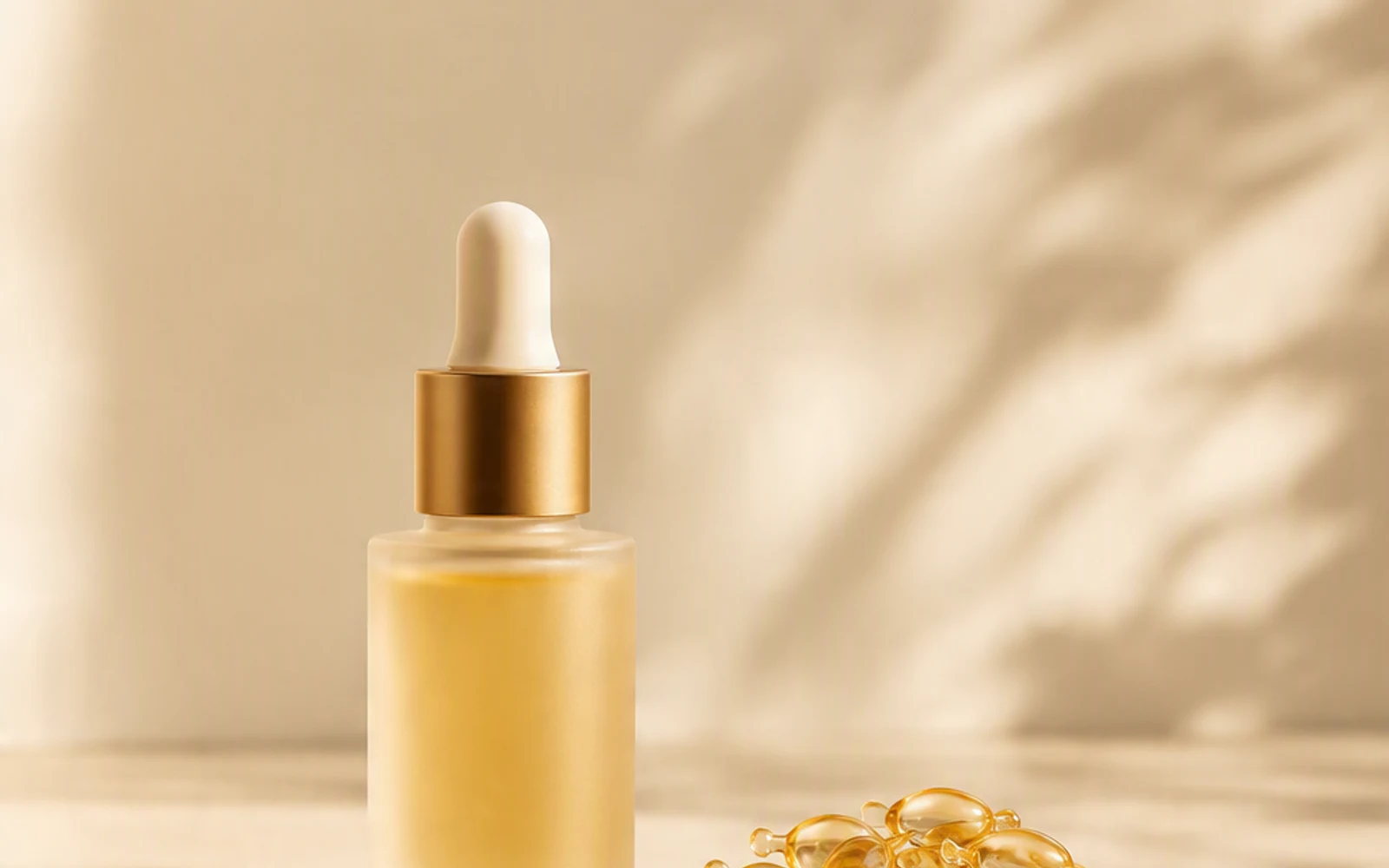
Short answer: choose facial oil capsules when the brand needs a designed single-use ritual, controlled unit presentation and a distinct trial or retail packaging story. Choose a bottle when the routine needs flexible dispensing, frequent use or a lower-complexity pack. Neither format is a universal upgrade; the right choice depends on formula, consumer behavior, packaging and channel.
Project decision
- Choose capsules when the unit-dose format solves a clear routine, sampling or merchandising task.
- Choose a bottle when flexibility of amount and repeat use matter more than unit presentation.
- Compare both routes using the same formula, channel and packaging requirements.
The comparison should begin with the product experience, not with an assumption that one format is inherently more premium or more protective. A unit-dose capsule changes how the user receives and applies a formula. A bottle changes how the user controls the amount and stores the product after opening. Each route creates different opportunities and constraints for formulation, packaging, sampling and retail storytelling.
Compare the consumer routine
| Facial oil capsules | Bottled facial oil |
|---|---|
| Supports a defined one-use or ritualized application experience. | Lets the consumer adjust the amount through a dropper, pump or other dispensing system. |
| Can create a visible unit-dose product story for travel, gifting or premium programs. | Can fit an established daily routine where repeated flexible dispensing is expected. |
| Requires capsule, count and outer-package decisions to work together. | Requires bottle, closure, dispensing and post-opening use decisions to work together. |
| Needs review of the complete capsule-plus-package system. | Needs review of the complete formula-plus-bottle system. |
Define the intended amount
Capsules are most coherent when the brand can define what one unit is intended to deliver. That does not mean every consumer will use exactly the same amount in every climate or skin routine; it means the product concept has a clear unit-dose hypothesis that can be sampled. A bottle is more flexible, but the brand still needs to explain the recommended use in a way the consumer can follow.
For a capsule route, use the fill-weight selection guide to translate the desired facial application into a testable sample concept. The selection should be based on actual formula spread and consumer use, not on a generic category number.
Consider formula exposure and package as one decision
Both formats require a project-specific stability and compatibility review. In a bottle, the product is repeatedly accessed after opening. In a capsule, each unit is sealed until use, while the remaining capsules depend on the outer pack and storage conditions. Neither fact produces a blanket protection claim. The finished formula and the final package need review under the conditions relevant to the project.
This is especially important when the concept includes retinoids or other ingredients that require careful technical and market review. See Retinol Capsules: Stability and Packaging Considerations for a framework that keeps the formula, shell and package in the same conversation.
Compare retail and merchandising needs
Capsules can create an immediate visual product signal. A clear capsule tray, a counted blister or a refillable-looking jar can support a particular story, provided the pack is technically and commercially appropriate. Bottles may be familiar to consumers and can support an established facial oil category presentation. The question is which format helps the brand communicate a use routine without creating confusion or unnecessary complexity.
- Does the consumer need a measured unit, or do they expect adjustable dispensing?
- Is the product a discovery set, a giftable program, a travel item or a daily core SKU?
- How will the format be photographed, sampled, shipped and displayed?
- What label, instruction and package information are required in the intended markets?
Account for project complexity honestly
A capsule product may add decisions around shell, mold, count and capsule packaging. A bottle product may add decisions around bottle material, closure, pump or dropper and post-opening handling. Neither is categorically simpler without knowing the formula and route to market. The best choice is the one that creates a credible consumer proposition and a manageable production plan.
Choose capsules when the brief says
- The consumer story benefits from a single-dose, tactile or ritualized experience.
- The brand can define and validate an intended application amount.
- The team is prepared to select shell, mold, count and package as one system.
- The retail concept gains value from a distinct capsule format.
Explore the Facial Oil Capsules product route for a capsule-focused brief, or begin with PZIK services when the brand still needs to compare the two formats alongside formula and packaging options.
Use the 5-part format decision matrix
The 5-part format decision matrix is our own buying framework, not an industry standard. It keeps the comparison focused on the product system instead of treating capsules as automatically more premium or bottles as automatically simpler. Compare consumer routine, formula exposure, package behavior, channel story and production complexity. The format that wins should be the one that solves the brand’s actual commercial problem.
| Decision area | Capsule route | Bottle route | Buyer consequence |
|---|---|---|---|
| Use amount | Can define a planned single-use amount. | Allows adjustable dispensing through dropper, pump or other closure. | Choose based on whether the routine benefits from control or flexibility. |
| Exposure | Each unit remains sealed until use; remaining units depend on the outer pack. | Product is accessed repeatedly after opening. | Neither format creates a universal stability claim; review the complete system. |
| Retail story | Can create a distinctive ritual, travel, gift or trial presentation. | Familiar category format with flexible quantity communication. | Match the format to the channel and buyer expectations. |
| Packaging | Requires shell, count, primary pack and capsule presentation decisions. | Requires bottle, closure, dispensing and post-opening handling decisions. | Compare complete pack scope, not only the container. |
| Production plan | Formula, shell, mold and capsule packaging must align. | Formula, bottle, closure and filling route must align. | The simpler-looking format is not always simpler for the project. |
Define the consumer moment before the format
Write the consumer action in plain language. Is the user applying one amount at night, adjusting drops for different skin needs, taking a travel unit, opening a giftable ritual or using a product as part of a professional treatment? The capsule route can make one-use behavior visible, but it can also feel restrictive if the user expects to change the amount. The bottle route can feel familiar and flexible, but it can be less distinctive as a retail story.
For an oil capsule, define whether the user opens the capsule with fingers, cuts or twists it, applies it directly or dispenses it into the palm, and whether one unit should be used immediately. For a bottle, define whether the dropper or pump delivers a meaningful amount and how the product is stored between uses. The format should make the routine easier to understand, not create a new source of confusion.
Compare formula exposure without overclaiming
Capsules are sealed until use, while a bottle is repeatedly opened. That distinction can be useful when designing a product concept, but it should not be translated into a blanket statement that one format guarantees better stability or protection. The formula, shell, package, closure, storage and distribution conditions still need the appropriate review.
For either route, record the formula version and the package used for sampling. A bottle project should identify the closure and access method. A capsule project should identify shell, mold, fill amount, count and primary package. If the product includes retinoids or other sensitive materials, connect the comparison to the retinol stability and packaging guide rather than making a general format claim.
Look at the retail and channel story
Capsules can create an immediate visual signal. A tray of single units, a counted blister or a compact gift box may help a brand communicate a ritual, discovery set or travel format. Bottles can fit established facial oil merchandising and make the amount feel adjustable. The right choice depends on where the product is sold and how the customer understands the category.
Consider ecommerce photography, retail shelf presentation, salon use, distributor handling, subscription, gifting and travel. A capsule format can be easier to photograph as a complete set, but it may require more explanation. A bottle can be easier to explain but less distinctive. The brand should test the proposition with the actual package, not decide from a mood board.
Compare project complexity honestly
A capsule route introduces shell, mold, fill weight, count and capsule packaging decisions. A bottle route introduces bottle material, closure, dispensing, filling, decoration and post-opening storage decisions. Each route can be simple or complex depending on the formula and commercial goal. If a buyer compares only the visible container, the production and quality scope remains hidden.
| Project question | Capsule follow-up | Bottle follow-up |
|---|---|---|
| What is one use? | Define capsule fill and opening experience. | Define pump/dropper amount and consumer instructions. |
| How is it stored? | Review remaining capsules in the outer pack. | Review closure, repeated access and storage after opening. |
| How is it packed? | Compare blister, tray, jar, carton and count. | Compare bottle, closure, carton, label and shipping protection. |
| What needs sampling? | Formula-shell-mold-package configuration. | Formula-bottle-closure-dispensing configuration. |
| What can the brand claim? | Keep unit-dose and protection language project-specific. | Keep freshness, dosing and convenience language project-specific. |
Choose capsules when the brief says
A capsule route is a strong candidate when the brand wants a designed single-use ritual, a measurable unit concept, a travel or sampling format, a giftable presentation or a distinctive range architecture. It also fits when the team is prepared to define shell, fill amount, mold, count and package together. The format should create a reason for the buyer to choose the product, not simply add visual novelty.
Choose a bottle when the brief says
A bottle may be the better route when the routine needs adjustable amounts, frequent repeated use, a familiar facial-oil category experience, a larger multi-use pack or a simpler dispensing explanation. A bottle is not automatically lower complexity; it still needs a formula, closure, packaging and storage review. It may simply fit the consumer behavior better.
Run a fair format comparison
When a brand is uncertain, compare both routes with the same formula direction, target market, use routine and channel. Build a capsule sample and a bottle reference with equivalent consumer instructions. Review amount, feel, storage, package, photography, shipping, price architecture and operational assumptions. Do not ask one route to prove more than the other.
Format-comparison RFQ checklist
- Product concept, target consumer and cosmetic use.
- Formula direction, sensory target, active ingredients and fragrance.
- Target market, channel, trial strategy and replenishment plan.
- Capsule route: shell, mold, fill amount, count and primary pack.
- Bottle route: bottle material, closure, dispensing method and pack size.
- Packaging, instructions, coding and market information.
- Sample questions: amount, feel, access, storage, presentation and package fit.
- Quantity range, launch timing and finished-goods scope.
When capsules are the wrong choice
Capsules may be the wrong first choice when the brand needs highly adjustable dispensing, the intended use amount varies widely, the package cannot make the routine clear, or the capsule adds cost and complexity without a meaningful consumer benefit. A bottle may be the better decision when it serves the product and channel more honestly. The goal is not to force the format that a manufacturer can make; it is to select the format that the brand can explain, sell and support.
FAQ
Are facial oil capsules more hygienic than bottles?
Do not make a universal claim. Capsules and bottles create different access and storage systems. The finished formula, shell or closure, package and use instructions need project-specific review.
Are capsules more premium than a bottle?
Not automatically. A capsule can support a distinctive ritual or giftable format, while a bottle can communicate familiarity and flexible use. Premium value comes from the complete product experience.
Which format is better for travel?
A capsule format may be attractive for a defined travel or trial routine, but the package must protect and organize the units. A compact bottle may also work. Compare the actual package and use instructions.
Do capsules reduce formula exposure after opening?
Each capsule remains sealed until use, but the remaining units still depend on the outer package and storage route. That is a design consideration, not a universal stability result.
What should a buyer send when comparing both formats?
Send the formula direction, target market, intended use amount, channel, package concept, count or bottle size, quantity range and launch timing. Ask the manufacturer to compare complete product systems.
Request a format comparison
Send PZIK your facial oil concept, target channel, desired use routine and packaging idea. We can help compare a capsule route with a bottled route and identify which technical and commercial questions should be answered through sampling. Request a facial oil format review.
About this guide
This comparison is written for B2B product teams deciding between unit-dose facial oil capsules and bottled facial oil. It does not claim that either format universally improves stability, hygiene, efficacy or consumer results. Those questions require review of the finished formula and package.
Decision summary
Facial oil capsules are not a universal upgrade to a bottle, and a bottle is not automatically the simpler commercial answer. Choose the format that suits the intended consumer routine, supports the formula and package review, and makes sense for the channel. A clear decision brief is more valuable than a format preference based on appearance alone.